Given the amount of attention that it got in the rather protracted build up to its much delayed release, the actual film was always going to be some form of an anti-climax. That the hype was head-banging skywards reduced the threshold for cinema goers queuing up to watch the film, and many movie critics from slating it. For, with or without the controversy, Padmaavat is a Bollywood masterpiece.
We are dealing not just with a controversial masterpiece but also a few masterpiece conspiracy theories; the most cited being that the uproar was fabricated – or at the very least facilitated – to get the desired numbers. The film was breaking Baahubali’s overseas numbers for instance, over the very first weekend.
Here’s another contribution to the conspiracy mill; the Rajput outrage has actually forestalled any potential backlash by Muslim fundamentalists over the depiction of Alauddin and the Khilji dynasty – or the Khilji tribe, if they still claim to be as such.
For, it is Alauddin Khilji – an actual individual who lived in and ruled (parts of) India – who has all the negative shades, while Padmavati – a fictional character from a fable, who never existed (definitely not as Alauddin’s contemporary) –is the protagonist.
As someone with both Rajput and Muslim roots, one is in a position to suggest that any possible offence over a film that is based on a fictional poem and takes creative liberty with a chain of events that never actually happened, is more offensive to oneself than anything depicted in the film.
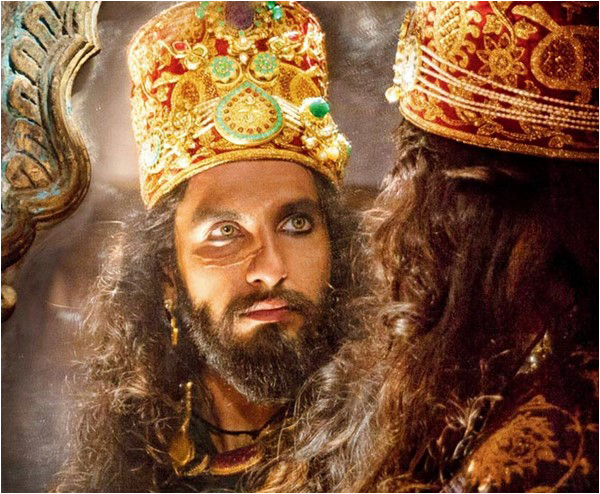
This is notwithstanding the reality that Alauddin could be every bit a savage ruler – supremely played out by Ranveer Singh – or that the film occasionally borders on satirising Rajput grandeur, what with the exaggerated wardrobes matched with equally outrageous narcissism.
The only person who would have a right to be offended by Padmaavat would be an Indian history professor of Turkic or Khilji origins, who has never watched a Bollywood movie.
But it is that very flamboyant aura that is the strength of the film. At the end of the day, the film doesn’t make any claims for historical accuracy and hence shouldn’t be held accountable for it.
Just like the previous Sanjay Leela Bhansali offering Bajirao Mastani, Padmaavat uses an amalgamation of history and folklore to create an epic. And this one goes a few steps further than its predecessor.
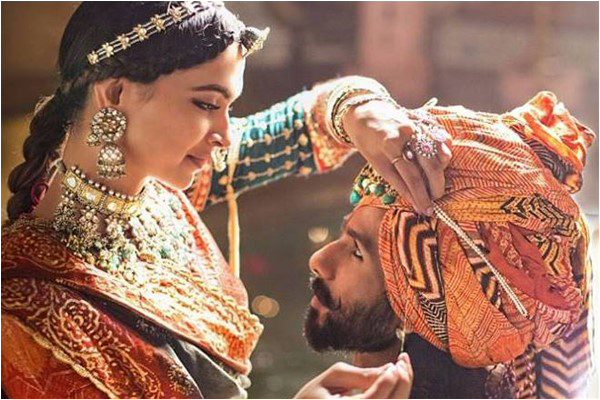
In 13th century Afghanistan, Jalaluddin Khilji – Alauddin’s (Ranveer Singh) uncle – is on the verge of seizing control over Delhi, thanks almost entirely to the nephew. Meanwhile, Rajput ruler Maharawal Ratan Singh (Shahid Kapoor) travels to Singalawhere he and princess Padmavati (Deepika Padukone) fall in love and get married.
Singh fallsout with royal priest Raghav Chetan and his idea of revenge is helping Alauddin capture Chittor – the Raja’s fortress – with Padmavati as the bait.
The tale is Alauddin’s quest to conquer Padmavati, and in turn Chittor, while Ratan Singh vows to defend both.
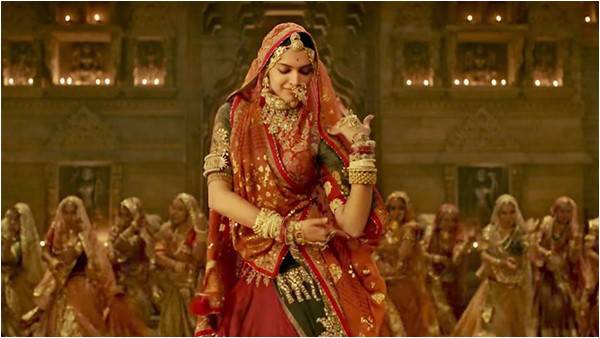
Perhaps the greatest strength of Padmaavat is its cinematography, which is the hallmark of every (successful) Bhansali production. The film is a visual treat that recreates the era – if not the history associated with it, or largely agreed upon – on honest foundations.
The battle scenes, just like those in Bajirao Mastani, are unparalleled in all of Indian cinema. In fact, there are numerous commonalities between the two productions, but it’s mostly the positives that are retained, eventually culminating in a film that is an absolutely spectacle to watch.
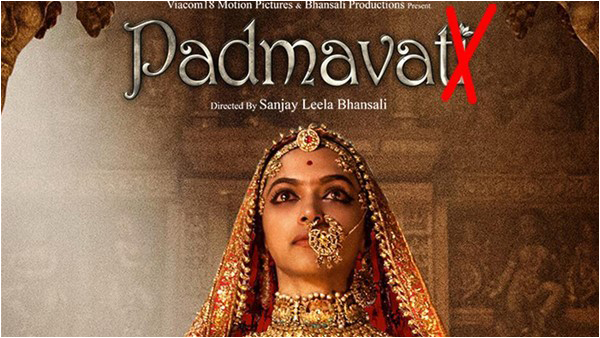
The name had to be changed, too
Of course, this wouldn’t be possible without the leading trio giving their absolute best to three challenging roles. Both Shahid Kapoor and Deepika Padukone have played their parts splendidly, and it is evident that Bhansali has made them put in the homework needed to pull off the characters.
However, it is again Ranveer Singh that towers above in a Bhansali production. His depiction of the ferocious Alauddin as the ruthlessly ambitious conqueror of India – and his obsessions – is masterful, unmatched by any other portrayal in Indian cinema.
Of course, all of this praise comes with the mandatory disclaimers for Bollywood. Those at the helm of the Khilji dynasty were apparently using the word ‘itehaas’ for ‘history’! And Ranveer Singh doesn’t remotely look like someone possessing Afghan ancestry, nor was any effort made to fabricate one.
As far as the controversy is concerned, Sanjay Leela Bhansali actually does well to create an epic that has a Hindu-Muslim divide, without aggravating it, given the Hindutva surge in India and prevailing anti-Muslim sentiments.
If you’re a film lover who won’t compare the movie to the best Hollywood or foreign epics of the past, and don’t quite push yourself to be outraged, you would thoroughly enjoy the production as a fine piece of art. The only person who would have a right to be offended by Padmaavat would be an Indian history professor of Turkic or Khilji origins, who has never watched a Bollywood movie.