I woke up on Easter Sunday to 42 text messages from friends all over the world asking if I was alive. It was that strange twilight time, between sleep and consciousness, when one’s dreams are at their most fluid and vivid. The sheer number of unexpected notifications on my phone inspired shrouded figures to rise up ominously in my room. Obviously, with that many messages in the night you just assume someone has died, and so with effort I pierced through my half-sleep, sweating and nervous, and prepared for the worst. That’s how I found out about the bombing in the Iqbal Town Park that killed so many people and children, and injured so many more.
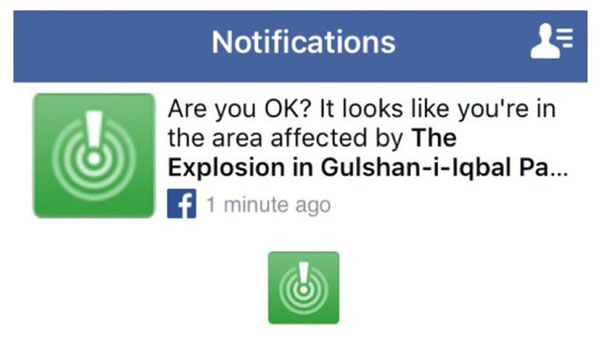
Facebook was the first to ask me if I was okay, and suggested that I “mark” myself “safe” by posting a little status about it. I didn’t, because for one I’m not in the city at present and two, it seems slightly tacky. I understand the impetus for letting people know that you’re OK, but for the most part the victims of the bombing were unlikely to be checking Facebook feeds to figure out who was alive and in any case, most of the people I saw posting “I am safe” messages live nowhere near the bomb site, but rather behind the armed barricades and militarised safety zones of Defence and Cantt. It just struck me as vain and unseemly.
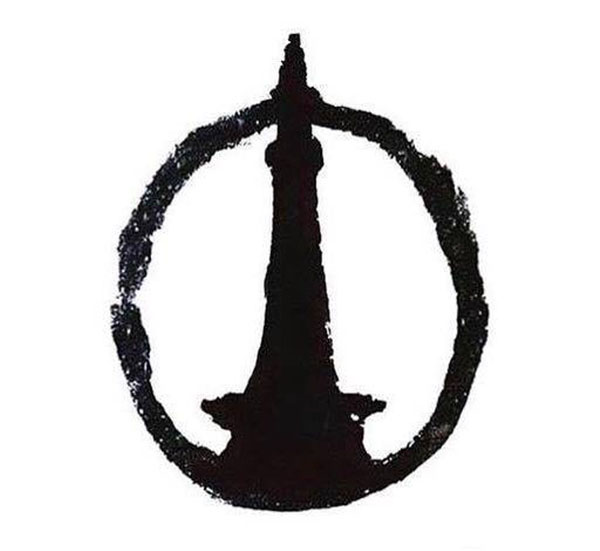
The Minar-e-Pakistan as a peace sign, shared widely on social media
Most people "marked safe" on my Timeline live nowhere near the bomb site, but rather behind the armed barricades and militarised safety zones of Defence and Cantt
But I get where the need to express solidarity with the city is coming from. I feel wounded from the attack on Lahore sitting half a world away. It’s as if a person I know (and love) is bleeding. She is. That’s the message that was being delivered by this and indeed every other attack that we as a nation have suffered in the last several years: “We are here and we are going to get you.” It’s not a new message, and by now we have come to assume it is part of our reality.
Facebook, in an apparent glitch, asked many non-Pakistanis if they were safe from the Lahore carnage
I’ve been away from Lahore for four months now, busying myself with work, and the distance has shown me how deeply embedded those assumptions are in my psyche, irrespective of geography. I am still unsure of being in crowded spaces, still unused to seeing people breezing in and out of buildings and theatre without some kind of security check. It seems naïve, almost innocent. “Don’t you know what he could be hiding in a backpack?” I wonder silently, and then chide myself for being a Debbie Downer. But it’s the truth. I look at the news reports of the recent attacks in Turkey, Belgium, Pakistan and others and the notion that the world is at war is not abstract (as if it ever was) but a dour reality. My therapist says that nations can suffer PTSD much like individuals. I wonder if planets can too.
But if Lahore is bleeding, the truth is she has been for quite some time, as has Pakistan. I wrote something after the Peshawar massacre that erupted in me after seeing the shocked posts and moral outrage that was bubbling in privileged social media enclaves all around me.
“How could they do this to children?”
“Can you imagine the lack of humanity!
“How did this happen?”
The answer to this and all subsequent questions is simple: it happened because we let it. It’s not a virus that someone injected us with against our will. It’s a cancer that we ourselves nurtured and now don’t want to admit. Consider, just for a moment, the optics of a large crowd of religious zealots forming a protest in Islamabad demanding the imposition of ‘Islamic law’ (and in essence a shrine for a man who gunned down a governor) the very same week as another group attacks children in a park on a Christian holiday.
These are not mutually exclusive events. They are part of a tapestry and the thing that gets me about this is that we all know it and aren’t really willing to admit it. That crowd shouldn’t have been allowed to assemble. It is tantamount to treason. The government or the army or whoever is in control knows this. Or should.
On another note - because this one is getting me real down real fast - it was nice to see that little graphic that popped up with the Minar-e-Pakistan in a circle like a peace sign. If you think about it, all terrorist attacks now have a social media checklist that follows. There is the initial concerns (“Oh no”), then the hashtags (#ohno), followed by the solidarity hashtag (#jesuisOhNo), leading inevitably to a symbol of the “Oh No” made by an industrious photoshopper. For what it’s worth, that sign with the Minar in the circle looks great and should be the symbol for Lahore and used at airports, T shirts, shopping bags and at the very least on mugs at the next LLF.
But occasionally things can get a bit overboard. For starters, because of a glitch in the system, Facebook sent the “Are you safe?” alert to the entire world, not just Lahoris. There are lots of screengrabs online by nationalists the world over, Israelis and Ghanaians and so many others, expressing solidarity but also mild surprise that Facebook thought they lived in Lahore. Also, lots of people started posting a picture of the Eiffel Tower lit up in green in apparent solidarity with Lahore with a triumphant note attached below shaming anyone who thought the West doesn’t care. I won’t go into the politics of that, but I will say that it turned out the picture was from a 2007 Rugby championship and Paris was not feeling particularly demonstrative about her feelings at all this week. Also, to those who never studied the romance languages, #jesuisLahore has very different connotations in French. Just saying.