

It’s been a while since I was there, but memories of Venice are still fresh. When I told a friend we were heading to Venice, she said: “You will be enchanted by the light that shines there.”
I was intrigued, even though I was not sure what she meant.
I had put Venice on the bucket list after reading that Napoleon, on entering the Piazza San Marco in Venice in 1797, said: “This is the finest drawing room in Europe.” With his entrance into Venice, the maritime Venetian Empire, which had reigned for almost a millennium, from 810 to 1797, disappeared into history. But the city retained its glory.
I was excited to be visiting a city that was built on more than a hundred islands in a lagoon in the Adriatic Sea. Several hundred bridges connected the islands. The New York Times called it “undoubtedly the most beautiful city built by man.”
Because of its uniqueness, Shakespeare set two of his plays there: Merchant of Venice and Othello, while Thomas Mann penned a novel Death in Venice. Indeed, Marcel Proust went so far as to write that when he arrived in Venice, “My dream became my home.” Unsurprisingly, many films have been shot in Venice, including Indiana Jones and the Last Crusade and Summertime.
Thus, we arrived in Venice with great expectations. It was the month of April. From the Marco Polo airport we took a water taxi to our hotel, which by itself told us we had arrived in Venice. Along the way, we saw the extensive network of canals that are synonymous with the image of the city. In the days that followed, we would walk the streets of Venice, sampling the culinary delights along the way, and ride in the storied boats and gondolas that ply the numerous canals, soaking in the views.
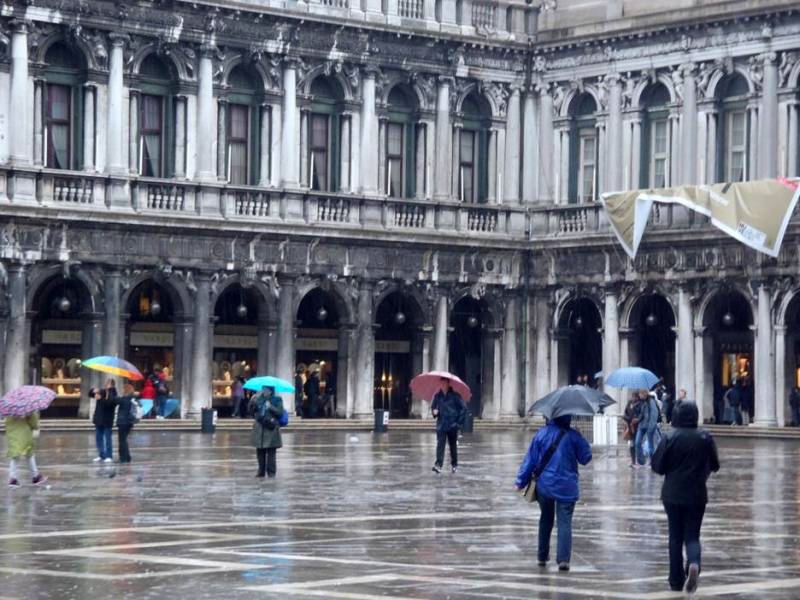
On our final day, we were rained upon. As the plane’s wheels lifted off the runway, the Bard’s words, 'Parting is such sweet sorrow,' were ringing in my ears
It was then that I understood what my friend meant when she spoke of the magical light in Venice. When the rays of the sun hit the city’s multitudinous buildings adorned with glass and tiles, they cast their reflections and their shadows on the waters of the canals. What would otherwise be a run-of-the-mill cityscape was transformed into a surreal painting.
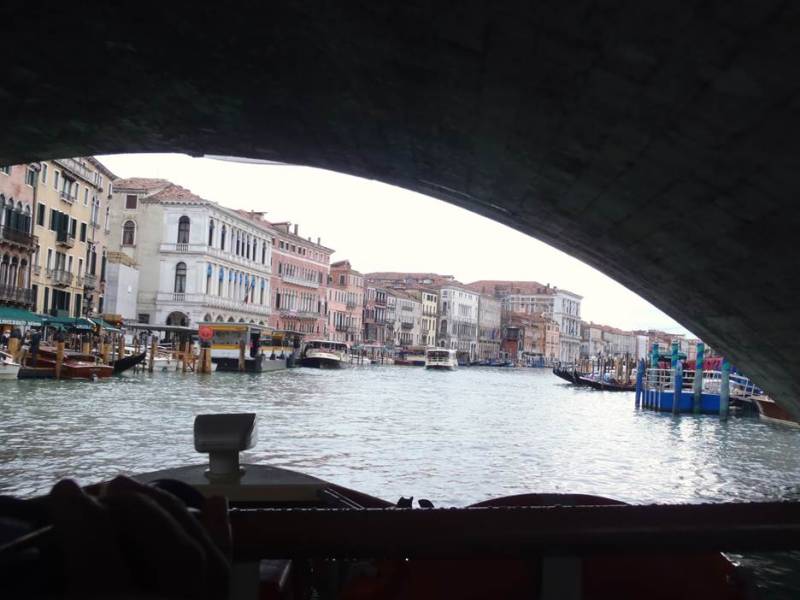
A neighbour had cautioned us that Venice is often beset with floods, muddying the streets and making walking difficult. It also ruins the views, since the mud stains the buildings. Thankfully, there was no flooding during our stay.
The weather was quite cold, requiring us to don thick jackets with scarves most of the time, but that just made the visit more memorable. Of course, like all Italian cities, it had some of the most amazing restaurants in the world. We indulged in just about everything the chefs offered. The seafood was out of this world. Even the everyday pizzas were unique as was the gelato.
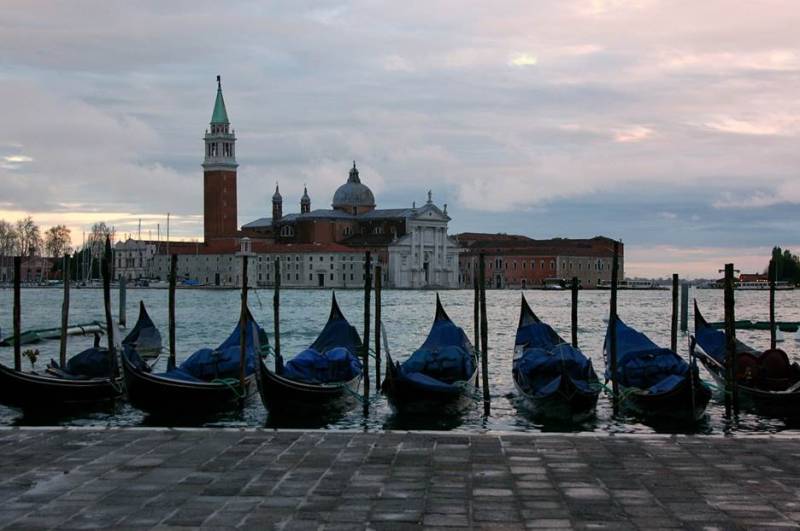
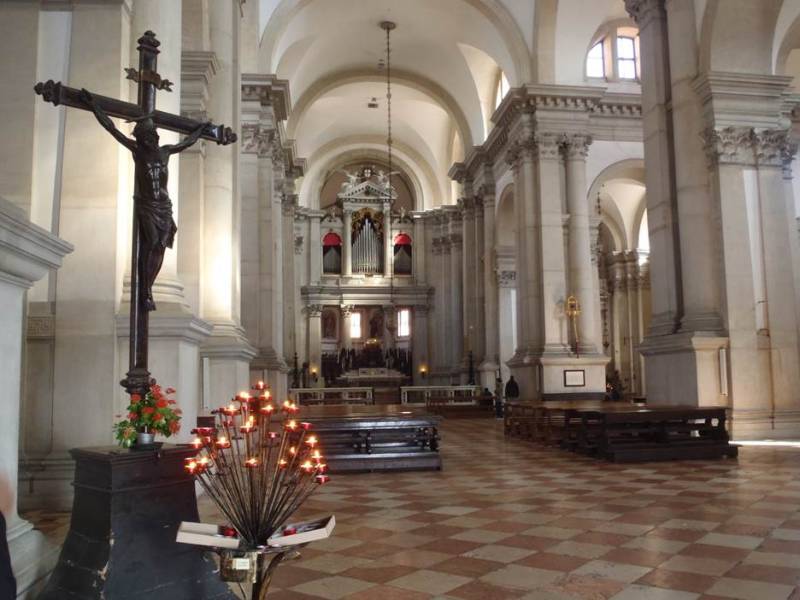
Venice abounds with churches, one more magnificent than the other, each with its unique set of paintings and sculptures. Most of the churches have ceased being houses of worship. They have been converted into theatres and opera houses. We watched a show in one of the churches but could not help but be enamoured by the religious art which decorated the walls and halls of the church. In the churches, many of the scenes bring the Old and the New Testament to life. Among the recurring themes are the Virgin Mary’s ascension to heaven, a wood carving of St John the Baptist, and an enormous Crucifixion. There are plenty of life size statues as well.
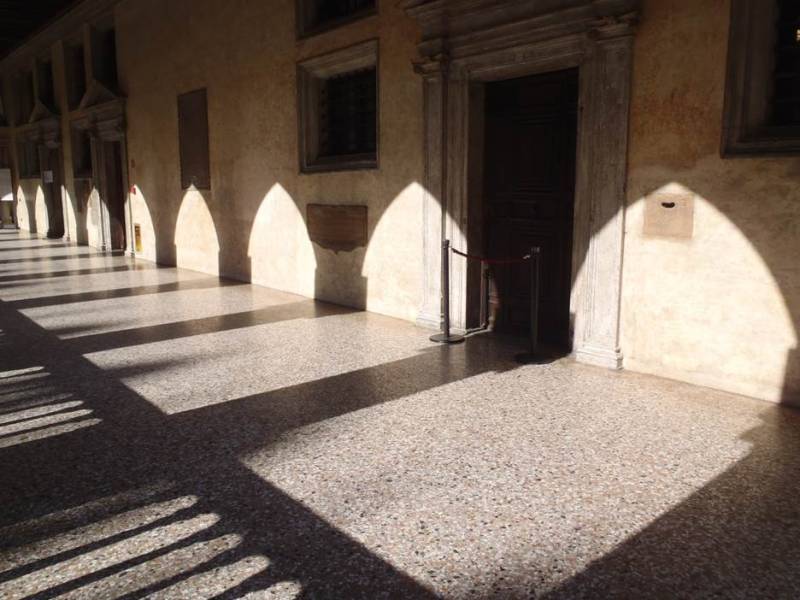
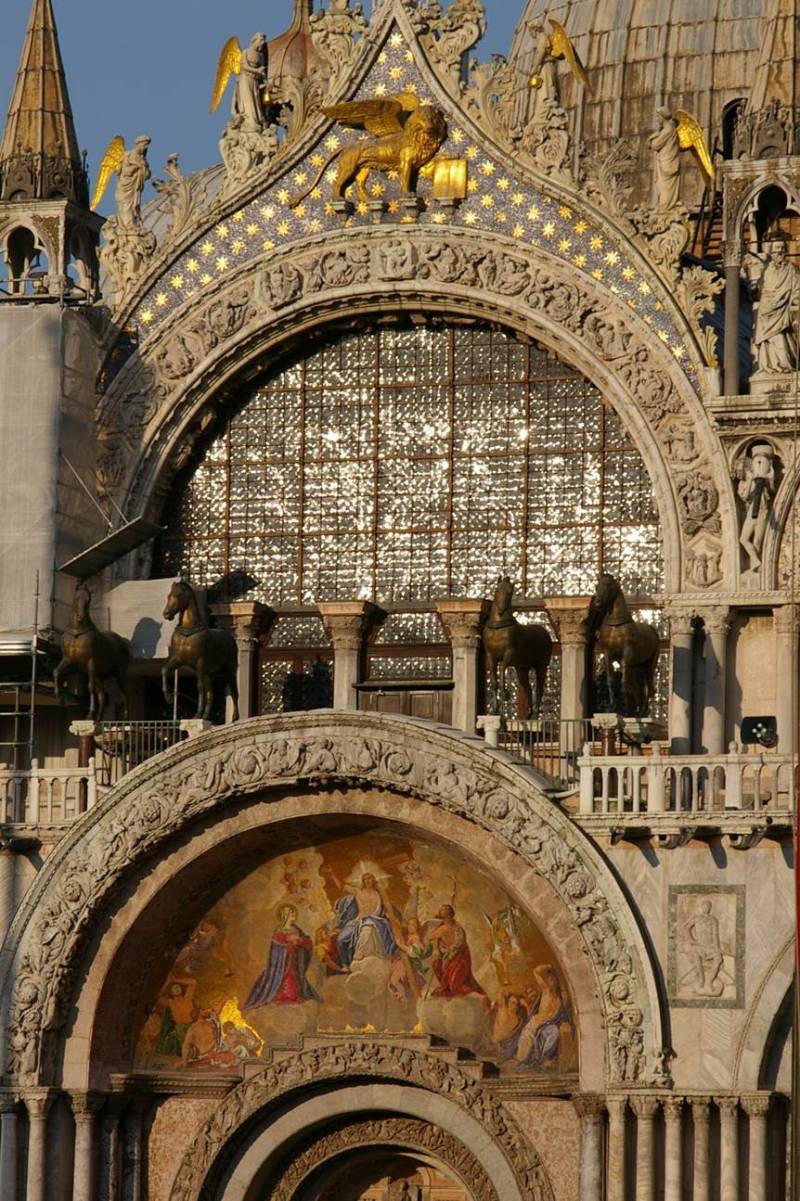
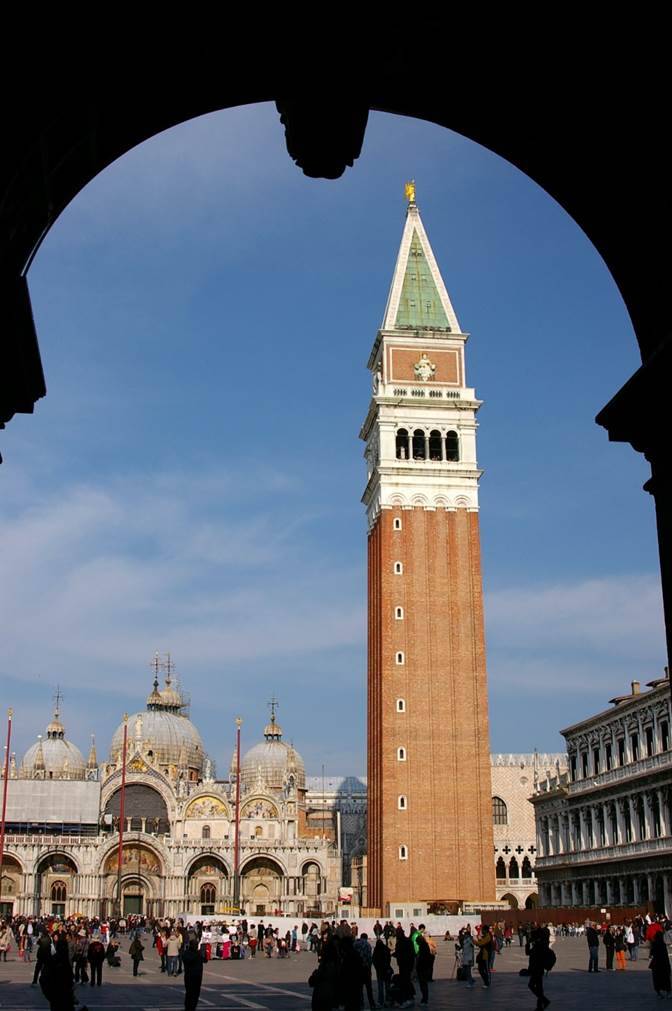
Piazza San Marco, the main square, was the city’s centre of gravity. It has been featured in many films and is always packed with tourists and for good reason. It cannot simply be ignored. We toured it more than once and, in the Basilica, we stood by the grave of San Marco, whose body was reportedly smuggled out of Alexandria, Egypt in 828. The architecture is Byzantine, almost mosque-like.
Atop the 15th century clock tower, Torre dell ‘Orologio, two Bronze Moors strike the time every 60 minutes and the sound echoes throughout the square. At the other end of the square is the Campanile, the tallest tower in Venice. From the top, the view of the surrounding canals and buildings is sweeping. On a clear day, we were told, one could see the top of the Dolomite Mountains.
Venetian architecture follows the Gothic style which blends Byzantine and Ottoman influences. It has been traced to Constantinople and Andalusia. The most prominent manifestation of this style can be found in the Doge’s Palace.
During one of our random walks, while admiring the architecture that was all around us, we ended up walking over the Bridge of Sighs that connects the Doge’s Palace with the prison. Just stepping on it evokes the eponymous sighs of those who were headed for internment.
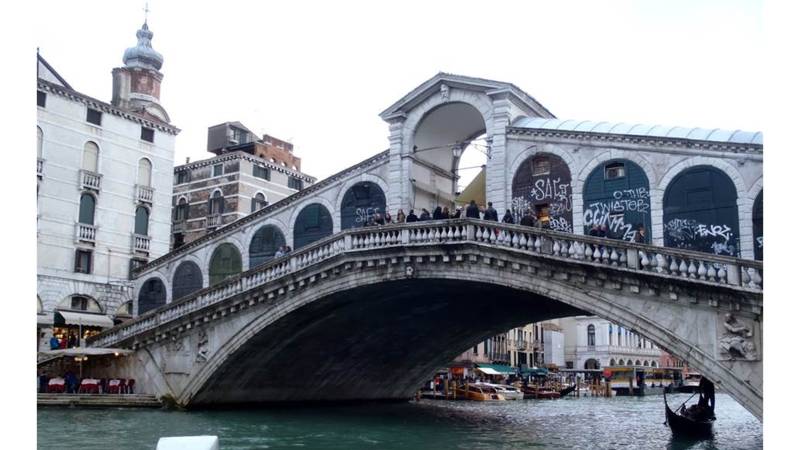
We made it a point to climb onto Ponte di Rialto from the water and later to view it from land. It is one of only four bridges crossing the Grand Canal, and is made of stone, unlike some of the other bridges which are made of wood.
One of our daughters recommended that we visit Murano, an offshore island whose glasswork is legendary. It can be traced back to artisans who fled from Constantinople twice, first during the fourth crusade in 1204 and again when the city fell to the Ottomans in 1453.
We availed ourselves of a free ride in a gondola to Murano. But everything was so expensive there that we returned empty handed. The gondolier asked us to take a bus back to the hotel, reminding me of a precept I had learned in my Principles of Economics class at the University of Karachi: “There is no such thing as a free lunch.”
On our final day, we were rained upon. As the plane’s wheels lifted off the runway, the Bard’s words, “Parting is such sweet sorrow,” were ringing in my ears.