

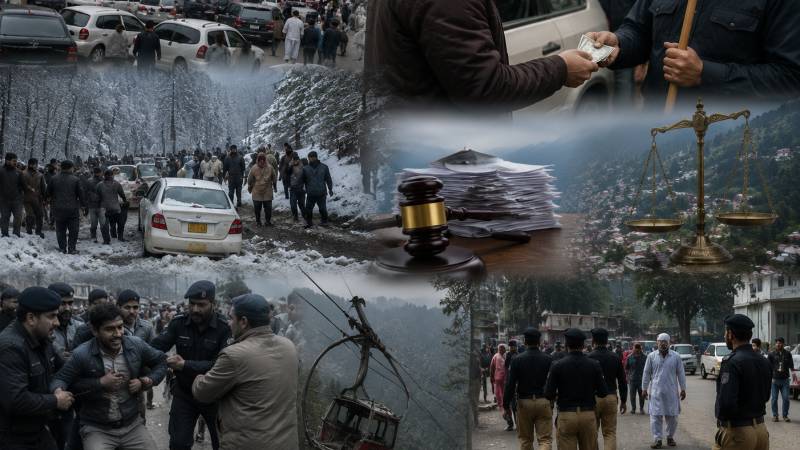
Pakistan was handed everything on a silver platter by nature. From the majestic, snow-capped peaks of the north to the pine-clad ridges of historical hill stations like Murree, the country possesses the geographical blueprint to stand as one of the world’s premier travel destinations. By all logical rights, tourism should be a leading contributor to our national economy and international soft power.
Instead, a persistent lack of commercial governance and ground-level accountability has allowed these natural wonders to be hijacked. What should be a celebrated national asset has increasingly devolved into an unregulated territory dominated by aggressive commercial cartels—where visiting families are treated not as valued guests, but as prey.
Every year, public funds are channeled into glossy promotional campaigns inviting citizens and international travelers to explore the beauty of Pakistan. Yet, the moment an ordinary family takes to the road, that polished image shatters against a grim reality on the ground: unchecked price gouging, aggressive mobbing upon questioning substandard services, and an indifferent local police apparatus that routinely turns a blind eye to active extortion. When state regulation ends where a local cartel’s profit margin begins, glossy campaigns achieve little more than luring unsuspecting families into a trap.
This systemic decay is not a theoretical policy issue; it plays out daily across major tourist hubs. A recent incident at GPO Chowk, right off Mall Road in Murree, illustrates how deeply entrenched this lawlessness has become. A family traveling all the way from Lahore—having navigated severe monsoon rain, road closures, and heavy construction—arrived late at night, having paid an advance deposit at a local hotel-restaurant establishment. Upon checking in, they were presented with appalling, unhygienic conditions that fell far below basic hospitality norms and differed sharply from advertised rates. When the family politely requested to cancel their booking, the local establishment mafia went to work.
What should be a celebrated national asset has increasingly devolved into an unregulated territory dominated by aggressive commercial cartels—where visiting families are treated not as valued guests, but as prey.
Exploiting the vulnerability of an exhausted family waiting outside at midnight, the management aggressively attempted to extort an arbitrarily inflated full-stay charge for unrendered services, completely refusing standard cancellation courtesies. When the family stood their ground, staff physically surrounded them and blocked their exit. Seeking help, a family member ran directly to a passing police patrol vehicle at the intersection. In a disturbing display of dereliction of duty, the officers dismissed the plea, claimed no formal call was logged, told the victim to call the central emergency helpline, and drove away.
Taking advantage of the departing police vehicle, the mob aggressively charged at the victim, attempting a physical assault in plain view of the intersection. It was only after an emergency call was logged with the central system that the panicked establishment forced a financial compromise under intense duress to allow the family to leave. Realizing they had zero protection from local law enforcement, the family was forced to evacuate Murree at midnight to seek emergency shelter in Islamabad.
When an establishment at a high-security intersection like GPO Chowk can detain and attempt to assault tourists with impunity, it exposes a fatal flaw in our tourism strategy. Beautiful mountains mean nothing to a family that feels physically unsafe. Dismantling this cartel culture does not require grand policy speeches or multi-billion-rupee initiatives; it requires the resolute execution of existing laws. Treating incidents like the Murree case as an administrative benchmark offers a clear roadmap to break the cycle of impunity:
First, audit the digital evidence floor. Prime tourist hubs are equipped with Safe City CCTV networks and central helpline logs. Auditing recorded feeds in high-density areas immediately verifies vendor behavior and police response times, replacing hearsay with concrete facts.
Second, enforce zero-tolerance licensing. Tourism authorities must tie commercial operating licenses directly to consumer safety and fair pricing. A single verified instance of extortion or physical intimidation should trigger the immediate sealing of the establishment and permanent license revocation.
Third, hold neglectful law enforcement accountable. Cartels only flourish when local police allow them to. Initiating strict departmental inquiries into on-duty personnel who ignore citizens in distress breaks the unspoken protection racket between rogue vendors and local officers.
Reclaiming Pakistan’s tourism potential is a matter of administrative will. In a notable gesture of civic responsibility, the affected family in the Murree incident publicly declared that should any monetary compensation or fines be awarded through official proceedings, the entire sum would be donated directly back to the Punjab Tourism Development Fund to support sustainable reform. Pakistan has all the natural beauty it will ever need. What it desperately requires now is an iron-clad commitment from administrative leadership to crush local cartels and ensure that every family traveling across our nation can do so with dignity, safety, and peace of mind.