

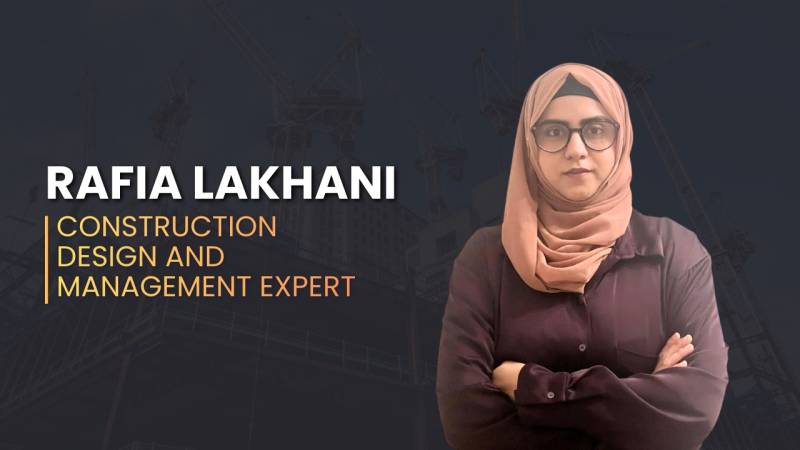
A renovation plan can look perfect on paper, yet still fall apart when it reaches the site. Small misunderstandings over drawings, materials, and timelines quickly turn into delays and extra cost. That is the practical problem Rafia Lakhani has focused on solving in her work across design and project coordination.
The reason this profile matters is simple: as construction becomes more time-sensitive and clients ask for clearer control over scope, the “invisible” coordination work decides whether a project stays reliable. In fast-growing cities, that reliability affects everyday life—from homes and offices to the public spaces people use daily.
Lakhani is an architecture and project management professional based in the United Kingdom, with an MSc in Construction Project Management from Heriot-Watt University in Edinburgh and a Bachelor of Architecture from NED University of Engineering and Technology. Her career sits at the intersection where design intent meets execution discipline, especially on residential and interior work where changes can come quickly and stakeholders often have different expectations.
Her architectural education placed strong emphasis on fundamentals—materials, construction techniques, urban planning, and professional practice—alongside the communication skills that help teams work from the same understanding. That grounding is increasingly important as projects involve more consultants and more specialised design packages.
In industry, Lakhani worked as a Junior Architect at Identity Design , contributing to ongoing residential and interior projects. Her role included producing 2D drawings, 3D models, and renderings, and joining site visits, surveys, and planning assessments—tasks that help convert a concept into instructions that can be followed on the ground.
A key part of that translation is coordination with technical teams. Lakhani’s work included collaborating across architecture and MEP teams—MEP refers to mechanical, electrical and plumbing plans that determine how a building “functions” behind walls and ceilings. When these drawings are aligned early, teams are less likely to discover clashes during construction.
Her evidence pack highlights a practical, tool-driven approach. She has developed 3D models using 3ds Max and SketchUp, with improved timelines reported at around 20% on relevant tasks, and has prepared material boards for commercial projects to support design consistency and client approvals. She has also supported contract document reviews and client meetings to improve alignment on what is being delivered.
Beyond design outputs, Lakhani has organised project trackers for residential work under tight deadlines—simple tools, but often the difference between controlled progress and a last-minute scramble. She has also managed subcontractor activities to help maintain compliance with project specifications, and attended site and client meetings where health and safety implementation was a core focus.
Her postgraduate work adds a wider project-management lens to that on-site discipline. At Heriot-Watt, she earned an A grade on a final integrated project based on a metro line case study in Abu Dhabi, contributing as a sustainability and design consultant in the project report. She also completed research analysing the Edinburgh Tram timeline through strategic, value, and risk management perspectives, and produced a research paper on how AI and machine learning could reshape construction workflows.
Put simply, her working style aims to reduce confusion before it becomes cost. “Good design only helps when it becomes clear actions on site—drawings, materials and timelines have to speak the same language,” she has said when describing her approach. She also points to “change management” as a recurring reality—meaning a structured way to record and control changes so budget and scope do not drift quietly.
For Pakistani readers watching construction and commercial development grow more complex, the message is familiar: projects move faster when the basics are handled with discipline. Lakhani’s profile reflects a quieter kind of leadership in the sector—strengthening delivery by making coordination measurable, decisions traceable, and teams easier to align as projects move from concept to completion.