

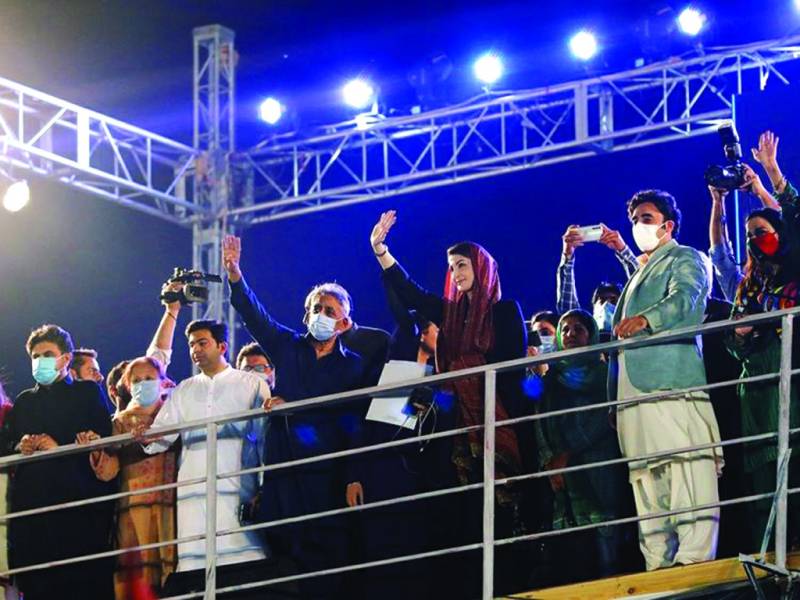
The next public gathering of the Pakistan Democratic Movement (PDM) will be held in Quetta on October 25. This is the third stop of the PDM campaign after Gujranwala and Karachi. The last two political gatherings heated up the political atmosphere in the country, and increased the intensity of the confrontation between opposition parties and the establishment. Now, there are a lot of expectations from PDM’s third gathering in Quetta. However, it is unlikely that PDM can score a major political victory here due to several reasons.
The political gathering in Quetta will be jointly hosted by JUI-F and it will have support from all major opposition parties. BNP, PKMAP, and NP will provide numerical strength to the gathering as they have a strong presence in Quetta. However, the gathering will be a hard sell for these political parties to the people of Balochistan.
Three political parties in this gathering - PML-N, National Party, and PKMAP - were the ruling coalition in Balochistan from 2013 to 2018. The track record of these three parties was not satisfactory during their tenure. It will be difficult for them to draw in the public as opposition leaders, so soon after their government. The PML-N, which was in government in the center during the aforementioned period, completely ignored the development of Balochistan. It was under the PML-N government that Balochistan was left out from the early harvest projects of CPEC. PKMAP and National Party were coalition partners of the PML-N and they overlooked how the development of Balochistan was being ignored. In this backdrop, these three political parties do not really have the moral standing to represent the political opposition in Balochistan.
Capitalizing on this moment, Chief Minister Balochistan Jam Kamal also took a dig at the opposition. He tweeted, “PKMAP and National party enjoyed five years of absolute power with the PML-N from 2013 to 2018... tell us what CPEC mega project, national highway or motorway they brought from the PML-N [coalition]?” He also questioned why these parties did not start development work in Gwadar when they had full control of Balochistan and the federal government. Interestingly, Jam Kamal was a federal minister of state in the PML-N government from 2013 to 2018, a fact which he conveniently ignored in his outburst against the opposition. Still, he raised some valid questions against the three parties of PDM which were in government during the last tenure of assemblies.
The PDM gathering in Quetta will also be attended by PPP workers and their chairman, Bilawal Bhutto Zardari, will address the gathering. Two years ago, the PPP helped bring down the coalition government of Balochistan in an undemocratic manner, and paved the way for the establishment of the king’s party, Balochistan Awami Party (BAP), which is now ruling the province. With this track record, PPP also does not stand on a high moral pedestal while attending PDM’s Quetta show.
Still, PDM’s Quetta gathering has the support of JUI-F and BNP. Both of these parties were in opposition during the last tenure as well. They can play the opposition card with a certain degree of justification. However, these two parties are not at the steering wheel of PDM. It is the PPP and the PML-N which are the main players in this game and they are likely to dominate the Quetta gathering.
Political pundits in Quetta are well aware that the PDM power show in Quetta will not be about the problems of Quetta and Balochistan. Being the most backward province of Pakistan, Balochistan is facing a multitude of problems. Apart from the ongoing low-scale insurgency, the most pressing issues in Balochistan are the provincial control of natural resources, the required supply of electricity and gas to the province, and unemployment. These are the issues that are affecting the people of Quetta on a daily basis. However, these issues will not be the focus of the PDM gathering, which will largely focus on the confrontation narrative between major political parties and the establishment. In that sense, PDM in general and this gathering, in particular, will not address the problems of people in Balochistan.
Furthermore, the success of political gatherings is measured in terms of the people who attend them. This is not a fair tool, because political parties can adopt various methods to artificially increase attendance of a gathering. At the same time, a government can employ tactics to limit the arrival of people to a political gathering. The numbers of this gathering do not look promising. This gathering will be held in the hockey stadium of Quetta, which is very small. It can accommodate around ten thousand people at the most when it is fully crammed. The security arrangements, given the threat perception in Quetta, will further limit the number of people that can be accommodated. Therefore, the gathering in Quetta will not be a success if the number of attendees is to be considered the barometer.
Historically, Quetta has always been the first choice of major political movements in the country because of Balochistan’s deprivation narrative. However, when the parties in those opposition movements join the government they completely ignore Balochistan. The same is expected from PDM unless they dramatically change their attitude toward smaller provinces. Therefore, the people of Balochistan do not easily fall for the claims and rhetoric of opposition alliances and the same will be the case with PDM.
Lastly, the best way to counter the PDM gathering, for the PTI government in the center and BAP government in Quetta, is to prioritize the development needs of Balochistan. The PTI and its allies should provide Balochistan what the PML-N and its allies failed to provide during their government. This can be the best response to the PDM show in Quetta. Otherwise, the problems of Balochistan will remain unresolved and the musical chair of government and opposition alliances will continue using Quetta as a stage for their rhetoric.
The writer is a journalist and researcher. He can be reached on Twitter: @iAdnanAamir
The political gathering in Quetta will be jointly hosted by JUI-F and it will have support from all major opposition parties. BNP, PKMAP, and NP will provide numerical strength to the gathering as they have a strong presence in Quetta. However, the gathering will be a hard sell for these political parties to the people of Balochistan.
Three political parties in this gathering - PML-N, National Party, and PKMAP - were the ruling coalition in Balochistan from 2013 to 2018. The track record of these three parties was not satisfactory during their tenure. It will be difficult for them to draw in the public as opposition leaders, so soon after their government. The PML-N, which was in government in the center during the aforementioned period, completely ignored the development of Balochistan. It was under the PML-N government that Balochistan was left out from the early harvest projects of CPEC. PKMAP and National Party were coalition partners of the PML-N and they overlooked how the development of Balochistan was being ignored. In this backdrop, these three political parties do not really have the moral standing to represent the political opposition in Balochistan.
Capitalizing on this moment, Chief Minister Balochistan Jam Kamal also took a dig at the opposition. He tweeted, “PKMAP and National party enjoyed five years of absolute power with the PML-N from 2013 to 2018... tell us what CPEC mega project, national highway or motorway they brought from the PML-N [coalition]?” He also questioned why these parties did not start development work in Gwadar when they had full control of Balochistan and the federal government. Interestingly, Jam Kamal was a federal minister of state in the PML-N government from 2013 to 2018, a fact which he conveniently ignored in his outburst against the opposition. Still, he raised some valid questions against the three parties of PDM which were in government during the last tenure of assemblies.
The PDM gathering in Quetta will also be attended by PPP workers and their chairman, Bilawal Bhutto Zardari, will address the gathering. Two years ago, the PPP helped bring down the coalition government of Balochistan in an undemocratic manner, and paved the way for the establishment of the king’s party, Balochistan Awami Party (BAP), which is now ruling the province. With this track record, PPP also does not stand on a high moral pedestal while attending PDM’s Quetta show.
Three political parties in this gathering -
PML-N, National Party, and PKMAP - were the ruling coalition in Balochistan from 2013 to 2018. The track record of these three parties was not satisfactory
Still, PDM’s Quetta gathering has the support of JUI-F and BNP. Both of these parties were in opposition during the last tenure as well. They can play the opposition card with a certain degree of justification. However, these two parties are not at the steering wheel of PDM. It is the PPP and the PML-N which are the main players in this game and they are likely to dominate the Quetta gathering.
Political pundits in Quetta are well aware that the PDM power show in Quetta will not be about the problems of Quetta and Balochistan. Being the most backward province of Pakistan, Balochistan is facing a multitude of problems. Apart from the ongoing low-scale insurgency, the most pressing issues in Balochistan are the provincial control of natural resources, the required supply of electricity and gas to the province, and unemployment. These are the issues that are affecting the people of Quetta on a daily basis. However, these issues will not be the focus of the PDM gathering, which will largely focus on the confrontation narrative between major political parties and the establishment. In that sense, PDM in general and this gathering, in particular, will not address the problems of people in Balochistan.
Furthermore, the success of political gatherings is measured in terms of the people who attend them. This is not a fair tool, because political parties can adopt various methods to artificially increase attendance of a gathering. At the same time, a government can employ tactics to limit the arrival of people to a political gathering. The numbers of this gathering do not look promising. This gathering will be held in the hockey stadium of Quetta, which is very small. It can accommodate around ten thousand people at the most when it is fully crammed. The security arrangements, given the threat perception in Quetta, will further limit the number of people that can be accommodated. Therefore, the gathering in Quetta will not be a success if the number of attendees is to be considered the barometer.
Historically, Quetta has always been the first choice of major political movements in the country because of Balochistan’s deprivation narrative. However, when the parties in those opposition movements join the government they completely ignore Balochistan. The same is expected from PDM unless they dramatically change their attitude toward smaller provinces. Therefore, the people of Balochistan do not easily fall for the claims and rhetoric of opposition alliances and the same will be the case with PDM.
Lastly, the best way to counter the PDM gathering, for the PTI government in the center and BAP government in Quetta, is to prioritize the development needs of Balochistan. The PTI and its allies should provide Balochistan what the PML-N and its allies failed to provide during their government. This can be the best response to the PDM show in Quetta. Otherwise, the problems of Balochistan will remain unresolved and the musical chair of government and opposition alliances will continue using Quetta as a stage for their rhetoric.
The writer is a journalist and researcher. He can be reached on Twitter: @iAdnanAamir