

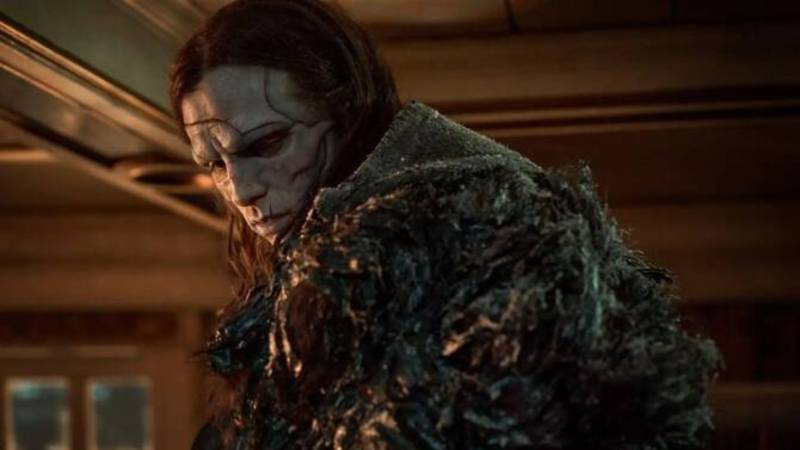
The new Hollywood adaptation of Frankenstein is a remarkable achievement, distinguished by meticulous production design, atmospheric sets, sharp characterisation, immersive makeup, and evocative cinematography. Like other enduring classics, the tale has been reinvented many times, each version adding to its long cultural afterlife. In this retelling, Guillermo del Toro spent more than two decades shaping his vision, inviting viewers to consider how his interpretation reframes the story’s core anxieties.
Mary Shelley, only eighteen and without formal academic education, produced a novel that would become one of modern literature’s most influential works. Its adaptations have evolved with cultural moods: early cinematic versions, especially in the 1930s, leaned heavily on Gothic horror, marketed as monster spectacles to follow the success of Dracula. Over time, Frankenstein became shorthand for any creation, biological or mechanical, that grows uncontrollable or fearsome.
Del Toro’s film, however, spotlights a different dimension: creation as a moral act. The ornate life-giver device serves less as science and more as a visual argument, a symbol of technological mastery that is dazzling yet ethically charged. It invites the question: What obligations arise the moment we bring a new being into existence?
Shelley’s original answer was clear. Her Creature, though deformed, is emotionally tender and profoundly human, yearning for kindness, connection, and companionship. His gentleness towards the blind old man he befriends, and even towards his creator, is met only with fear and violence.
The tragedy in Del Toro’s adaptation grows from this same isolation. Except for two individuals, the blind old man and Elizabeth, the Creature is rejected everywhere. To add further grief to his miseries, Elizabeth briefly offers him a glimpse of companionship, but society’s reflexive intolerance erupts in violence, extinguishing his last hope for belonging.
The horror, Shelley implies, does not spring from the Creature’s appearance but from society’s refusal to recognise humanity in the “other.” Victor Frankenstein embodies this failure. Shelley’s subtitle, The Modern Prometheus, positions him not merely as a rogue scientist but as a metaphor for negligent power. Like Prometheus, he reaches for divine fire; unlike Prometheus, he abandons the life he creates. His revulsion becomes a chilling analogy for how vulnerable individuals are mistreated by society through rejection, neglect, and hostility. The Creature’s eventual rage is not innate monstrosity but the predictable outcome of dignity denied.
The danger is not human ambition itself but ambition divorced from responsibility
This is why Del Toro’s film lands as a tragedy rather than a horror. The creator fails the moral test of creation, and the Creature, despite his longing for sympathy, finds none. Both fall to the same question Shelley posed two centuries ago: What do we owe the beings we bring into the world?
And by extension, what responsibilities do we bear for the societies we build?
The desire to reverse death has haunted human imagination for millennia. Ancient myths spoke of gods guarding the secrets of fire and life; mortals who dared to seize those secrets paid a price. The Greeks gave us Prometheus. Egyptians embalmed their dead in hopes of defying time. The biblical narrative describes a people yearning for visible gods they could shape and control.
Across these stories lies a common thread: the desire to bring life to death.
Shelley inherited this tradition and gave it a modern form. In Frankenstein, resurrection is no longer a divine miracle; it is manufactured in a laboratory. Victor Frankenstein does not pray for life; he assembles it. He asks no blessing; he circumvents it. And he never considers the responsibilities of nurturing what he creates.
Shelley’s insight remains strikingly relevant: the danger is not human ambition itself but ambition divorced from responsibility. The Creature’s tragedy stems not from his artificial origin but from the indifference that follows it.
This theme foreshadows the twentieth century’s most consequential modern Prometheus, J. Robert Oppenheimer. He did not create life; he devised a way to erase it. Yet he, too, sought powers once reserved for gods. When the New Mexico sky lit up, he glimpsed the catastrophe Shelley warned of: the moment when ingenuity outstrips wisdom. Quoting the Bhagavad Gita, he reflected, “Now I am become Death, the destroyer of worlds.”
Today, the drama resurfaces in debates about artificial intelligence. Technology companies promise systems that learn, judge, predict, and create, while society fears another leap into powers we do not fully understand. Yet the impulse behind these innovations is ancient. Prometheus’s fire, Moses’s miracles, Egyptian resurrection myths, Shelley’s reanimation, Oppenheimer’s bomb, and today’s AI systems all reflect the same human drive: to break limits, confront the unknown, and reshape the world.
Humanity never stops inventing because it cannot stop imagining. Our brilliance and our tragedy are inseparable, and perhaps this is what defines us.
The future now hinges on a choice older than myth. Will we keep grasping powers beyond our wisdom, or will we finally learn to care for what we create?
That question, more than any new invention, will determine whether the next chapter of human ingenuity becomes a miracle or an avoidable ruin.