

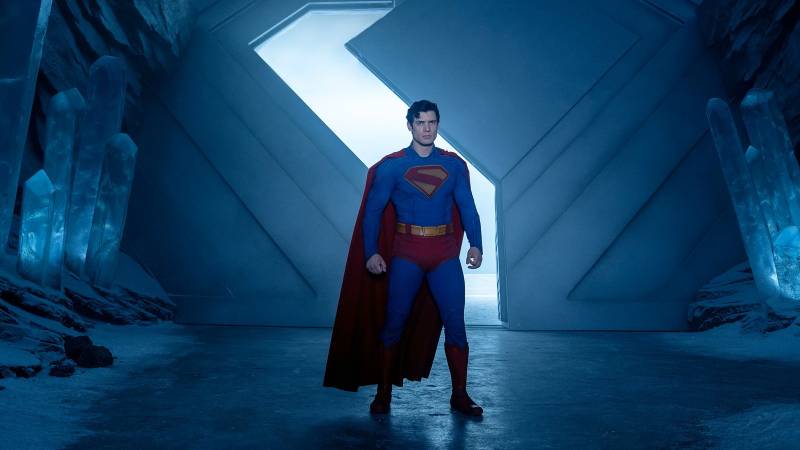
Superman was introduced in 1938. I have fond memories of reading his comic books as a teenager in Karachi and later seeing his films in the US.
Superman: Legacy was released in July. James Gunn took on a tough assignment: make an old-fashioned idea appeal to a modern audience by creating a movie that was “utterly human and also utterly fantastic.” Among the many new elements that he introduced is a very lovable and amazing flying dog.
The movie has much in common with its predecessors. Superman has superhuman skills. Kryptonite impairs those superhuman abilities. He stands for everything that is good and fights against everything that is evil. In other words, he is the embodiment of goodness and should be everyone’s idol. And, yes, he does have a girlfriend: Lois Lane.
Superman, as in prior incarnations, has two identities. That first is that of a newspaper reporter, Clark Kent, who works for The Daily Planet, located in a metropolis which for all intents and purposes is a caricature of New York City. The second identity is that of a superhero, who came to Earth from Krypton, a fictional planet that later exploded as a child and was adopted by a couple living on a farm in Kansas.
But that’s where this movie breaks with the past. It is set in the contemporary world, which is fraught with armed conflicts and wars. The script has strong political undertones, which many would consider are directed at the Military-Industrial Complex in the US. Despite that, it is doing very well at the box office.
Globally, in its first two weeks, it has crossed the $400 million box office mark, of which nearly 60% is from the US. As expected, the latest portrayal of the ultimate comic book hero has attracted millions of young adults. But it has also drawn millions of grown-up adults, including seniors.
Among the reviewers, it has garnered more positive reviews than most movies that are playing these days. It has been covered in publications as diverse as The Economist, The Hollywood Reporter, Rolling Stone and The New York Times.
Among the general public, more than 15,000 have reviewed it on Google and given it an average score of 4 on a scale of 1 to 5. The overwhelming majority gave it a 5. It gets a score of 92% on Rotten Tomatoes.
In the movie, the first hour is devoted to setting the stage for the second hour. The action is slow and downright boring at times. It is not clear where the story is going. The movie introduces far too many characters and the conversations among them seem to lead nowhere, giving the script a schizophrenic feel.
Among the many new elements that is introduced here is a very lovable and amazing flying dog
Then the action picks up and the movie comes into its element, reaching a thunderous climax in the last half hour. Of course, it is not exactly a thriller since the superhero is going to win in the end. The only question is how he will pull off a win against very powerful foes.
Along the way, Superman runs into many obstacles and suffers several setbacks. There is a shocking moment when a secret video is aired on virtually every screen and billboard that portrays him as having been sent down to earth as a Kryptonian conqueror with a single objective: Destroy the earth. He is shocked by the allegation and points to his stellar track record, but his credibility has taken a serious hit.
He is eventually captured, locked up in a notorious prison, and disabled with a dose of Kryptonite. But in the end, against all odds, he prevails.
The action is centred around a conflict between a heavily armed country, Boravia, and a very poorly armed country, Jarhanpur. The former is governed by a ruthless dictator, a genuine tyrant, who has a profound accent. Then comes the surprise.
The tyrant is being aided and abetted in his crimes by an American defence contractor headed by Lex Luthor. That man seems to have a lock on the US government and portrays himself as the biggest patriot in the land of the free. He holds Superman in contempt: “Super... man... he's not a man. He's an it... that's somehow become the focal point of the entire world's conversation. I will not... accept that.”
During the climatic battle, he says: “My envy is a calling. It is the sole hope for humanity, because it is what has driven me to annihilate you.”
According to one critic, “it’s a chilling moment, revealing Lex’s deluded belief that his hatred is actually a form of salvation. Nicholas Hoult plays Luthor with terrifying calm, and this line encapsulates his warped moral logic. It’s not just envy, it’s messianic obsession.”
“The phrase is hauntingly Shakespearean, as Lex elevates his personal grudge into a mission statement. Unlike previous versions who simply wanted control or dominance, this Luthor believes destroying Superman is an act of righteous evolution.”
On the other hand, Superman says this about himself: “I'm as human as anyone. I love, I get scared. I wake up every morning and despite not knowing what to do, I put one foot in front of the other and I try to make the best choices I can. I screw up all the time, but that is being human. And that's my greatest strength.”
Right-wing critics have panned the movie, calling it woke, too pro-immigrants and too pro-refugees, forgetting that Superman was both an immigrant and a refugee. Some have said it lacks a plot, forgetting that it is a cartoon script.
But these critics are in a minority. Most reviews are positive to very positive. In my opinion, it’s a movie worth seeing. It’s not just a movie about superheroes and supervillains. It’s not just a cartoon script in which good invariably triumphs over evil. It is a movie about the dilemmas facing the modern world. What makes it truly special is that at times it takes on a Shakespearean quality.