

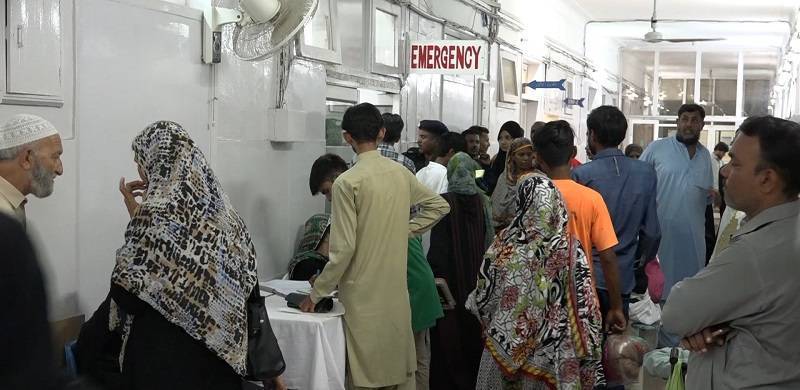
In a country where the state is absent when needed and aggressive when not, it took water cannons on Mall Road to remind us who bears the cost of healthcare reform: not the policymakers, but the medics left gasping for justice.
The first sparks came last year in Quetta. In April 2024, nurses and paramedics marched through the streets, denouncing the Balochistan government’s plan to outsource public hospitals. They called it economic murder. Their demand was simply to prevent the privatisation of 11 hospitals in Balochistan.
By January 2025, the backlash had gone national. In Islamabad, the Young Doctors Association warned of a countrywide shutdown unless Balochistan reversed its privatisation plan and released detained doctors. FIRs were filed. Homes raided. Protesters detained. The state’s instinct was not reform—it was control. In March this year, Lady Health Workers in Narowal brought the protest to the doorstep of Federal Minister Ahsan Iqbal. Many had spent decades delivering vaccines and frontline care in rural Pakistan. Now, they stood outside his residence, demanding they not be discarded in old age. “We gave our youth to this system,” one said.
Then came April. In Lahore, doctors, nurses, and paramedics marched toward the Chief Minister’s Secretariat—only to be met with riot police. Water cannons were fired. Dr. Shoaib Niazi, president of YDA Punjab, collapsed on Mall Road. The police dismissed it as theater. Protesters called it what it was: a state that responds to healthcare demands with force. That same week, the Grand Health Alliance shut down outpatient departments at Jinnah, General, and Children’s Hospitals. Paramedics at Lahore General Hospital locked down wards. Sit-ins continue outside the CM House. Across the province, the frontlines of medicine have become the frontlines of resistance.
Outsourcing won’t fix what governance has neglected. If the state wants trust, it has to show up—not with water cannons, but with leadership
Trump’s return comes with a new economic model: national capitalism. Tariffs have been used to shield domestic industries, as Trump and his aides embark on a mission to end government support to public servants and institutions. University funding is being cut. Green energy subsidies are under threat. Public agencies like the U.S. Postal Service and Fannie Mae are once again being floated for privatisation. It’s a shift that favors market mechanisms over public spending, and rewards protectionism without public provision. Vietnam, among other countries, is following suit, under very different branding. General Secretary To Lam’s “streamlining revolution” has already triggered the dismissal of tens of thousands of civil servants, the merger of provincial governments, and the dissolution of entire ministries. The state is being pared down in the name of efficiency—but with little public debate and even less institutional accountability. Healthcare, education, and administration are being reduced to cost centers.
Pakistan is heading in a similar direction, but not by choice. Under IMF guidance, subsidies are being withdrawn, hospitals are marked for outsourcing, and public sector jobs are being scaled back. Ironically, this shift is being dictated through fiscal policy. Decisions about healthcare are being made in spreadsheets, not in hospitals. And the result is predictable: fewer protections, weaker institutions, and growing unrest from the very professionals expected to hold the system together.
Privatisation would have massive implications for the health sector: jobs will be slashed, and healthcare might become unaffordable. Out-of-pocket expenditure accounts for over 56% of the country's current health expenditure, while less than 3% of individuals have health insurance coverage. In regions like Balochistan and southern Punjab, efforts to implement universal health insurance policies are underway, but comprehensive coverage remains limited. Past outsourcing experiments, such as those involving BHUs, have faced challenges like staff absenteeism and medicine shortages, failing to ensure equitable and quality healthcare. For low-income families, who already bear a significant portion of healthcare costs out-of-pocket, further privatisation without adequate safeguards could exacerbate financial barriers to essential services.
If the goal is to fix public healthcare, the solution is not in outsourcing; it goes beyond that. The Chief Minister’s own visit to Mayo Hospital in March exposed what everyone already knows: poor management, supply gaps, and administrative indifference are what undermine service delivery, not the presence of public-sector doctors. Instead of handing rural health centres to contractors, the government should focus on what it already controls—clean up procurement, enforce attendance, and link promotions to performance. If 766 health centres have already been revamped, the next step is not privatisation—it’s oversight. Real-time dashboards already exist for medicine supply and staff deployment; they just need to be used.
At the rural level, basic citizen oversight committees—once common—should be reactivated to monitor staffing and medicine availability. Teaching hospitals could be linked to rural clinics through telemedicine, without requiring handovers to third parties. New hiring should prioritise mid-level public health workers to relieve pressure on specialists. And district-level health budgets should be tied to data—not guesswork. OPDs need staffing, not speculation. Medicines need budgets, not speeches. And if free drugs worth Rs6.7 billion are being distributed in Punjab alone, then it’s worth asking why patients are still buying syringes at midnight. A public hospital isn’t failing because it’s public—it’s failing because the people tasked with running it are nowhere to be found.
Outsourcing won’t fix what governance has neglected. If the state wants trust, it has to show up—not with water cannons, but with leadership.