

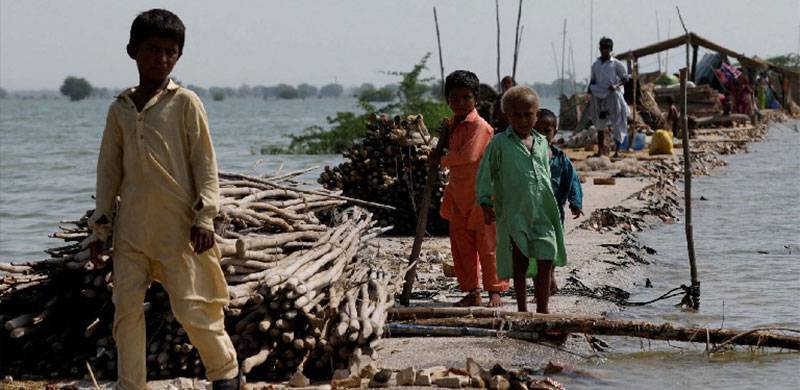
Every Ramazan, like clockwork, the screens fill up. A caregiver clutching a ration bag. A child with swollen eyes. A patient in a hospital bed, tubes attached, staring into the camera with an expression between grief and shame. The nasheed is melancholic. The donation link pulses. Give now. Allah will reward you.
We have been taught to feel moved by these images. We have not been taught to question them. This is not just debauched communications practice. It is a system in which the suffering of the poor is packaged, circulated, and consumed to produce moral comfort for the privileged. The charity campaign becomes the alibi. The suffering face becomes the instrument. The deeper structures that produce inequality remain untouched.
This is not a Pakistani problem. It is a global industry with a global methodology. The term “poverty pornography” was coined over four decades ago. In a 1981 article, Lissner, then director of a Danish voluntary aid agency, condemned the use of images of starving children in fundraising campaigns, calling them “social pornography.”
While Lissner coined the conceptual term in the early 80s, the phrase “poverty porn” gained wider media, social, and political usage in later decades, particularly regarding television shows or social media. It has been debated, studied, and largely ignored in practice.
We know why. Emotionally charged imagery works. It raises more money than facts, but it comes at a cost: research now shows that repeated exposure to such imagery reduces how people perceive the agency and capability of those in poverty. You raise funds, and you simultaneously narrow the humanity of those you claim to help.
Within organisations, this tension is often rationalised: the end justifies the means. The logic looks the same whether the office is in Lahore, London, or Los Angeles.
This is not a story about small, poorly run charities. The largest and most respected humanitarian organisations have relied on the same model for decades: display vulnerability, evoke pity, convert emotion into donations. Policies have evolved. Guidelines on dignity, consent, and representation exist on paper.
But practice is still shaped by incentives that reward distress more reliably than dignity. When change does occur, it is often reactive, prompted by public criticism rather than internal reform. The gap between what organisations say and what they do is where credibility begins to erode.
Decisions about how poverty is represented are made by people who have never experienced it, for audiences who will never experience it, to generate resources controlled by institutions not accountable to those depicted
I have raised the question of informed consent many times in power rooms. What does consent mean when a family depends on the organisation asking permission? When there is a language barrier, a power imbalance, and no meaningful ability to refuse?
Consider an entirely plausible scenario. A 10-year-old from a low-income settlement attends a donor-funded “model” school, brightly painted, carefully branded, designed to signal success. One day, a media team arrives. The child is prompted to describe life before school. Hesitant, they repeat what they believe is expected: “We were very poor… this school saved us.”
Months later, their faces circulate in a Ramazan campaign. Their story travels across cities they will never see. Their parents do not know. Their identity has been fixed publicly: the rescued child.
Now place that child next to a student in an elite private school in the same city—air-conditioned classrooms, debating societies, international curricula. Ask a simple question: why is the solution to poverty separate systems for the poor, rather than access to the systems the privileged already have?
The answer reveals the architecture. Inclusion is not the goal. Management is. What does it do to a person to be repeatedly presented as an object of pity? To have their most vulnerable moment turned into a permanent, circulating image?
Chronic exposure of this kind is not neutral. Being publicly fixed as an object of pity reshapes how a person is seen—and how they begin to see themselves. Shame is not a side effect; it is built into the transaction. Its psychological cost is carried entirely by those with the least power. Poverty is not only material. It is also psychological. Yet these effects remain largely unexamined in the systems that profit from such representations.
At its core, this is a governance problem. Decisions about how poverty is represented are made by people who have never experienced it, for audiences who will never experience it, to generate resources controlled by institutions not accountable to those depicted. Boards are dominated by the wealthy.
This is often defended as practical—networks and capital matter—but it produces a clear imbalance: organisations answer upward to donors, not downward to communities. The people whose faces appear in campaigns are not collaborators or authors. They are the material.
During Ramazan, this model intensifies. The instinct to give, sincere and generous, is combined with imagery designed to maximise emotional response. This is not a critique of faith. It is a critique of how faith is operationalised.
Spiritual obligation is fused with marketing technique in ways that discourage scrutiny. The instinct to give deserves better than to be engineered through distress. There are examples, including within Pakistan, that point to another way. Organisations that build trust without spectacle.
That centre accountability in their own conduct rather than in the suffering of others. That communicates impact without manufacturing despair. They are less visible, less dramatic, and often less well-funded—but they demonstrate that dignity and effectiveness are not mutually exclusive.
Even strategically, the current model is weakening. Constant exposure to extreme suffering without visible progress produces donor fatigue. Younger audiences increasingly demand transparency, agency, and evidence of change. A system that rests on the continual visibility of suffering sits uneasily with reducing it.
That contradiction is becoming harder to sustain. Next time you see a child’s face in a fundraising campaign, ask: Would the people approving this image accept the same representation for their own children? If the answer is no, then the ethical line is already clear.
The remaining question is whether organisations are willing to act—to change how they raise money, who they are accountable to, and how they define dignity—or whether they will continue to rely on a model that extracts value from the visibility of suffering. Because whatever else this system achieves, it does not produce justice, and it does not need to continue.
PS: I revisited this piece after writing it and realised it likely narrows my chances of ever being comfortably employed within this sector. The harder question is why this subject provokes such insistence.
We live in a country where millions of children remain out of school, and many work in conditions ranging from exploitative to outright dangerous—in mines, workshops, and roadside labour. They are visible, structural, and sustained. Yet those with legislative power, however they arrived there, carry on undisturbed.
Civil society organisations engage them with care. The media often remains respectful. Perhaps that is precisely why this subject demands discomfort. It sits at the intersection of what we are willing to see and what we are willing to question.
It exposes a system in which representation is easier to fix than reality and far more acceptable to those who benefit from the status quo. If this piece feels excessive, it is worth asking what, exactly, we have become comfortable ignoring.