

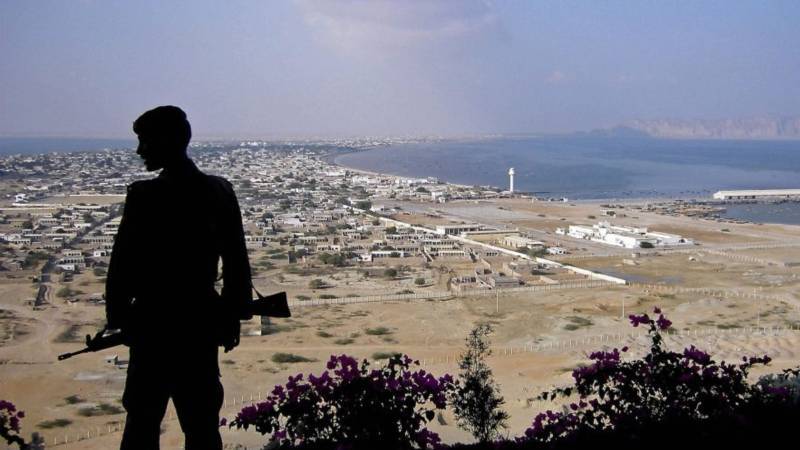
During the current month of November 2025, a significant deterioration has been observed in the law-and-order situation in Balochistan. As a result, due to security concerns, the communication system has been completely shut down for the past ten days in the provincial capital as well as several other districts, causing serious inconvenience to the public.
During the same period, a series of attacks on security forces began in different districts in early November. For example, on 7 November, a check post in the Sami Kalag area of Turbat came under fire. A few days later, on 13 November, an explosion occurred at a check post in Panjgur, which a Baloch separatist organisation claimed responsibility for. On the same day, later in the afternoon, armed men took control of a police station in Kachhi, held personnel hostage, and fled with government weapons.
Furthermore, on 16 November, an explosion took place on a bridge near a check post in Mand, Turbat, though no casualties were reported. Continuing this trend, on 17 November, a major gas pipeline was blown up in Rojhan, temporarily suspending the gas supply to Punjab.
Meanwhile, a separatist organisation claimed responsibility for several attacks carried out between 7 and 14 November in Panjgur, Gwadar, and Kech, including attacks involving automatic weapons and damage to surveillance systems. However, these claims remain unverified, and security officials have yet to release any detailed statement. In addition, the convoy of an SSP in the Kachhi area came under attack near Sani and Bhag, where motorcycle-borne assailants opened fire. The exchange of fire continued for almost half an hour; fortunately, no police personnel were injured, and the attackers managed to escape.
In light of the worsening situation, the provincial government imposed several strict restrictions. Mobile internet services were suspended from 10 to 16 November across 36 districts, including Quetta, Gwadar, Chaman, Khuzdar, Turbat, Kalat, Lasbela, Mastung, Naseerabad, Sibi, Zhob, Harnai, Panjgur, and Kech. Additionally, inter-district transport was halted from 12 to 14 November, while banks in the Nall tehsil of Khuzdar were ordered to close due to credible intelligence reports. A high alert was also issued in Dera Bugti over fears of possible coordinated militant operations.
Although there was an increase in incidents during this period, the overall damage remained limited. Most attacks were small in scale and did not result in major casualties. Authorities believe that preventive measures such as communication restrictions, transport suspensions, and security alerts played a key role in keeping the situation under control.
However, the provincial government’s measures have faced strong criticism. Citizens argue that such restrictions create severe hardships, especially in an underdeveloped province like Balochistan, where many districts rely on larger provinces or Karachi for education and health services. Transport shutdowns have made inter-city travel difficult, while internet suspensions have disrupted online businesses, causing distress among the public.
Consequently, although tensions rose and several localised incidents occurred during this period, the province overall remained safe from large-scale damage.