

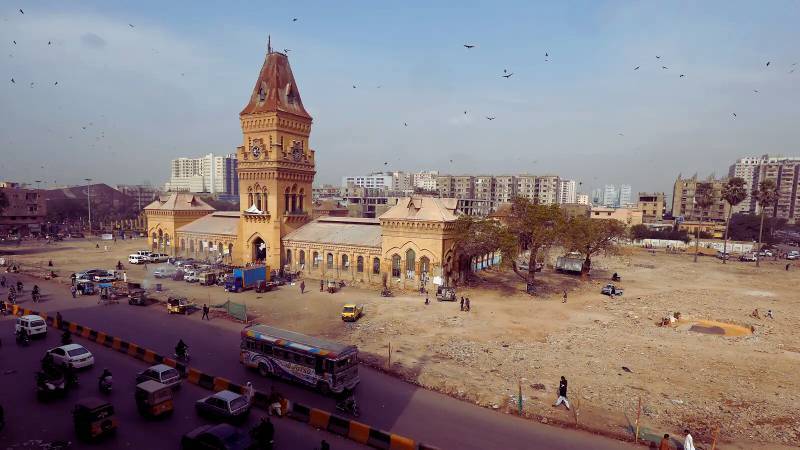
Karachi, a city of over 20 million people, has faced numerous challenges over the years — political instability, economic struggles, natural disasters, and security threats. Each of these hurdles could have been enough to slow its progress. Yet, Karachi has always found a way to recover and move forward. Its resilience stems from the unyielding spirit of its people, who refuse to back down in the face of adversity. Time and again, the city has shown that it cannot be held back for long. With its vibrant energy, a strong business culture, and diverse communities, Karachi continues to adapt, rebuild, and progress toward a brighter future.
One of the most remarkable aspects of Karachi is the way its people come together during difficult times. The city is home to millions from different backgrounds, cultures, and communities. Despite these differences, Karachiites unite when faced with challenges, displaying a deep sense of solidarity. For example, after the devastating 2010 floods in Pakistan, Karachi residents were quick to lend a hand. Volunteers and local organisations immediately began distributing food, providing shelter, and offering support to those displaced by the floods. The city’s businesses, from large corporations to street vendors, adapted quickly to ensure the local economy kept running during a time of crisis. Life may slow down temporarily, but it always resumes stronger than before.
Karachi’s economic significance also plays a major role in its recovery. Despite facing economic challenges like inflation and unemployment, the businesses in the city continue to thrive. The informal sector, consisting of street vendors, daily wage workers, and small enterprises, has been essential in keeping the city's economy moving, particularly during the times of crisis. During the COVID-19 pandemic, many businesses rapidly shifted to online platforms to continue operating, while local organisations stepped up to support the most vulnerable members of society.
The collective efforts of Karachi's residents show a remarkable capacity for recovery, reflecting their determination to keep the city moving forward
In addition to its economic resilience, the city's ability to rebuild infrastructure after natural disasters or urban challenges is remarkable. Karachi’s infrastructure has been under strain due to poor drainage systems, rapid urbanisation, and seasonal rains causing frequent flooding. In 2020, heavy rains devastated parts of the city, leading to widespread flooding that impacted millions. However, government agencies, private companies, and local communities came together to repair roads, restore power, and clear debris. While progress may be slow, the collective efforts of Karachi's residents show a remarkable capacity for recovery, reflecting their determination to keep the city moving forward.
Security challenges have also plagued Karachi, with periods of violence and unrest that affected daily life and economic activity. In the past, Karachi was seen as one of the most dangerous cities in the world, with incidents of terrorism, gang violence, and political instability. Yet, through improvements in law enforcement, better security measures, and stronger community involvement, Karachi has made significant strides in restoring stability. For instance, the launch of targeted operations by law enforcement agencies in the mid-2010s helped reduce crime rates significantly, leading to a safer and more secure environment for both residents and businesses.
Karachi's resilience goes beyond enduring hardships; it is also about innovation and adaptation. The city's people have an incredible ability to find solutions, no matter how tough the situation. During the COVID-19 lockdowns, tech startups and entrepreneurs quickly pivoted to meet the demands of a changing market, with digital solutions for e-commerce, healthcare, and education. The city's universities and research institutions also continue to produce talented individuals working on solutions to urban challenges, from traffic congestion to waste management. For example, several Karachi-based startups have developed innovative solutions to address Karachi's traffic woes, such as apps for ridesharing and carpooling that ease congestion.
Education and technology are essential components of Karachi’s growth. The city boasts some of Pakistan’s top universities, such as the University of Karachi and NED University of Engineering & Technology, which continue to produce highly skilled professionals. Young entrepreneurs and social enterprises are contributing significantly to the city’s development. They are working tirelessly to tackle pressing issues, such as waste management, pollution, and transportation inefficiencies, with the hope that Karachi can continue to evolve and improve.
Karachi remains a city of hope and opportunity, one that continuously rises above its challenges. Whether it’s facing economic difficulties, recovering from natural disasters, or overcoming security threats, Karachi has shown time and again that no hardship is too great to overcome. The strength of Karachi lies in its people, whose resilience, hard work, and unwavering belief in a better future fuel the city's continuous growth. Karachi is not just a city; it is a living testament to perseverance, showing that no matter how difficult the circumstances, the spirit of its people will always lead the way forward.