

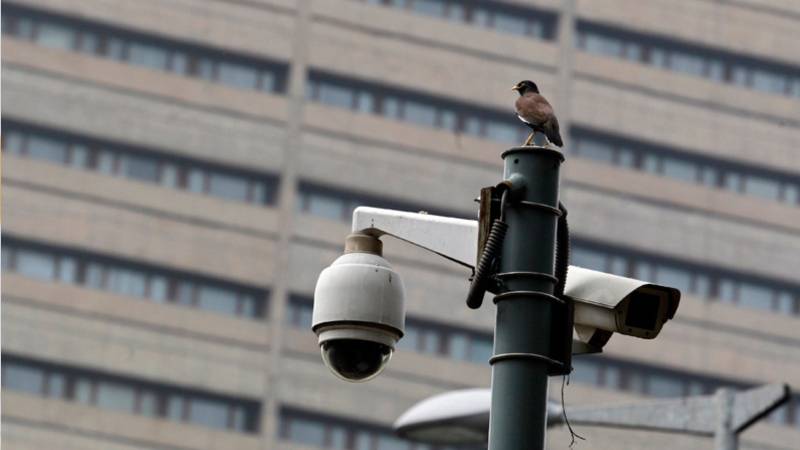
A few days ago, Amnesty International released a report on the Pakistani state’s mass surveillance mechanism. The fact that we are under surveillance comes as no surprise to the public. The Pakistani citizen has long been making light of the constant surveillance they are subject to. Two is a party, three is a crowd, and phone calls in Pakistan tend to get crowded.
However, as Amnesty notes, the extent and depth of surveillance is something people are not aware of. As per the Amnesty report, the state has been employing foreign technology like the Web Monitoring System 2.0 (WMS) and Lawful Intercept Management System (LIMS) to censor online content and intercept and surveil digital activity.
Our legal frameworks, instead of restricting such intrusion by the state, have facilitated the violation of the citizen’s right to privacy, which is inextricably linked to the freedom of speech/expression.
Last year, a notification was passed by the federal government, which allowed for the tapping and interception of calls under the guise of national security under section 54 of the Pakistan Telecommunication (Re-organisation) Act, 1996.
Additionally, the Pakistan Electronic Crimes Act, 2016 and its later 2025 amendments paved the way for not only censorship of online content but also monitoring of online activity. Both traditional surveillance and digital surveillance work in tandem to violate the private sphere and enable the constriction of spaces which allow for dissent.
The Amnesty report is correct in noting that such surveillance results in self-censorship and has a chilling effect on speech. Citizens are unwilling to voice opinions that do not fall in line with official narratives.
Apart from freedom of speech concerns, in a surveillance state where calls are being intercepted and internet activity is being tracked, the right to privacy is also under threat. But what does privacy mean when data is being mined and monitored by the state, and surveillance justified on the premise of national security and anti-terrorism?
We see the weakening of checks and balances in the Amnesty report, which notes that the government is bypassing accountability and has not provided clarity regarding the sources of funding for the upgrading of the national firewall
Depending on where you stand politically and ideologically, the restriction on privacy could be reasonable or unreasonable, proportional or disproportional, and necessary or unnecessary.
The obvious argument in favour of such monitoring is that rights can be reasonably restricted where necessary and when the restriction is proportional. After all, if the security of the state is threatened and public safety compromised, individuals may need to be monitored to ensure the stability and safety of the public at large.
In a changing national security landscape, some may argue that to effectively counter both internal and external threats, such surveillance is required. The greater good trumps individual freedoms. However, when does this insidious eroding of core individual freedoms – like the right to privacy – end up compromising the ‘greater good’?
The formation of the nation-state solidified the idea of a social contract between the individual and the state. Citizens pledged allegiance to the state, and in return, their security was ensured.
However, to protect the individual and, in turn, the collective against the excesses of those in power, individual freedoms were secured. Therefore, modern constitutional guarantees and political freedoms are restrictions on the state to protect citizens from the state itself.
When such guarantees and freedoms are restricted consistently and in expansive terms, more power is given to an already powerful government. Mass surveillance and censorship mean fewer checks and lower accountability thresholds for an invasive government.
We see the weakening of checks and balances in the Amnesty report, which notes that the government is bypassing accountability and has not provided clarity regarding the sources of funding for the upgrading of the national firewall.
At the very least, our legal frameworks ought to constrain the state in its censorship and surveillance by inserting not only warrant requirements, but also requiring that data collection, tracking and monitoring should be in extremely limited circumstances, and by ensuring that the data collected is then also protected.
In the absence of data protection legislation in the country, the privacy of individuals is at an even greater risk.
Our judiciary needs to also ensure that the interpretation of such restrictions on fundamental rights is narrow, now more than ever. In a world where data mining and surveillance are profitable for corporations and governments are exercising Orwellian control over their citizens, the judiciary needs to protect the rights of citizens instead of insulating the state.
National security and public safety cannot be used as a catch-all for the monitoring of a mass majority of citizens. Any caveats to the right to privacy and freedom of expression need to be phrased with clarity, narrowly construed and linked to an imminent harm in terms of security, order or safety, instead of being premised on a loose possibility or likelihood of such harm.
The danger lies not in the state being restricted but in the wide limitation on freedoms such as privacy and speech.
Freedom of speech and privacy together are a cornerstone of democracy; without the freedom to think and express in private, there can be no free speech. A dilution of political freedoms and constitutional guarantees stunts not only individual progress and thought but also collective good and development.