

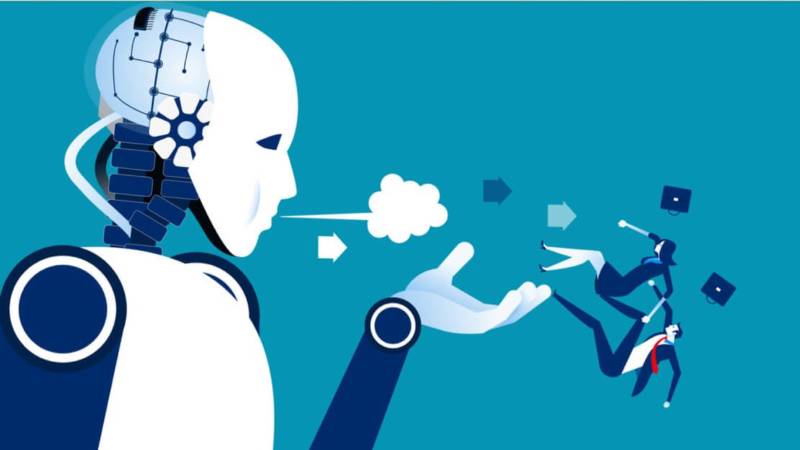
Last week, I read an op-ed that sounded uncannily familiar, not due to the argument it presented, but because I’d seen the same sentence structure in five different places, including a LinkedIn post, a student essay, and an AI-generated bedtime story. It appears that the imitation game isn’t coincidental. A 2024 survey found that 43% of college students have used ChatGPT for schoolwork, and more than half of those did so for essays. This clearly tells us that we’re not in a war with artificial intelligence.
We’re in a joint venture. A handshake between our fatigue and its mimicry of effort. The robots aren’t stealing our jobs (or maybe they are), but one thing is for sure: the robots are here to ensure we never have to try in the first place. And frankly, we seem just fine with that, as long as it means outsourcing one more tired paragraph to the algorithmic abyss.
For a species that once invented language, we’ve now determined that it's just too much work to use it ourselves. In 2025, it’s completely possible to hold a conversation, send a breakup text, caption your holiday snaps, and write a hysterical apology, all without thinking. Just prompt the machine, tweak a comma, and voilà: expression delivered. This isn't artificial intelligence, it's factory-grade mediocrity packaged in a slick interface. And now these bots are even playing in creatively rich fields like art.
Let's look at last month's viral wave of "Ghiblification". ChatGPT's new image tool is filling X, Instagram, TikTok and memes with Studio Ghibli-inspired visuals. Think well-placed pastel scenery, mesmerising doe-eyed characters, and magical wistfulness all created in seconds. But here's the thing: Hayao Miyazaki, co-founder of Studio Ghibli, himself has publicly disavowed AI animation, calling it "an insult to life itself," so horrified that he once said the zombie-like demo depicted "no idea what pain is whatsoever".
The robots are not here to take away our greatness but to improve our mediocrity, and we invited them in, prompt by prompt
Artists are well within their rights to be upset. Designer Seema Kohli called the trend "deeply disrespectful… an intrusion, a violation of creative ownership". Studio Ghibli diplomatically declined to cash in on the trend. They kept quiet when approached for official approval, and OpenAI quietly shut down the access. But the harm was already done; a generation now believes dreaming is overrated, as long as a bot can dream in their place.
AI can create something that appears quaint. But it does not have the soul sewn into each Ghibli frame. It’s devoid of the sweat, toil, and human pulse. Doing so, we are certainly not applauding the genius of creators who spent decades perfecting the Ghibli art; rather, we are promoting a fake feeling. And we're devouring it because why fight creativity when a robot can serve it up on a silver plate?
There was a time when mediocrity had a face. You could recognise a last-minute paper by its strained metaphors and rushed thesis statements. The grammar was off, the arguments confused, and yet, somewhere between the overuse of "therefore" and the distorted transitions, you could still catch a whiff of sweat and soul. It was human.
Now? The new mediocrity doesn't even pretend to try. It glides. It's polished, tidy, and strangely untraceable. Professors now report reading essays that "flow well" but say nothing about it. One of them called it "synthetic fluency". They are referring to that creepy smoothness of a student who suddenly churns out prose like a mid-list content writer from Denver. Because that's all ChatGPT does, it doesn't write poorly; it writes like LinkedIn talks to itself after three cups of coffee. Wordy, sincere, and utterly empty.
But let's not pretend we were crafting masterpieces before. What's terrifying is that AI is not replacing our genius. It's replacing our bare minimum. It's replacing the 2 a.m. existential cram session, the "I'll just wing it" attitude, the B-minus that was a victory. And in doing so, it's erasing the weird, flawed grain of human effort.
Perhaps we never were afraid of AI because it would be better than us. Perhaps we were afraid of it because it would show us how much lower the bar was. That we were never reaching for greatness. Just hoping not to get caught slacking off. And now we've created machines that capture that aspiration beautifully. We, humans, once boasted that the pen was mightier than the sword. Now the expression has evolved into: the prompt is mightier than the thought. Creativity is a convenience. Language is templated. And our mediocrity, which was once gained through good-old-fashioned laziness, is now auto-written with no guilt.
So no, I am not afraid of the robots writing symphonies or repairing global warming. I am afraid they'll just do what we're instructing them to:
Write like us. Think like us. Perform like us.
And in the process, we won't even realise that the worst of us is just upgraded for life. The robots are not here to take away our greatness but to improve our mediocrity, and we invited them in, prompt by prompt.