

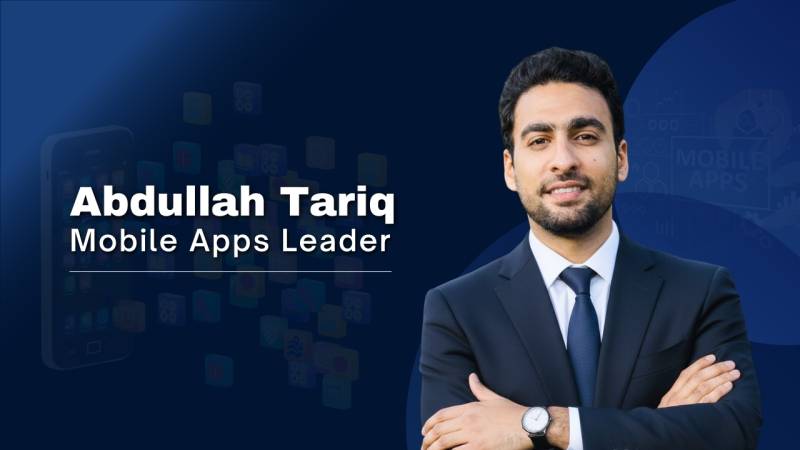
In consumer finance, mobile products tend to grow faster than the systems underneath them. New features arrive on weekly cycles, compliance requirements evolve, and customers expect payments and cards to work without friction—yet many apps still carry the accumulated weight of earlier design decisions. In Dubai, Abdullah Tariq operates at this intersection as a Senior Software Engineer – Mobile at Tamara Technologies, where his work has included leading mobile migrations and architectural alignment across teams to improve scalability and consistency.
For Abdullah Tariq, the work centres on migrations and the quieter engineering discipline that makes them sustainable: shared patterns, clear interfaces, and habits that keep releases predictable. In cross-team initiatives, he is often relied on as a practical decision point when trade-offs must be made between delivery speed, stability, and user experience. “If you don’t agree on the shape of the system, every feature becomes an argument,” he says.
His career began in Pakistan with hands-on iOS development, starting at DSME Global Links in Lahore. That early period kept him close to fundamentals—UI optimisation, auto layouts, and the everyday discipline of fixing bugs while keeping the product moving. It was also where he worked with common architectural patterns such as MVC and MVVM, building an instinct for what tends to break first as an app grows.
After completing a Bachelor’s degree in Computer Science from the National University of Computer and Emerging Sciences (FAST-NUCES), Abdullah Tariq joined Rolustech and spent several years as a senior engineer across multiple iOS applications. The work included refactoring legacy code toward more standardised practices and improving maintainability for teams working under delivery pressure. Over time, he developed a preference for pragmatic architecture: structures that reduce risk during change, support clean handoffs, and keep delivery predictable as codebases and squads expand.
A later role at Byte Technology Systems broadened his responsibilities into mobile product ownership and cross-functional delivery. Working with product, growth, customer experience and backend engineering teams, he helped manage engineering flows from requirements through release, while staying accountable for quality in the iOS application. The experience reinforced a simple reality of scaling: once multiple functions are moving at once, clarity becomes as important as code.
In late 2022, Tariq moved to Dubai and took on senior iOS responsibilities at Ziro Information Technology, where he served as an iOS team lead on a mobile product. The role emphasised end-to-end execution—design, development, debugging and deployment—and demanded a steady cadence of progress updates and stakeholder alignment. It also highlighted the value of clear ownership, particularly when a product is still defining its rhythm.
At Tamara, Abdullah Tariq has worked on large-scale migration efforts from native iOS to Flutter while guiding engineers through architectural changes and complex releases. According to his CV, he has been involved in modularising an iOS codebase into more than 30 modules, applying clean architecture approaches and reactive programming patterns including ReactorKit and RxSwift. His remit has also touched payments and card-related integrations, alongside quality practices such as CI/CD pipelines, unit test cases, code reviews, and pair programming, while coordinating with product, growth, customer experience and backend teams to deliver features end-to-end.
What aligns closely with Tariq’s “Mobile Apps Leader” label is an emphasis on alignment before speed: bringing engineers to shared patterns early, so decisions do not fragment across squads. In practical terms, that can mean documenting trade-offs, agreeing coding standards, and helping teams anticipate the downstream impact of a seemingly small change. “The goal isn’t to write clever code,” he says. “It’s to make the next release less risky than the last one.”
Outside day-to-day delivery, Abdullah Tariq keeps close to the broader engineering community through memberships such as ACM and IEEE and continues structured learning through short programmes and certifications. His listed writing topics orbit mobile performance testing, quality assurance, and modular architecture—subjects that reflect an industry shift toward resilient platforms that can evolve without constant rewrites. For Abdullah Tariq, the long-term aim of mobile engineering is straightforward: build systems that keep up with growth without losing stability.