

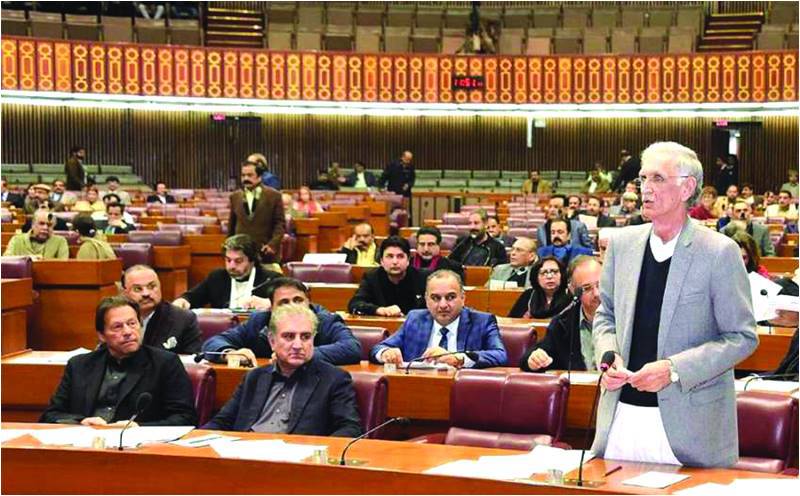
January 7 will be remembered as a day of embarrassment for the national parliament and the country. It was on this day that the Parliament signed on the dotted line adopting a legislation that was widely believed to have been handed down to it by the de facto rulers of the country. There was no discussion, no debate and no questions asked. No one was allowed to speak for or against the bill. A far reaching legislation was passed in just 10 minutes by the Parliament. Seldom before has the capitulation of the Parliament, indeed of political parties, been so swift and so complete.
What is the fallout of this surrender?
First, it left the judiciary lonely and without the crucial support of the Parliament in the wake of two remarkable judgments in quick succession. The judiciary took a giant leap forward to shed past baggage by convicting former military dictator General Pervez Musharraf of high treason. The treason verdict has since been set aside by another high court, but its controversial overturning should be seen merely as a pause in the process. It will be hard to wash out the original verdict completely. Echoes of paragraph 66 of the Special Court verdict giving voice to the collective anger of the people against bonapartic interventions will be heard until eternity. The Parliament should have at least commended the verdict, but it chose to keep quiet, leaving the judiciary alone to fend for itself.
The judiciary also took another giant leap in the extension case by asking the government to revert to the Parliament and make appropriate legislation. The verdict gave a historic opportunity to the much-reviled and maligned Parliament to assert itself against de facto rulers. Those who were used to trampling the constitution and disbanding the Parliament were now obliged to seek redress from the same Parliament. What else the Parliament could ask for?
The least the Parliament should have done was to debate the pros and cons of the legislation, examine whether it was in accordance with the parameters of the Supreme Court’s verdict and to make some necessary changes in the draft law handed down to it. No one asked or expected the Parliament to out rightly say no to legislation and force the exit of General Bajwa. The expectation was that the Parliament will at least debate, discuss and make some necessary changes in the legislation. Unfortunately, the Parliament not only squandered the opportunity to assert itself to make the army truly subservient to the prime minister and the parliament, it even failed the judiciary that again was left alone.
There was no discussion on the impact of the extension legislation on efficiency of the institution itself. Will it not demoralise senior general staff officers and consequently everyone in the chain of command waiting in line to move up along the ladder? Will this enhance or undermine professionalism? Past record shows that winners of the coveted sword of honour and other top positions in training academies generally end up as army chief or top commanders one day, resulting in the creation of what is called expectancy among officers. The Parliament failed to take into account the harmful fallout of upending many careers in the general staff. No thought was given to the huge embarrassment caused to all institutions in the event of judicial challenge to the legislation
The judges who delivered these verdicts empowering the Parliament took great risks. They needed the supported of the Parliament, not to be abandoned by it. By leaving the judiciary alone at this critical moment, the Parliament has only undermined itself and the democratic project. It will be long before it can come out of the loss it has suffered.
Second, in all likelihood, from now on almost every army chief will serve two terms totalling six years. It means that the chief will deal with at least two, and possibly three, civilian governments. Given the vulnerabilities of every new civilian government and the benefit of institutional memory available to an army chief, the codification will further tilt the balance of power in favour of the army. The usurpation of more and more of political and economic power by the army will speed up, instead of slowing down.
Third, the military as an institution has also not gained anything. History will tell whether the legislation benefited or harmed it. There are reasons to believe that it may have lost. Placing an individual above the institution is undoubtedly not in the interest of the institution. An individual and a few of his supporters in the institution may have won this round, but it might turn out be a pyrrhic victory. And who knows; the extension may kick off a new round of political games. If that happens, it will certainly not strengthen the institution. The perception that the adoption of legislation without application of mind was forced upon political parties also does no service either to the Parliament or to the institution of the army.
In every crisis there also is an opportunity. Hopefully, the Parliament and political parties will live to fight another day. The deep resentment among workers of the democratic political parties might force a rethink for initiating internal reforms in the parties and for developing a mechanism for structured decision making through forums like the central executive committees or party’s central councils. The resentment generated by the crisis has opened the possibility for reforms and rethink within parties particularly with regards to the manner and mode of decision making on critical issues. It might be a dream but everyone has a right to dream.
The writer is a former senator
What is the fallout of this surrender?
First, it left the judiciary lonely and without the crucial support of the Parliament in the wake of two remarkable judgments in quick succession. The judiciary took a giant leap forward to shed past baggage by convicting former military dictator General Pervez Musharraf of high treason. The treason verdict has since been set aside by another high court, but its controversial overturning should be seen merely as a pause in the process. It will be hard to wash out the original verdict completely. Echoes of paragraph 66 of the Special Court verdict giving voice to the collective anger of the people against bonapartic interventions will be heard until eternity. The Parliament should have at least commended the verdict, but it chose to keep quiet, leaving the judiciary alone to fend for itself.
The judiciary also took another giant leap in the extension case by asking the government to revert to the Parliament and make appropriate legislation. The verdict gave a historic opportunity to the much-reviled and maligned Parliament to assert itself against de facto rulers. Those who were used to trampling the constitution and disbanding the Parliament were now obliged to seek redress from the same Parliament. What else the Parliament could ask for?
The least the Parliament should have done was to debate the pros and cons of the legislation, examine whether it was in accordance with the parameters of the Supreme Court’s verdict and to make some necessary changes in the draft law handed down to it. No one asked or expected the Parliament to out rightly say no to legislation and force the exit of General Bajwa. The expectation was that the Parliament will at least debate, discuss and make some necessary changes in the legislation. Unfortunately, the Parliament not only squandered the opportunity to assert itself to make the army truly subservient to the prime minister and the parliament, it even failed the judiciary that again was left alone.
There was no discussion on the impact of the extension legislation on efficiency of the institution itself. Will it not demoralise senior general staff officers and consequently everyone in the chain of command waiting in line to move up along the ladder? Will this enhance or undermine professionalism? Past record shows that winners of the coveted sword of honour and other top positions in training academies generally end up as army chief or top commanders one day, resulting in the creation of what is called expectancy among officers. The Parliament failed to take into account the harmful fallout of upending many careers in the general staff. No thought was given to the huge embarrassment caused to all institutions in the event of judicial challenge to the legislation
The judges who delivered these verdicts empowering the Parliament took great risks. They needed the supported of the Parliament, not to be abandoned by it. By leaving the judiciary alone at this critical moment, the Parliament has only undermined itself and the democratic project. It will be long before it can come out of the loss it has suffered.
Second, in all likelihood, from now on almost every army chief will serve two terms totalling six years. It means that the chief will deal with at least two, and possibly three, civilian governments. Given the vulnerabilities of every new civilian government and the benefit of institutional memory available to an army chief, the codification will further tilt the balance of power in favour of the army. The usurpation of more and more of political and economic power by the army will speed up, instead of slowing down.
Third, the military as an institution has also not gained anything. History will tell whether the legislation benefited or harmed it. There are reasons to believe that it may have lost. Placing an individual above the institution is undoubtedly not in the interest of the institution. An individual and a few of his supporters in the institution may have won this round, but it might turn out be a pyrrhic victory. And who knows; the extension may kick off a new round of political games. If that happens, it will certainly not strengthen the institution. The perception that the adoption of legislation without application of mind was forced upon political parties also does no service either to the Parliament or to the institution of the army.
In every crisis there also is an opportunity. Hopefully, the Parliament and political parties will live to fight another day. The deep resentment among workers of the democratic political parties might force a rethink for initiating internal reforms in the parties and for developing a mechanism for structured decision making through forums like the central executive committees or party’s central councils. The resentment generated by the crisis has opened the possibility for reforms and rethink within parties particularly with regards to the manner and mode of decision making on critical issues. It might be a dream but everyone has a right to dream.
The writer is a former senator