

In the cold weather of Kitty Hawk, North Carolina, a contraption took to the air on 17th December, 1903. Not even the Wright Brothers could have imagined the leapfrogs this technology was destined to make in the coming years. In 1911, aircraft were used in a military role for the first time by Italians in Libya, albeit in a reconnaissance role. The First World War broke out just after, and saw a new aerial combat force instead of this rudimentary role only. From tactical bombing to using machine-gun synchronisation for air fights, the new breed of knights was born with a firm code of chivalry. From celebrity aces like Albert Ball and Billy Bishop to aristocratic Manfred von Richthofen, or more famously known as The Red Baron, the aura and romance surrounding these air warriors was majestic. Even outside Europe, the top American racecar driver, Eddie Rickenbacker, became ace of aces and a Medal of Honour recipient.
The Great War had glamourised air war, and the exploits of civilian aviation pioneers further enhanced this public perception. A succession of extraordinary and record-breaking aviation achievements seized world attention. Charles Lindbergh and Amy Johnson were greeted by cheering crowds of thousands everywhere. In this backdrop, the scuffle between airpower sceptics and enthusiasts was gaining traction. Enter Douhet, Mitchell and Trenchard, the airpower proponents and advocates who faced huge backlash for their theories, with two of them being court-martialled by the military. However, one must concede the point that the primitive aero-technology of that time was a big factor in making people doubtful regarding the future of air arms as separate air forces.
The induction of highly expensive aircraft and air-defence missile systems, Rafale and S-400, respectively, may allow you to make some people happy and win elections, but winning wars is a far more complicated matter
With the new advances in aircraft design and engine power, the doctrine of gaining air superiority and destroying an enemy through devastating bombing raids became a core strategy in the Second World War. To summarise the next few decades, one can see the dogfight manoeuvring in conflicts like those in Korea and Vietnam changing from guns as primary weapons to air-to-air infrared guided, and subsequently radar guided, missiles. The era of beyond visual range engagements had begun because the phrase ‘lose sight, lose fight’ was not true anymore with new sensors like onboard fire control radars. The Indo-Pak and Arab-Israel wars showed the importance of tactical airpower vis-à-vis its strategic employment by great powers like the USA and the Soviet Union. Air operations played the key role in the destruction of the Iraqi military and the liberation of Kuwait in the 1991 Gulf War.
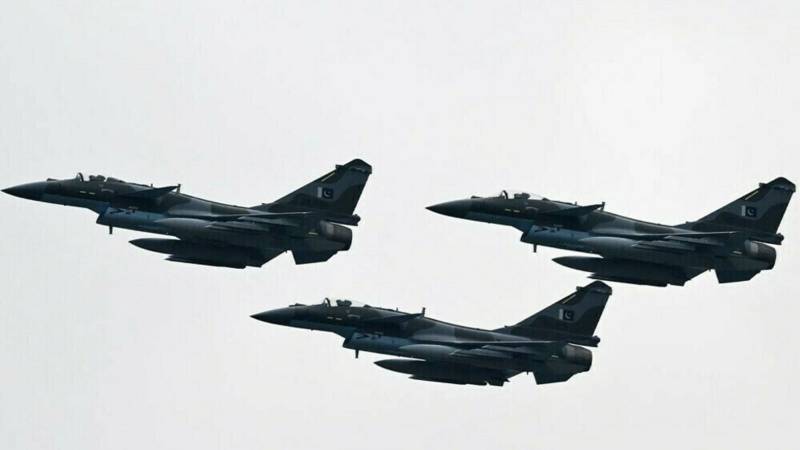
The recent convergence of airpower and geopolitics is clear to everyone after the use of fighter jets by Israel against Iran/Syria/Lebanon, Thailand, in Cambodia and the Indo-Pak aerial standoffs. With its speed and reach, combat aircraft can achieve military or political objectives far more swiftly than other arms. One must appreciate the mastery of PAF in successfully deterring a much larger adversary. The character of war has changed, and modern weapons or platforms are just one node in a large mesh of an integrated network of domains like space, cyber, air, land, sea, electronic warfare, AI, etc. The change in doctrine from platform-centric to systems-based is the real feather in the cap for PAF and a blunder for the IAF because even the best platform is just a single unit at the end of the day. Without sensor fusion and real-time data, the situational awareness of operators will be incomplete or delayed, a fatal weakness in modern multi-domain operations.
The induction of highly expensive aircraft and air-defence missile systems, Rafale and S-400, respectively, may allow you to make some people happy and win elections, but winning wars is a far more complicated matter. If you have not invested your time and money in boring projects like improving network-centric warfare capabilities, which cannot be paraded around for crowd pleasing, the modern battlefield will see the result of 6-nil against your so-called game-changing wonder weapons. The professionalism and better training are also important factors, but the vision of our top brass was the key factor in keeping our flag high in those 4 days of May 2025.