

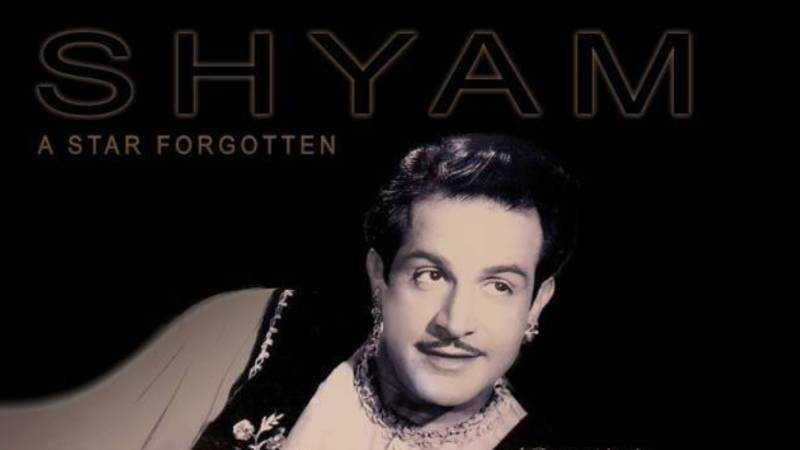
Some stars fade quietly. Others leave a glow that never dims. Shyam was one of the latter. Born in Sialkot in 1920 and raised in Rawalpindi, Shyam studied at the iconic Gordon College, a place that shaped more than just academic minds. There, in the red-brick corridors and buzzing student societies, his love for acting was born. Gordon College wasn’t just a college; it was a cultural powerhouse. Debating societies like The Bar and Minerva, poetry readings, sports, and especially theatre created an atmosphere that inspired bold dreams. Shyam found his passion on the stage despite his father's resistance to a life in film.
After graduating from Gordon College, he explored journalism and formed a close bond with Urdu literary icon Saadat Hasan Manto, driven by a shared love for books and language. However, the film industry still called to him. He relocated to Bombay. His first audition failed, but G. K. Nanda saw his potential and employed him as an assistant. His first big break came in Lahore with the Punjabi film Gawandi (1942), a hit that allowed him to go back to Bombay, now as an emerging star.
What followed was a remarkable run. Shyam starred in Bazaar, Patanga, Dil Lagi, Aaj aur Kal, Room No. 9, Man Ki Jeet, Kaneez, Mina Bazaar, Majboor, Samadhi, Naach, and Chaar Din. He acted alongside some of the biggest names of the era, such as Suraiya, Nargis, Nigar Sultana, and Naseem Bano. His duet with Suraiya in Dil Lagi, “Tu Mera Chand, Main Teri Chandni,” remains an iconic performance.
Success followed him, bringing wealth too. He married fellow actress Mumtaz Qureshi, known in the film industry as Taji, and built a life in Bombay. But fate had other plans
Shyam and Manto, both working at Bombay Talkies, became close friends. Manto’s sketch of Shyam, Murli ki Dhun, in his book Ganjay Farishte, vividly captures his charm and contradictions. When the 1947 Partition happened, Manto left Bombay for Pakistan. Shyam stayed behind, captivated by Bombay’s vibrancy. In a letter to Manto, he wrote:
The adventurer, the wanderer in me, remains strong. I belong nowhere in particular. Life is dear to me, and I love her.
Success followed him, bringing wealth too. He married fellow actress Mumtaz Qureshi, known in the film industry as Taji, and built a life in Bombay. But fate had other plans.
In 1951, while filming Shabistan, Shyam was thrown from a horse during a scene. Trampled, he died shortly afterwards. He was only 31. Taji later moved to Lahore with their two children and remarried in Rawalpindi to a businessman. Their daughter, Sahira Kazmi, became a celebrated actress and director, continuing her father’s artistic legacy. Sahira’s children, Ali and Nida, also entered the world of television.
Shyam’s story still stirs strong emotions in those who hear it. A boy from Sialkot. A dreamer at Gordon College. A star in Bombay. He lived life to the fullest, loved passionately, and left behind more than just films; he created a lasting impression. Shyam’s legacy isn’t only in film; it’s in the hearts of those who adore him, the voices that still sing his songs, and the lives shaped by his courage to dream.