

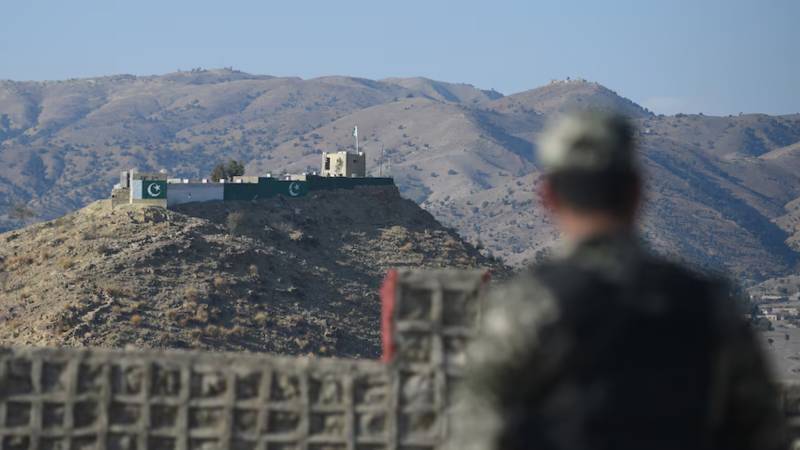
Pakistan and the Afghan Taliban have agreed to a 48-hour ceasefire following a series of intense cross-border clashes and precision strikes by the Pakistan Army that, according to security sources, destroyed key Taliban strongholds in Afghanistan’s Kandahar province and the capital, Kabul.
The Foreign Office confirmed on Wednesday evening that the truce was reached “at the request of the Afghan Taliban regime” and will take effect from 6 p.m. “Both sides will make sincere efforts to find a positive solution to this complex but solvable issue through constructive dialogue,” the statement read.
The ceasefire announcement came hours after Pakistan carried out what officials described as “retaliatory precision strikes” against Taliban targets in response to recent cross-border attacks. Security sources said the strikes destroyed Taliban Battalion No. 4 and Border Brigade No. 6 in Kandahar, killing dozens of Afghan and foreign militants. The operation also targeted the “leadership centre” of Fitna al-Hindustan—a state-designated terrorist organisation in Kabul.
“All targets were meticulously selected and isolated from civilian populations,” said one official, adding that Pakistan retains “the full capability to respond decisively to any external aggression.”
The strikes followed a series of deadly border incidents, including an attack by the Afghan Taliban on Pakistani positions in the Spin Boldak area of Balochistan early Wednesday morning. The Inter-Services Public Relations (ISPR) said Pakistani forces repelled the assault, killing between 15 and 20 Taliban fighters and destroying several Afghan tanks and posts.
The ISPR added that the Taliban had also damaged the Pak-Afghan Friendship Gate on their side of the border — a move officials said underscored their disregard for “mutual trade and easement rights of divided tribes.”
Security sources described the Taliban leadership as being in a “state of panic” following the Pakistani strikes. They alleged that the group resorted to “false propaganda” online, sharing misleading footage that purportedly showed a captured Pakistani tank. Officials clarified that the tank was, in fact, operated by the Taliban.
Meanwhile, a separate infiltration attempt by militants from Afghanistan into Pakistan’s Mohmand district was thwarted by Pakistani forces. The attackers were reportedly aiming to launch terrorist operations inside Pakistan but were “completely neutralised,” with at least 30 killed.
Today’s developments mark the third major armed engagement between Pakistan and Afghanistan within a week, signalling the most serious escalation since the Taliban’s return to power in 2021. Over the weekend, the ISPR confirmed that 23 Pakistani soldiers were martyred in similar cross-border skirmishes, while intelligence assessments suggested more than 200 Taliban and affiliated fighters had been neutralised.
Tensions have soared as Islamabad accuses Kabul of harbouring the Tehreek-e-Taliban Pakistan (TTP) and allowing its operatives to use Afghan soil for attacks across the border — allegations the Taliban regime denies.
Pakistan’s Foreign Office said the 48-hour ceasefire aims to “reduce tensions and open a channel for dialogue,” but security officials cautioned that operations would resume if provocations continued.
As Defence Minister Khawaja Asif remarked earlier this week, relations between the two countries remain at a “stalemate.” He warned that while active hostilities may pause, “the environment is hostile and fighting could resume at any time.”