

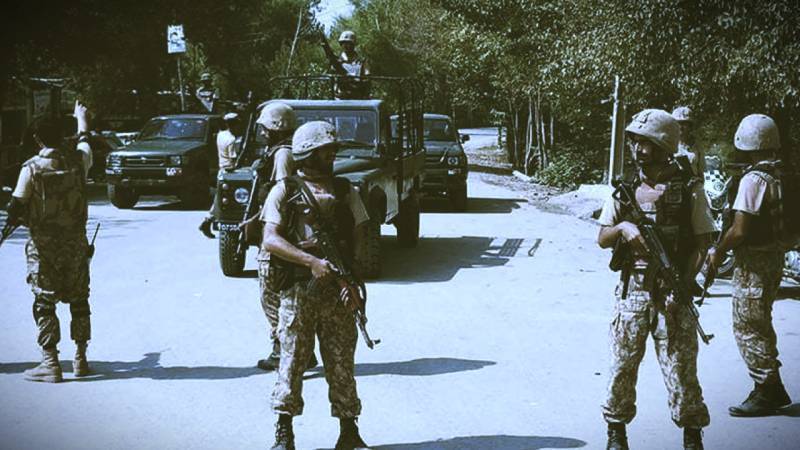
Malakand district has witnessed a steady and alarming deterioration in law and order over the past several years. What was once a stable region is now plagued by repeated incidents of targeted killings, unresolved murders, armed intimidation, and extortion.
Regional peace has been further shattered by firing over homes, motorbike snatching, and rampant street crime. Perhaps most concerning is the unchecked prevalence of narcotics, particularly Ice (methamphetamine), and the brazen movement of criminal elements, including terrorists. These developments have severely eroded public trust in the state’s ability to protect lives and property.
At the heart of this deepening security vacuum lies a fundamental and long-standing structural flaw: the continued reliance on the Levies Force and the conflation of policing functions with district administration. Placed under the command of the Deputy Commissioner rather than trained and experienced police professionals, the Levies were never designed to meet modern law-and-order challenges.
As a result, they lack the operational capacity, investigative skills, command structure, and accountability mechanisms required to respond effectively to the district’s increasingly complex security environment. This situation demands an urgent policy reassessment and, ultimately, the replacement of the Levies with a professional, accountable police force.
The failures of the Levies in Malakand are neither occasional nor accidental; they represent a consistent pattern. Rather than acting as a deterrent, the force’s inaction has normalised lawlessness. Dozens of serious crimes, including high-profile murders, remain unsolved.
While First Information Reports (FIRs) are registered, investigations inevitably stall. Suspects roam freely, leaving victims’ families and witnesses exposed and unprotected. This chronic impunity has emboldened criminal networks, allowing them to operate openly and violently with little fear of consequences
In many cases, the basics of criminal investigation are absent. Crime scenes are poorly secured, evidence is mishandled, and no meaningful forensic or intelligence-led investigation follows. Such systemic weaknesses point to institutional failure rather than individual negligence alone.
While opponents often cite concerns about local employment, these can be addressed through a structured transition plan, including the absorption of eligible Levies personnel into the police after rigorous vetting and training
A tragic case in point is the murder of my brother, Khalid Khan Khattak, Advocate, who was serving as President of the Dargai Bar Association at the time of his death on August 28, 2025. This personal tragedy provided me with a direct and painful opportunity to observe the inner workings of the Levies.
Despite a lapse of over four months, the force was unable to complete the investigation or resolve the case. The investigating officers lacked the technical capacity to analyse geo-fencing and other crucial digital evidence, dismissively informing me that the data “contained nothing of value.”
During these four months, the force failed to arrest the suspects or recover the vehicle and weapons used in the murder. Consequently, the perpetrators have become so emboldened that they are now openly threatening me, my family, and the legal community of Dargai and Batkhela.
They have even uploaded intimidating videos to social media platforms such as Facebook and TikTok. Ultimately, the case was transferred to the Counter Terrorism Department (CTD) with an incomplete investigation report, a stark indictment of the Levies’ inability to handle serious crimes.
The most damaging consequence of this failure is the collapse of public confidence. Citizens increasingly believe that justice is inaccessible and that reporting crimes is futile or even dangerous. Families of victims are often forced to pursue justice through personal connections, political pressure, or prolonged public appeals.
When people lose faith in law enforcement, they turn to silence, self-help, or informal power brokers. This not only weakens the writ of the state but also deepens social fragmentation and insecurity.
The Levies system is rooted in a colonial-era framework designed for limited, low-intensity policing in remote areas. Malakand district today, however, is a key movement route for terrorists and faces organised crime, drug trafficking, and complex disputes over community land (Shamilaat).
These are crimes that require modern training, forensic tools, and specialised expertise. The Levies Force suffers from a lack of professional training, is plagued by political interference, and operates without any meaningful accountability mechanisms. These weaknesses are structural and cannot be remedied through cosmetic reforms.
The Levies in Malakand district, much like in the former FATA areas, should be immediately replaced with a police force. A properly deployed police service offers a fundamentally different institutional model, one trained in preventive policing, scientific investigation, and intelligence-based operations.
While opponents often cite concerns about local employment, these can be addressed through a structured transition plan, including the absorption of eligible Levies personnel into the police after rigorous vetting and training.
Police reform in Malakand should not be held hostage to a fear of change when the cost of inaction is measured in lost lives. Continued reliance on a failing force is no longer a neutral administrative choice; it is a political and moral failure.
The state has a constitutional obligation to protect its citizens. When an institution consistently fails to do so, replacing it is not radical; it is responsible governance. Both the provincial government of Khyber Pakhtunkhwa and the federal government must play their role in transitioning Malakand district from the Levies to the police at this critical juncture.