

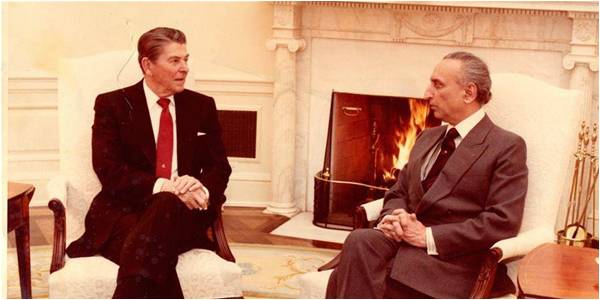
I am drawn to Orlando’s encomium to Adam in Shakespeare’s “As You Like It” when a great figure such as Sahabzada Yaqub Khan passes from the scene. Sahabzada died on January 26 at the age of 95. Orlando’s words capture, I think, the essence of Sahabzada’s greatness; “O good old man, how well in thee appears the constant service of the antique world, when service sweat for duty, not for meed….” He was throwback to an age when service to ones people was its own reward.
I did not know Sahabzada in any official capacity. He was a friend. I cannot write with first-hand knowledge about his various successes as Ambassador or Foreign Minister as some of his many friends have done. His official days were behind him before I arrived. And though he initially led the Pakistani side in the nuclear talks with the US that began after Pakistan’s nuclear tests of May 1998, he had left that position before I arrived. There was a brief episode that I only vaguely remember when he was recruited by then-Chief Executive General Musharraf to go explain to world leaders in their capitals why the Musharraf coup d’etat was necessary. My impression was that he did not enjoy that experience very much and preferred not to talk about it.
I met him only when I came to Pakistan in 1998. But I had known about him for a decade because I had served in Bangladesh some years earlier, where he was, at that time, and still is I think, a national hero. Everybody knows the story: he gave up a glorious military career after rising to the rank of Lieutenant General, when as Governor and Commander of the East Pakistan Military he would not carry out orders that he knew would lead to violence against people of East Pakistan, to insurrection—and to the separation of East and West Pakistan.
Toward the end of my tour in Pakistan, I was at a small intimate dinner hosted by another Ambassador at which Sahabzada was asked why he decided to end his military career in that way. It seemed to me an indiscreet question, but one that I had often been tempted to ask. He replied very gently that he could see what was coming. That was it, not a word about how right he turned out to be, or any semblance of back-patting; it was said almost sadly, implying to me not that he regretted doing it, but that he regretted having to do it.
But while his brilliant military career was shattered by what he had to do, in fact the repercussions of the Pakistani defeat in East Pakistan brought down the military government, and brought him back up in another profession, one that he was well suited for. The democratic government of Zulfikar Ali Bhutto sent him off for a decade of major ambassadorial posts, France, the US, and the Soviet Union. After that decade, with another military government in power, Sahabzada was called on to be Foreign Minister, and remained in that position for 11 years, through the military government and into the transition to democracy under Benazir Bhutto.
Some wonder, I suppose, at why he would agree to work for Zia ul Haq, or why Zia would want him to. The latter question is easy; he was renowned for his integrity and his brilliant diplomacy and what better face would there be to represent a military regime that had taken power from a democratic leader and hanged him. Why would Sahabzada work for that regime? It is hard to know, but I would presume it was because he wanted always to serve Pakistan, and perhaps the he felt that the service he could provide might keep the regime from making the same kind of blunders as he had tried to prevent in 1971 – blunders that tore the nation in half.
There is also, I believe, in many great men a belief that service, work, duty are never finished until life itself is finished. I am influenced here by one of my great American heroes, the renowned jurist and legal scholar Oliver Wendell Holmes, Jr, the son of a well-known poet, and the scion of an aristocratic New England family. In fact, in addition to similar family backgrounds, there are illustrious parallels in the lives of these two great men.
Both were deeply influenced by their early military experiences. Sahabzada fought, as young officer in the British Indian Army in North Africa in World War 2 and was captured by the Italians. He escaped about a year later, and after a year on the run in Italy, was recaptured by the Germans. He was lucky to survive the escape and especially the recapture. Holmes volunteered for the Union Army at the beginning of the American Civil War, and as a junior officer was seriously wounded four times. Given the survival rate of the wounded in that war, his survival was a miracle. Both made good careers after their wars. Sahabzada rose quickly through the ranks to Lieutenant General and Commanding General in East Pakistan. Holmes became a renowned legal Scholar and Chief Justice in the Massachusetts Supreme Court. Both found a way to move on to a different career at an age when many would have had to gone into retirement. Sahabzada beat the odds by answering the call for the diplomatic career described above. Holmes beat the odds by moving up to the US Supreme Court at the age of 64.
I believe their attitudes toward life and work were roughly the same. Sahabzada was reticent on such questions. But Holmes made his attitude toward life and work known in a rarely cited national radio broadcast (one of the first in the US) on March 8, 1931, which honored him on his 90th birthday. I am quoting it at length below as I have always found it very compelling.
“… I may mention one thought that comes to me...[T]he riders in a race do not stop short when they reach the goal. There is a little finishing canter before coming to a standstill. There is time to hear the kind voice of friends and to say to one's self: "The work is done." But just as one says that, the answer comes: "The race is over, but the work never is done while the power to work remains." The canter that brings you to a standstill need not be only coming to rest. It cannot be, while you still live. For to live is to function. That is all there is in living. And so I end with a line from a Latin poet who uttered the message more than fifteen hundred years ago; "Death plucks my ear and says, 'Live - I am coming."'
“Live, I am coming” has often been taken for hedonism. But in Holmes’ lexicon, to live is to function, that is to serve, to work. I believe that Sahabzada would have agreed completely. Perhaps a good friend of mine got a sense of this when he visited Sahabzada about a year ago. Though frail and almost deaf, his mind was still active and sharp. My learned friend quoted some lines from Ghalib, a poet he knew Sahabzada liked, to the effect that all elements of existence lean towards decline. Sahabzada after repeating and savoring the lines looked up and said to my friend that he should read Eckard Tolle’s book “The Power of Now,” a book that promotes a philosophy based on living in the present moment instead of losing oneself in the past or the future.
I did not know Sahabzada in any official capacity. He was a friend. I cannot write with first-hand knowledge about his various successes as Ambassador or Foreign Minister as some of his many friends have done. His official days were behind him before I arrived. And though he initially led the Pakistani side in the nuclear talks with the US that began after Pakistan’s nuclear tests of May 1998, he had left that position before I arrived. There was a brief episode that I only vaguely remember when he was recruited by then-Chief Executive General Musharraf to go explain to world leaders in their capitals why the Musharraf coup d’etat was necessary. My impression was that he did not enjoy that experience very much and preferred not to talk about it.
I met him only when I came to Pakistan in 1998. But I had known about him for a decade because I had served in Bangladesh some years earlier, where he was, at that time, and still is I think, a national hero. Everybody knows the story: he gave up a glorious military career after rising to the rank of Lieutenant General, when as Governor and Commander of the East Pakistan Military he would not carry out orders that he knew would lead to violence against people of East Pakistan, to insurrection—and to the separation of East and West Pakistan.
Toward the end of my tour in Pakistan, I was at a small intimate dinner hosted by another Ambassador at which Sahabzada was asked why he decided to end his military career in that way. It seemed to me an indiscreet question, but one that I had often been tempted to ask. He replied very gently that he could see what was coming. That was it, not a word about how right he turned out to be, or any semblance of back-patting; it was said almost sadly, implying to me not that he regretted doing it, but that he regretted having to do it.
But while his brilliant military career was shattered by what he had to do, in fact the repercussions of the Pakistani defeat in East Pakistan brought down the military government, and brought him back up in another profession, one that he was well suited for. The democratic government of Zulfikar Ali Bhutto sent him off for a decade of major ambassadorial posts, France, the US, and the Soviet Union. After that decade, with another military government in power, Sahabzada was called on to be Foreign Minister, and remained in that position for 11 years, through the military government and into the transition to democracy under Benazir Bhutto.
Some wonder, I suppose, at why he would agree to work for Zia ul Haq, or why Zia would want him to. The latter question is easy; he was renowned for his integrity and his brilliant diplomacy and what better face would there be to represent a military regime that had taken power from a democratic leader and hanged him. Why would Sahabzada work for that regime? It is hard to know, but I would presume it was because he wanted always to serve Pakistan, and perhaps the he felt that the service he could provide might keep the regime from making the same kind of blunders as he had tried to prevent in 1971 – blunders that tore the nation in half.
There is also, I believe, in many great men a belief that service, work, duty are never finished until life itself is finished. I am influenced here by one of my great American heroes, the renowned jurist and legal scholar Oliver Wendell Holmes, Jr, the son of a well-known poet, and the scion of an aristocratic New England family. In fact, in addition to similar family backgrounds, there are illustrious parallels in the lives of these two great men.
Both were deeply influenced by their early military experiences. Sahabzada fought, as young officer in the British Indian Army in North Africa in World War 2 and was captured by the Italians. He escaped about a year later, and after a year on the run in Italy, was recaptured by the Germans. He was lucky to survive the escape and especially the recapture. Holmes volunteered for the Union Army at the beginning of the American Civil War, and as a junior officer was seriously wounded four times. Given the survival rate of the wounded in that war, his survival was a miracle. Both made good careers after their wars. Sahabzada rose quickly through the ranks to Lieutenant General and Commanding General in East Pakistan. Holmes became a renowned legal Scholar and Chief Justice in the Massachusetts Supreme Court. Both found a way to move on to a different career at an age when many would have had to gone into retirement. Sahabzada beat the odds by answering the call for the diplomatic career described above. Holmes beat the odds by moving up to the US Supreme Court at the age of 64.
I believe their attitudes toward life and work were roughly the same. Sahabzada was reticent on such questions. But Holmes made his attitude toward life and work known in a rarely cited national radio broadcast (one of the first in the US) on March 8, 1931, which honored him on his 90th birthday. I am quoting it at length below as I have always found it very compelling.
“… I may mention one thought that comes to me...[T]he riders in a race do not stop short when they reach the goal. There is a little finishing canter before coming to a standstill. There is time to hear the kind voice of friends and to say to one's self: "The work is done." But just as one says that, the answer comes: "The race is over, but the work never is done while the power to work remains." The canter that brings you to a standstill need not be only coming to rest. It cannot be, while you still live. For to live is to function. That is all there is in living. And so I end with a line from a Latin poet who uttered the message more than fifteen hundred years ago; "Death plucks my ear and says, 'Live - I am coming."'
“Live, I am coming” has often been taken for hedonism. But in Holmes’ lexicon, to live is to function, that is to serve, to work. I believe that Sahabzada would have agreed completely. Perhaps a good friend of mine got a sense of this when he visited Sahabzada about a year ago. Though frail and almost deaf, his mind was still active and sharp. My learned friend quoted some lines from Ghalib, a poet he knew Sahabzada liked, to the effect that all elements of existence lean towards decline. Sahabzada after repeating and savoring the lines looked up and said to my friend that he should read Eckard Tolle’s book “The Power of Now,” a book that promotes a philosophy based on living in the present moment instead of losing oneself in the past or the future.