

Batting order
Sir,
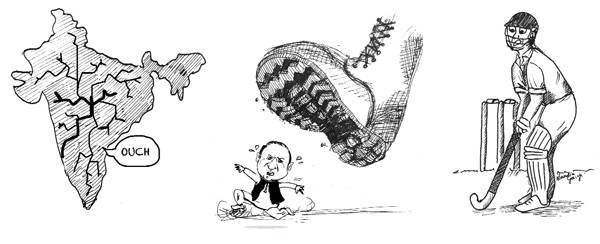
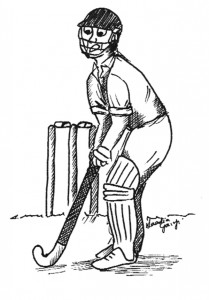
The cricket team for Pakistan’s upcoming series with Australia has been announced. Younis Khan, a veteran of 254 ODIs, was not selected in the ODI team.
The right handed experienced batsman was recalled to the side for the ODI series in Sri Lanka in August, but as bad luck would have it, he had to return home owing to the death of his nephew. He played only the first ODI in which he scored only three runs.
Chief selector Moin Khan described the event in these words: “Our experiment with Younis in the ODI series in Sri Lanka backfired.” This statement is very strange. How can a player’s form be judged in only one match?
Pakistan will need experience in the coming World Cup, and we don’t have enough of it in the batting department with only Misbahul Haq and Shahid Afridi.
Mubashir Mahmood,
Karachi.
The terrorism monster
Sir,
The people of Khyber Pakhtunkhwa and FATA were terrorized with warnings that if the army operation Zarb-e-Azab failed, they would suffer. But thanks to Gen Raheel Sharif’s decisiveness, that sense of insecurity is no more. The armed forces have destroyed the command and control system of the terrorists, killed more than 1,000 of them, captured bomb factories, and seized a large quantity of ammunition in Miranshah, Mir Ali and other towns.
The number of people displaced by the operation (IDPs) rose to 9.5 million. The Pakistan Army and government agencies are taking care of them.
Although there have been terrorist incidents that could be seen as a reaction to the operation, such as the attack on FC commander Brig Javed on September 23, there has been a relative calm since the operation began. Miranshah had become a hub of terrorism in North Waziristan. It is now completely under the government’s control.
The stated objective of this operation is to completely eradicate terrorism from Pakistan. Pakistanis hope that the operation succeeds and rids them of the monster that has wreaked havoc in their society for 12 years.
Aarya Beyazid,
Peshawar.
People and politics
Sir,
We cannot deny the fact that the sit ins of Imran Khan and Dr Tahirul Qadri have disrupted the fabric of the society. It is also important that these protests have a long term adverse effects on the economy of the country. However, some things which were consistently criticised, like nepotism, dynastic politics, poor decision making and corruption are serious concerns for the government and must be addressed timely.
The need of the hour is to take the mob seriously and find some way out to satisfy their fair demands. Imran Khan too has to let go of his obstinate stance that every single one of his demands should be met. Otherwise he will merely set a bad precedence, and anyone who has a few thousand followers will paralyze Islamabad. That is against the spirit of democracy.
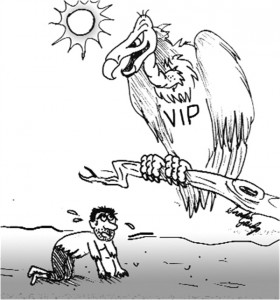
But the deprived segments of the society were not forced to join the sit-ins. They are so helpless and desperate that they could not continue living the way they do. Perhaps they are expecting their agitation will rid them of the VIP culture. They know that it is in fact their money with which bullet proof vehicles are purchased for the VIPs. They are aware of the ills of the feudal mindset that denies merit and ignores calls for justice. There is a great difference between providing security to important politico-religious leaders and encouraging VIP culture. People demand a change in the way of governance and politics. These sit ins are a struggle for their rights and perhaps they did not find any other way to express their concerns in any other way.
However, the fact remains and has to be acknowledged that this is no way to ask the constitutionally elected government to go home. There is a proper procedure for getting those demands heard and met. These politically immature revolutionary leaders would have to abide by them and wait patiently and consistently. Otherwise they would be remembered in history for triggering anarchy in Pakistan.
Shanzeh Iqbal,
Lahore.
Modi’s move
Sir,
The Indian media have reported that US President Obama Obama may ask Indian Prime Minister Narendra Modi to provide troops and other help for the US sponsored operation against ISIS, which has committed brutalities and war crimes in Iraq and Syria. Modi should be careful. India should not be lured by dollars (or even some strategic concerns projected to be emanating from Pakistan and China) that the US might offer. Instead, Modi should provide such help only when this military operation is carried out by the UN, and intended not only for eliminating ISIS but also to provide justice to the suffering Muslims of North Africa and the Middle East, especially in Syria and Palestine.
First and foremost Modi should understand the US is not concerned about the rights of Muslims. It is also not concerned with the threat of ISIS to the region either. In Assad’s Syria, about 10 million of the country’s 22 million people have been displaced, including 3 million refugees in neighboring countries and 200,000 have been killed.
The ISIS which has committed such brutalities and war crimes that it certainly deserves to be eliminated but it does not require a genius of military strategy to understand that the US will not succeed in eliminating ISIS without putting adequate boots on ground. Due to domestic pressure and especially in the election year, Obama is hardly in a position to do that. Therefore, Obama will expect Modi to provide Indian troops.
There is nothing wrong with that in this age of globalization, but India should only agree if it happens through the UN and the US agrees to eliminate the brutalities against Muslims in the region.
But when it is crystal clear that the US is doing all this for the survival of the state of Israel and not for human rights of Muslims, India should not commit that mistake, given its huge dependence on this region for oil, employment, other trade and social, religious and cultural links.
Hem Raj Jain,
Bengaluru.
Intolerant India
Sir,
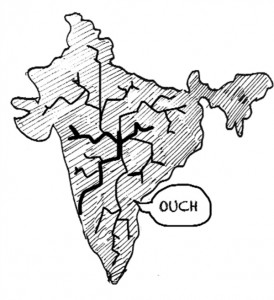
Besides the largest-in-the-world array of external conflicts, India is also home to the maximum-in-the-world internal conflicts. Ethno-religious fault lines play a predominant role in making a case for home-grown violence in India. The internal conflicts include separatist insurgencies plaguing the country since 1947. An estimated 30 armed insurgencies sweep across India, reflecting an acute sense of alienation of the people involved and sustained mainly by failure to attend to their grievances and human rights violations by the government. There are over 200 armed irregular guerrilla groups of which 68 are major terror outfits. A maximum of 34 armed groups are active in the state of Manipur.
It is of note that Sangh Parivar is chiefly responsible for Hindu extremism in addition to violence against the non-Hindu communities in India. No wonders, driven by the ideology of Hindutva, the Sangh Parivar has to have a clear predisposition. That the Parivar is back to the throne of Delhi as a result of 2014-election victory is neither a coincidence nor a political swap over. It bears evidence of a complete politico-ideological metamorphosis of the Indian society thereby pointing to the death of secularism. The Parivar cannot change itself or its dogmas. All that it can do is to transform India and its polity along theocratic lines. This squarely points to more conflict rather than peace.
To quote Dorothy Thompson, a US Journalist (1893 – 1961), “Peace is not the absence of conflict but the presence of creative alternatives for responding to conflict – alternatives to passive or aggressive responses, alternatives to violence.” It remains to be seen whether the Parivar, with simple majority in the 16th Lok Sabha is able to pitch some workable alternatives to violence or be instrumental in breeding more violence.
The track record shows the opposite. Frankly, pro-Hindutva means anti-Muslim. Juhapura with a population of 400,000, located in the New West Zone of Ahmedabad in Gujarat, received the brunt in 2002, when over 2,000 Muslims were killed under the chief ministership of Narendra Modi, is reported to be in a state of shock. The followers of Hindutva mockingly call Juhapura the “Little Pakistan.” Alongside Muslims of Gujarat and other states of India, the Scheduled Castes, the Scheduled Tribes, the marginalized Christian communities of the northeast and the Muslims of Kashmir are feared to endure added wrath of the Hindutva forces.
Ehsan M Khan,
Islamabad.
A new shade of green
Sir,
The 311,000 protestors who took part in the exhilarating Climate Summit march through Manhattan and those who blocked some entrances to Wall Street have returned to their homes.
The leaders of the more than 120 nation states that made pie-in-the-sky, non-binding promises for reductions in carbon emissions at the UN meeting and dozens of powerful corporations have moved on.
And across Canada and other countries, news about the greatest threat ever to humanity’s survival has returned to the inside pages of our newspapers. But people who strongly believe that the earth is in the initial stages of a downward spiral cannot allow conditions to return to the norm of the past.
Perhaps a main reason for the failure of environmental groups is because they have fought mainly against the symptoms of climate destruction rather than tackling the core sources. A major hurdle to overcome concerns the need to have all countries sign a new climate treaty in Paris in December 2015 that would go into effect in 2020.
A long-standing dispute pits developed Northern countries such as the United States and Canada against emerging countries such as China, Brazil, and India. The emerging states say that because the North is largely responsible for their environmental problems, they should pay a lot more than the emerging states when it comes to trying to reduce climate change.
Developed countries are contributing to a special fund to help the South meet climate challenges but, in general, they say both north and South should contribute equally.
While it will be a huge task, people in different countries must form some sort of power base that can challenge corporate power and also influence the signing of a world climate agreement.
Many large green groups take millions of dollars from powerful corporations – some the same corporations involved in pumping millions of tonnes of carbon into the atmosphere. The Big Green groups need to break away from their dependence on corporate money, but even if they don’t, the tens-of-thousands of other independent environmental groups need to organize.
If a broad movement can be established, it could consider pouring massive resources into three areas.
First, the movement could put on pressure to speed up the use of renewable energy. Secondly, a large, coordinated movement would have the power to develop strategies to challenge the disastrous practices of energy companies. And finally, an international movement could come up with a model for a climate agreement that it would promote as a North-South compromise before the UNESCO December 2015 meetings. A consensus on the make-up of a fair deal should be developed before next year’s summit so there can be no chance of failure.
It seems safe to say that if the unconnected environmental community continues on its ineffective way, and millions of concerned citizens continue to sit on the sidelines, we may not get the real action needed.
If a new, citizens-led movement can be established, it could help the world avoid further increases in the deaths of millions of people in underdeveloped countries, more huge destructive storms all over the world, and the extinction of thousands of species.
Nick Fillmore,
Toronto.
Who wants to be prime minister?
Sir,
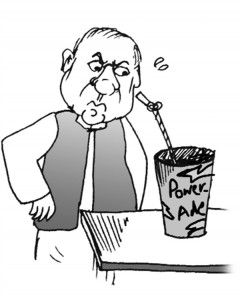
By choosing to be the president rather than the prime minister, Nawaz Sharif might have averted the current political crisis.
When the People’s Party was in government, Asif Ali Zardari preferred to be the president. This decision surprised the political pundits, but turned out to be an intelligent move. He separated himself from the government, leaving no space for critics to attack him. But behind the scenes, the rein was in his hands. At last, he made history by completing his tenure.
In the past, Nawaz Sharif has been elected prime minister twice. Regretfully, both the times he was toppled both times. In spite of that, he did not learn any lessons and decided to become the prime minister for a third tie.
If he were the president rather than the prime minister, he could easily have dealt with the current political crisis by sacrificing a prime minister, like the People’s Party did in its tenure.
Sanaullah Kakar,
Quetta.
Desire for change
Sir,
I thoroughly enjoyed the artile Governance and Compromise by Naveed Ashraf, published in the 12th September issue of The Friday Times, and would like to comment.
Firstly, the crisis in Islamabad reflects weak political institutionalisation resulting in personality politics. Imran Khan is correct in talking about a family monarchy in PML-N but needs to think also about his own party’s internal democracy. Less personalised politics would perhaps reduce the scope for the pursuit of personal vendettas and the adoption of rigid and uncompromising stances.
Secondly, while the PTI leader has acted rashly, it is in keeping with the prevailing political culture of short termism which places gesture politics above solid achievements in governance. The military have encouraged short termism by frequent political interventions which result in elected leaders ignoring the longer game required for democratic consolidation.
Finally the crisis should perhaps be set in a wider context of transition arising not just from the faltering early steps of democratic consolidation, but increasing disconnect between more informed populations, as a result of social media, and distant political elites. This is evident in developed countries with established democracies as well as in West and South Asia. In Pakistan’s case, Imran Khan’s actions both encourage and perhaps reflect a young generation eager for change.
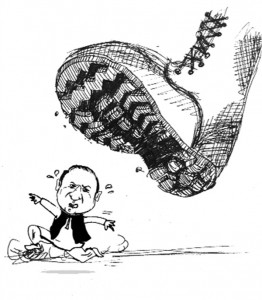
The PML-N would not have won the 2013 elections without tapping into this desire for change. However, it has failed to deliver, as in the need for economic transformation and tax reforms. Sections of the electorate have picked up on this along with the aloof attitude of the Prime Minister and his inner cabal. It has hardly surprising that however misguided, calls for revolution and change have a galvanising impact. What the PML-N at present seems to be offering is despite its electoral claims, more of the same. The military have profited from the political instability it has at least tacitly encouraged and would now, I think, be happy with a boxed in Prime Minister.
Personally I think because of the latter point the mandate has been frittered from the May 2013 polls. These offered hopes for rebalancing the civil-military relationship and addressing the economy. Nawaz Sharif’s personal pursuit of Musharraf and going back on an exit strategy only intensified the army’s existing mistrust. The recourse to violence in dealing with the PAT in the summer and lack of economic boldness in the first budget were other major turning points in handing the advantage to opponents both within and outside the political system. It would also have been wise to have nipped in the bud, genuine concerns about some aspects of the elections held not just by PTI, before they became a major focus.
One could argue it is easy to be wise with hindsight, but a more open and inclusive government might have avoided these pitfalls. Pakistan’s political system and culture mitigates against the kind of consensus and cooperation that the country urgently requires.
Prof Ian Talbot,
Southampton.