

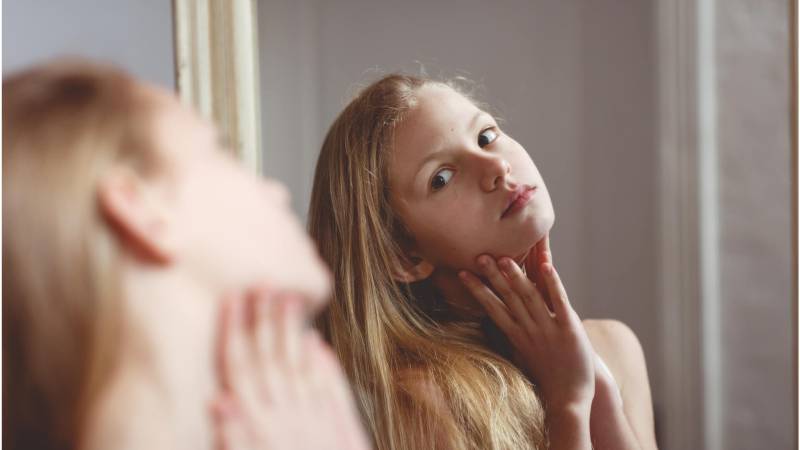
As of late, one of the things that has stayed with me the most is how young my patients are becoming. I am seeing teenagers walk into my clinic asking for major treatments, whitening procedures, fixes for things that do not need fixing. Just recently, two girls came in with their mother. One was fourteen, the other sixteen. I had no qualms with refusing outright.
They were simply too young. I lost a client that day, and I was completely okay with that. I have daughters of my own, and I think about them constantly in moments like these. Ethics in medicine are non-negotiable for me. One’s conscience has to be clear, always.
There is something deeper going on here, though. Young girls are absorbing beauty standards far earlier than they should be, long before they have had the chance to grow into themselves. Social media plays a huge role in this, creating urgency around perfection, around fixing, around looking a certain way before life has even begun.
As a dermatologist, I am always careful about what I recommend, not just because of my profession, but because of my responsibility. I tell my patients this often: the goal isn’t to make a forty-year-old look like a teenager. That is strange to me. Looking your age is not a failure. Working with what you have is far more powerful than chasing something unrealistic.
I also think we forget how holistic beauty and health really are, especially in South Asian culture. We tend to swing between extremes. On one end, many people completely let themselves go, ignoring their health, movement, nutrition, and overall well-being. On the other hand, there is pressure to reverse time entirely. Neither approach serves us. When I talk about restoration, I don’t only look at the face. I look at the whole body, lifestyle, habits, health… It’s all connected.
This is why the reaction to Mariam Aurangzeb’s recent appearance caught my attention. So much of the commentary was harsh, focused on how different she looked, how unrecognisable she was. What stood out most to me was not her face, but her weight loss. She looked healthier. She looked confident. I saw it as a full-body transformation, not just a cosmetic one. And honestly, I thought she looked great.
Studies suggest that when people see frequent images of surgically altered bodies and faces, they’re more likely to consider cosmetic surgery themselves… not because it’s a health choice, but because they’ve internalised a very narrow idea of what looks ‘good’
When we talk about unrealistic beauty standards, it’s impossible not to mention the role that global celebrity culture, especially figures like the Kardashians, plays in shaping how women and girls see themselves. Their influence extends far beyond fashion choices. Their Instagram feeds, reality shows, and product endorsements set benchmarks of beauty that are often digitally enhanced, surgically sculpted, and practically unattainable for most people!
This isn’t just idle opinion… decades of research show that exposure to highly idealised, manipulated images on social media is strongly linked to body dissatisfaction and poorer self-esteem, because people compare themselves to images that are simply not real.
Women and teens who scroll through these idealised feeds regularly are far more likely to experience negative feelings about their own bodies, and those comparisons are associated with anxiety, depression, and even disordered eating behaviours in some cases.
Some studies have found that this kind of media exposure can increase what psychologists call ‘social comparison’—when you start judging your own worth or beauty in relation to someone else’s filtered or enhanced image. That constant comparison fuels dissatisfaction and can make natural ageing, healthy bodies, and real-life imperfections feel unacceptable.
There’s even research connecting heavy social media use with signs of body dysmorphic disorder, where someone becomes preoccupied with perceived flaws, especially among teens and young adults.
The power of celebrity beauty norms also bleeds into cosmetic procedures themselves. Studies suggest that when people see frequent images of surgically altered bodies and faces, they’re more likely to consider cosmetic surgery themselves… not because it’s a health choice, but because they’ve internalised a very narrow idea of what looks ‘good.’
In a way, we’re living in an age where filters, fame, and fantasy have blurred into one giant beauty ideal that few can or should be expected to reach. And yet everyone feels the pressure to conform. That’s not healthy, that’s not real, and it isn’t something I want for my patients, my daughters, or the young girls who walk into my clinic thinking they need to change before they’ve even grown up!
All of this exists alongside another reality: being a female founder in Pakistan. I’m about two to three months away from completing three years of building my clinic, and in that time, I’ve learned that visibility comes at a cost. There is still a deeply ingrained mindset that a woman’s primary role is to be a homemaker. When you step outside of that, especially publicly, there is scrutiny. Putting yourself out there on social media takes courage.
Along with running a business and managing platforms, you also deal with negative attention, lewd messages, and completely unwarranted commentary, mostly from men. In the beginning, it affected me deeply. It is something women rarely talk about, yet constantly endure.
Almost three years in, I’ve learned to navigate it better, but it has shaped me. It has made me more intentional, more grounded in my values, and clearer about why ethics matter so much to me. You see, whether it’s refusing a teenage patient, questioning beauty narratives, or simply showing up as a woman building something of her own, I remind myself that doing the right thing is more important than doing the popular thing. And that, in itself, is something worth holding onto.