

For the people
Sir,
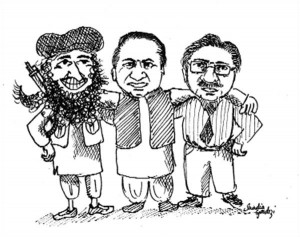
Pakistan faces a far worse security crisis than it could have if we had been in a declared war. Although this security nightmare has been of our own making, those whose task is to tackle this nemesis seem to be too involved in trivial egoistic pursuits. We are sowing harvest of sins committed by our establishment.
Had we pursued and followed the path of constitutional rule, as desired by Quaid-e-Azam, in all probability there would have been no Taliban, no target killers of Karachi, no insurgency in Balochistan, and we would not be plagued with illiteracy, which has reduced our citizens to cannon fodder.
For over 200 years, the subcontinent was under British Raj, ruled as security state, with only one agenda – to fill the coffers of the British crown, irrespective of the damage done to life and property of the natives who lived there. State lands were distributed to buy loyalties.
In 1947, we won liberation from the British Raj so that Pakistan could become a welfare state, with resources focused on developing human resources and achieving self-sufficiency in industrial growth, sciences, economics, arts and social sciences. A state whose citizens enjoyed equal rights and opportunities, freedom of expression and the fundamental right to practice their religion.
But we failed to undo the remnants of the British Raj by taking away land and titles allotted to the natives serving the British Crown, not for a specific duration, but as long as they were loyal to the colonial masters.
What we need is to restore the supremacy of the constitution in Pakistan and transform it into the welfare state that our founding fathers had wanted, so that no individual group, or cult, could impose their own views on everybody else.
Ali Malik Tariq,
Lahore.
Benefit of doubt
Sir,
Having just returned from abroad, a bomb explosion a few hundred yards of my office forced me, once again, to reflect on our present predicament.
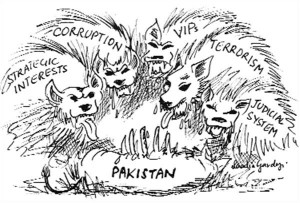
As a human being, rapidly becoming an endangered species in Pakistan, I sympathize with Hamid Mir and am delighted that he missed becoming yet another statistic in the steady and organized extinction of Pakistan’s ‘civil’ society. However, given the geometric progression in mayhem over the past few decades, I am unable to comprehend the hype that surrounds his particular allegations. We have long known that our protectors, from police upwards, are a law unto themselves, perpetrating and almost invariably getting away with whatever they wish and with utter disregard to any constitutional limitations - if, indeed, those exist. This is put down to a Doctrine of Necessity or to a self-defined set of ‘strategic interests’.
One might be forgiven for not understanding how an utter absence of Law and Order, a seeming carte blanche to openly propagate bigotry and hate and to extort and to murder one’s fellow citizens at will, especially in the name of Allah, and a vacillating and largely inconsequential, judicial system, serves any national interest.
Any casual observer of the vitriol and terror that Pakistan has plunged into might rightly question the purpose and competence, possibly the very intelligence of our various supervisory and protective agencies.
Almost without exception, every so-called political and religious party – many of them creations or clear beneficiaries of our many dictatorial regimes – have criminal or terrorist wings. With macabre humour, some are even referred to as proscribed or banned. Despite the obvious, our selectively electable leaders are supposedly working for our betterment.
The past twenty-five years have seen Pakistan hurtle down into horrific chaos with, for the lucky few, Pakistan say zinda bhag being the only possible alternative to the state of terror, oppression and cold blooded civilian murders creating world records. In a vast majority of cases, the perpetrators are known. Indeed in many cases they are proudly acknowledged. The law, police, and our ‘agencies’, with all knowledge and with more collected criminal DNA on national file than in any other country in the world, are unable to prosecute them.
As a taxpaying citizen with no benefits other than being very likely to shortly become yet another irrelevant statistic under the laws of probability, I am intrigued as to why the current crisis has evoked such national convulsions when we do not bat an eyelid at all the others. Wouldn’t it be wonderful if our leaders came on television and explained to us gladiators quite how this situation is benefitting Pakistan and is in the national interest? In passing, perhaps they might also let us know just how we came to be in this happy state. I am sure we’d all die happier.
Dr Mervyn Hosein,
Karachi.
Fair share
Sir,
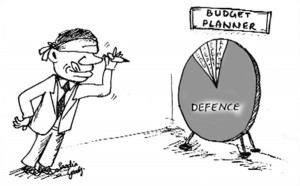
The report appearing in the media on April 15 that the government does not intend to review the defence budget has surprised and disappointed many.
It was generally perceived that the defence minister, who had been making statements about a better use of taxpayer money for so many years when he was sitting on the opposition benches, would try to rationalize the proportion of money spent on welfare and security.
But his recent statements suggest that he will not make any such change.
Haroon S Pasha,
Islamabad.
Rocky road in Canada
Sir,
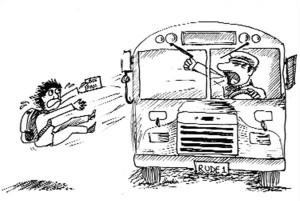
It was March 13, 2014 – a pleasant morning in Ottawa, the capital of Canada – when I boarded an OcTranspo bus from the University of Ottawa to go to Carleton University for some laboratory experiments.
Suddenly, I saw that the bus driver was waving in the rear view mirror. I looked around, realizing I was the only passenger, I stood up and went to him. As I approached, I heard him ask for the bus ticket. I took out my wallet, showed him the student bus pass and politely said that the rear bus door clearly had a sign stating that people with bus passes can board from the rear door. The bus driver yelled back at me quite angrily, “But this is an Express, you a*s#@|!”
My jaw dropped and for a moment I simply stood there in shock and staring at the bus driver. Eventually, I got off the bus, noted its unique four-digit number and called the OcTranspo complaint centre. However, they said that they would not be able to tell me about the investigation and action.
My perfect day was destroyed and I couldn’t understand why that bus driver had abused me for no reason and why OcTranspo was unwilling to do anything about it. I personally felt like I had been racially discriminated against since my religion and ethnicity were obvious from my appearance.
Disturbed by this incident and the lack of accountability by the concerned party, I approached the university’s international office, the legal clinic, the student federation and even the employee union since I was a teaching assistant and hence, an employee. However, no one was willing or able to guide me as to what action to take against OcTranspo. I realized that this country had more rights for cats and dogs than for international students.
Not admitting defeat, I decided to channel my anger into a productive cause. I decided to join other students to raise my voice against racial discrimination and advocate for immigrant rights. It has been over a month since that incident with OcTranspo and I haven’t received any reply. However, being a student member of the university senate, I have been recently elected to represent the graduate students of Science and Engineering and I take this as a positive indication of increasing acceptance and inclusion of international students.
It has given me hope that even though I am an ‘outsider’ in this country and community but if I want to defend my right to respect and equality, I must stand up for it and somehow, somewhere, it will bring about a change for me and for others like me.
Syed Abdul Bais,
Ottawa.
Sticky wicket
Sir,
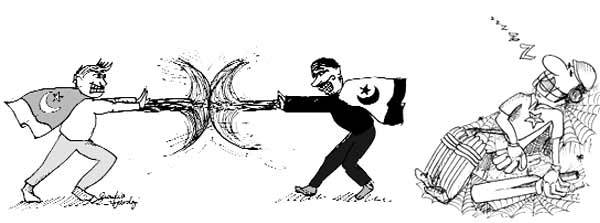
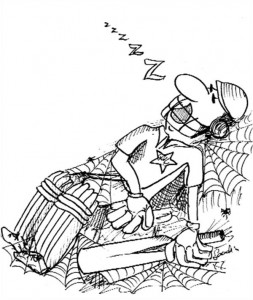
It is unfortunate for the cricket lovers of Pakistan that Pakistani players are not playing in the Indian Premiere League. In a country where every boy dreams of becoming a cricketer one day, and where cricket is played on every street, this fact is difficult to accept.
The first edition of IPL did include Pakistani players. Sohail Tanvir got an orange cap for taking the highest number of wickets, and Shoaib Akhtar made his mark with an extraordinary win for KKR with four wickets. Pakistani players such as Shahid Afridi, Umar Gul, and Saeed Ajmal can be an asset for any team in the world, and T20 cricket is incomplete without them.
But after the Mumbai terrorist attack, IPL stopped inviting Pakistani players. India also refused to play any bilateral series too, until 2013, when a short series of three ODIs and two T20s was played between the two archrivals. Meanwhile, after the attack on the Sri Lankan cricket team in Lahore, all foreign teams declined to play in Pakistan. While India has become the cricket board that generates the highest revenue, Pakistan’s cricket economy and the game itself are suffering.
Now that India has made the smart move of taking the newest edition of IPL to Dubai because of security concerns and elections, it is unfortunate that Pakistani players were still not invited.
India should reevaluate this approach, especially after their cricket board has a competent leader like Sunil Gavaskar.
Ammad Hassan,
Lahore.
Time to take sides
Sir,
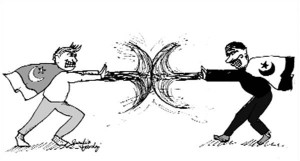
No war can be won until the entire nation is on the same page. Sadly, despite being at war for the entire last decade, there still are people who are indifferent. They are not fully apprised of the factual situation, or they lack the courage to see the ultimate truth. It is not the time for being neutral, it is time to decide which side we are on.
One side is the side of light, the side of peace, tolerance, moderation, enlightenment and prosperity. This side promotes a modern, educated, healthy and sovereign Pakistan, envisaged by the Muslims of the subcontinent. This side promotes education and equal opportunities for girls and boys to learn and prosper. This side gives women the confidence and respect to become doctors, teachers, pilots, bankers, politicians and soldiers. This side promotes tolerance for all faiths and all opinions. This side has looked after each other at the time of floods, earthquakes and other natural disasters. This side is governed by law, and respects Pakistan, its constitution, its government, its armed forces and its people.
The other side is the side of darkness. This side that wants to push the country back to pre-history. This side kills innocent men, women and children, in their homes, in their markets, and even in their mosques. This side bombs mosques, churches, and other places where people worship God. This side destroys schools and denies girls the opportunity to learn, and denies women the respect they deserve as equal citizens of Pakistan.
Polio vaccination teams have been brutally murdered. Lady health workers have been killed. This side has the blood of more than 50,000 Pakistanis on their hands. This side has no respect for any religion, and does not believe in Pakistan’s constitution and laws.
This denies people the benefits of technology and modernity, except weapons of destruction.
It is time we all decide whose side we are on – the side of Pakistan or that of its enemies. It is time we show the courage to say what is right and what is wrong.
Sadia N Qazi,
Muzaffarabad.