

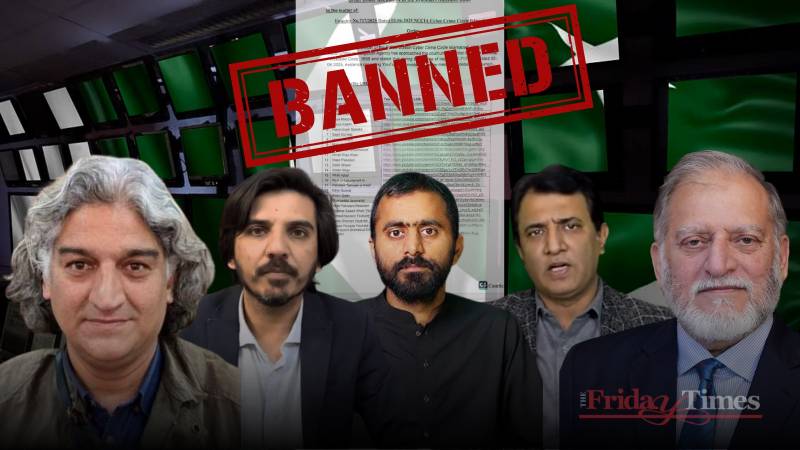
A local court in Islamabad has ordered the immediate blocking of 27 YouTube channels, including those run by prominent journalists and political commentators, over allegations of spreading anti-state content and violating Pakistan’s cybercrime laws.
Judicial Magistrate Abbas Shah issued the order on Tuesday after reviewing a petition filed by the Federal Investigation Agency’s (FIA) Cyber Crime Wing. The FIA launched an inquiry on 2 June and submitted what the court termed “satisfactory” evidence showing that the channels were publishing inflammatory and derogatory material targeting state institutions.
Among the individuals named in the order are well-known journalists such as Matiullah Jan, Asad Toor, Siddique Jan, Orya Maqbool Jan, and Habib Akram. Several of the channels are also affiliated with the opposition Pakistan Tehreek-e-Insaf (PTI) party.
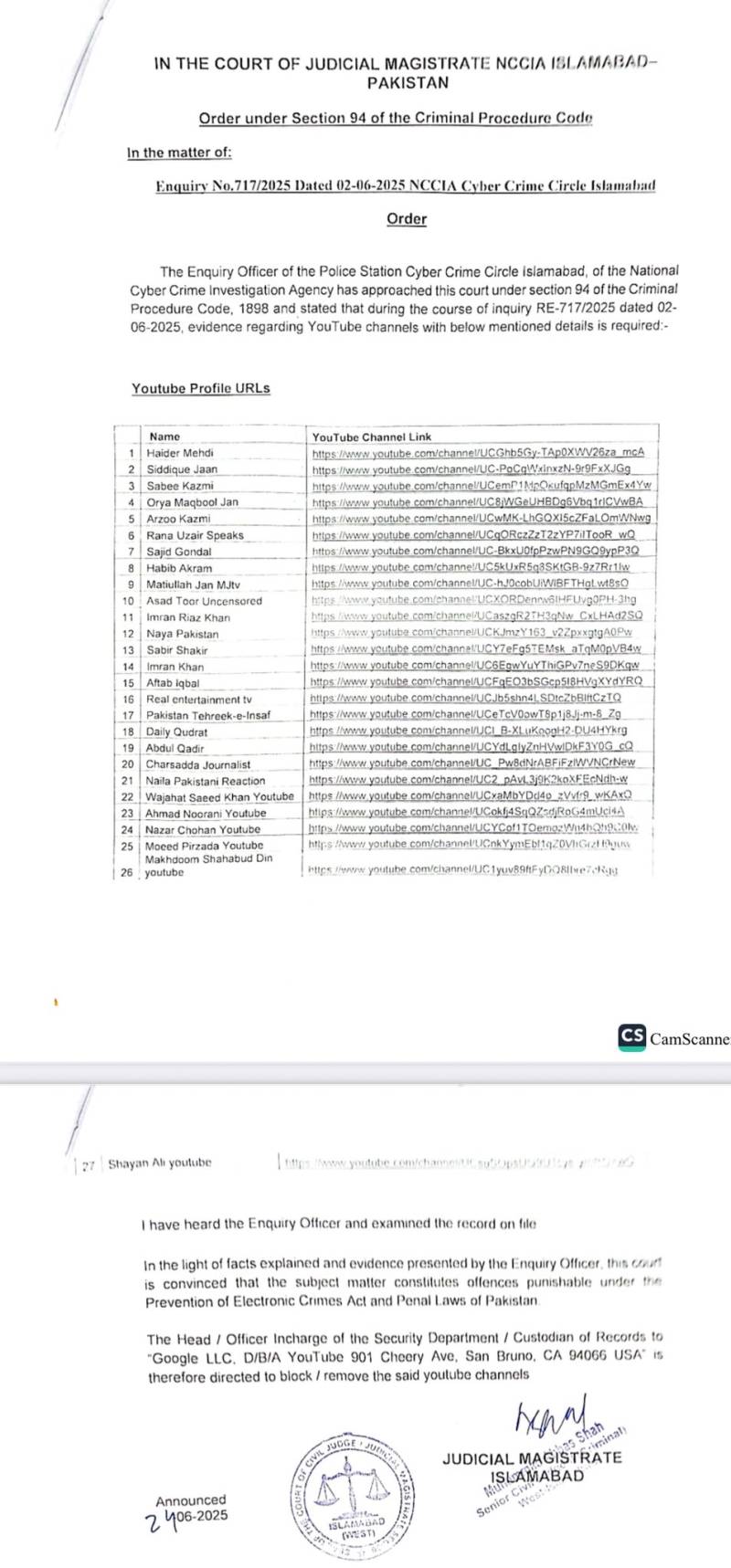
The FIA claimed that the channels were engaged in disseminating “disinformation, fake news, and content insulting towards the military, judiciary, and other state institutions,” which it argued posed a risk to public order and national security. The court concurred, ruling that the material may amount to punishable offences under the Pakistan Penal Code (PPC) and the Prevention of Electronic Crimes Act (PECA).
“The content published is highly inflammatory, derogatory, and incites hatred against the army, judiciary, and other state institutions,” read the FIA’s petition. The order added that such material threatens social cohesion and could erode public trust in national institutions.
The court directed Google LLC’s regional office in Pakistan to block the listed channels and remove access to any videos or streams found to be in violation of PECA and relevant laws. The directive was issued under Section 94 of the Criminal Procedure Code (CrPC).
The move follows earlier actions by the Pakistan Telecommunication Authority (PTA), which in May blocked 16 YouTube news channels, 31 specific video links, and 32 websites for allegedly promoting anti-state propaganda. According to the PTA, those platforms were “spreading misleading and harmful narratives” intended to damage national unity and influence public opinion negatively.
This latest crackdown comes in the wake of the Prevention of Electronic Crimes (Amendment) Act 2025, which was signed into law in January despite strong opposition from journalist unions, civil society, and rival political parties. The law introduces broader definitions of “false information,” allows for quicker content takedown, and establishes new regulatory and investigative mechanisms.
A report from the Human Rights Commission of Pakistan (HRCP) criticised the amendment, warning that it could lead to coercive enforcement and censorship under the guise of national security.
Critics fear that the court-ordered bans may be part of a wider trend of digital censorship targeting dissent and curbing free expression online. Media watchdogs have expressed concern about the lack of transparency in the decision-making process and the chilling effect on journalism in Pakistan.