

International cricket returns I
Sir,
The first international cricket match to be played in Pakistan in six years was played on Saturday 22 May 2015 – a day to remember. Gaddafi Stadium was tightly packed with crowds, people having arrived long before the start of the match, and the anticipation was overwhelming.
When team captains Shahid Afridi and Elton Chigumbura walked onto the pitch for the toss, the crowd’s roar reached the sky. Zimbabwe won the toss and elected to bat first. Anwar Ali bowled his first international game on home soil: an emotional moment for every Pakistani watching the match. And yet, perhaps the beauty of Pakistan is that only a Pakistani crowd can cheer as hard as it did when the opposing team was leading – as it did for Chimgumbura when he raised his bat, having made a half-century. Then, as Ahmed Shehzad walked towards the boundary line, the crowd started to shout “selfie, selfie!” and the player posed for one while fielding. Zimbabwe’s performance was outstanding at a total of 172 runs.
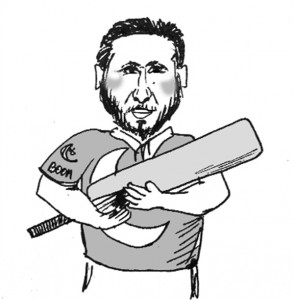
Once it was Pakistan’s turn to bat, a fabulous performance by the openers roused the crowd as they watched their cricket team do what it has been doing for several decades: taking an easy-win match in difficult circumstances. In the end, with four runs required of four balls, Shahid “Boom Boom” Afridi had the crowd on its feet, roaring his name. The first ball hit the ground straight down for four runs and Pakistan sealed its first game. A competitive total, decent bowling, a youngster’s stellar performance, and a winning shot from Afridi. The day couldn’t have been better.
Pakistan has shown that it is capable of hosting international cricket and there are no security issues to prevent this from happening. Every one is looking forward to the rest of the series. I sincerely hope that international cricket resumes in Pakistan and that other international teams, too, feel ready to play here.
Muhammad Abdul Moeed,
Karachi.
International cricket returns II

Sir,
It has been six years since international cricket was last played in Pakistan. On the last occasion, the Sri Lankan cricket team was attacked in Lahore, which has since marred Pakistan’s reputation as a host country. But there is now reason to find some cheer on the cricket grounds following the Zimbabwe Cricket Board’s final decision to tour Pakistan after three days of debate over security issues. This visit will make Zimbabwe the first Test-playing nation to visit Pakistan since 2009.
Zimbabwe has been promised VIP security protocol. The tickets for the matches are completely sold out. This shows how passionate the Pakistani people are about the sport and how desperately they want to see international cricket return to Pakistan.
M. Zohaib Iqbal,
Karachi.
Speaking up
Sir,
A bus attacked by terrorists; gunshots and bodies; no security in sight and 45 killed when vicious motorcyclists opened fire; a mother wailing inconsolably on hearing her son was found dead.
What a way to make headlines! But wait… isn’t that what we hear every time? That the Taliban claim responsibility. Or statements to this effect: justice-may-be-served-by-Allah-only.
I am a member of Pakistan’s Shia community and I am proud of it. What on earth have I done to disturb anyone’s sovereignty? What has any other minority done? Others and I ask this question and seek answers for ourselves and for millions of others who have not yet been able to put pen to paper. I have always wondered why these so-called staunch Muslims leave notes telling us they exist and post videos of their barbaric acts, and yet retreat hastily from the site of action. Even if one believed that their thoughts and actions were justified (which is, of course, possible), why do they serve ‘justice’ in such a concealed fashion? Why not stay put and face the consequences?
Hoping that real Muslims are reading this, please answer one question: how did the Prophet (pbuh) treat the woman who dumped rubbish on him every day?
Syeda Midhat Fatima,
Lahore.
Non-proliferation myths
Sir,
While it is true that the Non-Proliferation Treaty (NPT) of 1970 pays lip service to the notion of nuclear disarmament all around, an impartial examination clearly reveals that nuclear regimes are seen as pariahs – and this has led to instability and military imbalances in South Asia. World leaders in New York might gush about how we are moving steadily towards global nuclear disarmament, but the waivers and exemptions to long-held non-proliferation principles have contributed to insecurity in certain regions, and especially in South Asia.
What is worrying is that countries such as India are favored, which is cause more for concern than for celebration, given their poor workmanship, lack of documentation and poor quality control in almost all engineering products in the nuclear domain. Sadly, we may well see many more Three Mile Island and Fukushima incidents in our lifetimes.
The lack of progress in achieving global nuclear disarmament is associated with India’s bid for a Nuclear Suppliers Group (NSG) waiver and clearing the decks for an Indo-US nuclear deal. This selective nuclear policy has had far-reaching consequences, which have contributed to disrupting regional peace and global security. Washington remains committed to this goal, not least because it is part of an evolving US strategy to build up India as a counterweight to China. The modernization plans underway between the two diplomatic partners have created an asymmetry in the strategic capabilities of India and Pakistan, and eroded the role of nuclear deterrence in South Asia. This risks fuelling a new – and potentially more dangerous – regional arms race.
Ironically, the removal of nuclear sanctions against India has enabled France and Russia to benefit from the opportunities of the Indian nuclear market. It is also of severe concern that, under the proposed deal, India will separate its military and civilian nuclear reactors and place many – but not all – of its civilian nuclear reactors under International Atomic Energy Agency (IAEA) safeguards. The military facilities and stockpiles of nuclear fuel that India has produced up to now will not be subject to inspections or safeguards. Meanwhile, the US will be allowed to build nuclear reactors in India and provide the country with nuclear fuel for its civilian reactors.
Nothing better illustrates the double standard with respect to nuclear weapons and the NPT. The Indo-US nuclear deal has massively undermined the treaty’s goals, putting aside the fact that India is not a state party to the NPT. Meanwhile, Western nuclear powers continue to issue warnings about North Korea, Iran and other countries developing nuclear weapons, while forging ahead with the ‘modernization’ of their nuclear arsenals themselves.
Nevertheless, the nuclear agreement remains the centerpiece of the Indo-Pak bilateral relationship. While it is, of course, impossible to reverse the deal, amendments can be made in recognition of the right to equality for all states. This might help redress the strategic balance in South Asia instead of spending billions of dollars and decades undermining security. Lastly, one must remember that the NPT was intended primarily as a tool with which to stem the horizontal spread of nuclear weapons and is indeed a valuable legal instrument in that respect.
Usman Ali Khan,
Islamabad.
Sabeen’s mother and mine

Sir,
This refers to Mohsin Sayeed’s wonderful tribute to Sabeen Mahmud in the issue dated 15–21 May. The piece brought tears to my eyes and I felt that I too had known Sabeen as long as he did – even though I had never met her.
Mr Sayeed’s heart-rending account of Sabeen’s last journey to her final abode from T2F brought my own mother to mind. She too was full of strength and dignity, I thought to myself, as I read how Mahenaz Mahmud had dealt bravely with her daughter’s death, asking her nonagenarian mother to smile, saying it was what Sabeen would have wanted. When my grandfather died, my mother had simply uttered her thanks that he had gone peacefully.
People like Mahenaz Mahmud and my mother are rare souls. Only a mother of great love could have said such words at a time when controlling one’s emotions was next to impossible. And yet, we are so wanting in empathy: after all, how many people in this country really registered the horrific loss of Sabeen?
Dedicating merely one day a year to our mothers is not enough, given the sacrifices they make. A mother’s unconditional love cannot be expressed in words alone.
Aamir Aqil,
Lahore.
DCO appointment
Sir,
The tenure of the District Officer (DO) Colleges is three years in any district. Qazi Abdul Nasir was appointed to this post in Sahiwal in 2007 and has retained the position for almost eight years. He was transferred to Pakpattan in the same capacity in 2013 where he remained for six months. However, he was able to assume the post in Sahiwal once again.
I filed a complaint in the Chief Minister’s Punjab Complaint Cell. The Complaint Cell directed the Secretary of Higher Education to take necessary action, but Mr Nasir’s political influence meant that no action was taken. I sent a reminder to the Complaint Cell, which was similarly ignored.
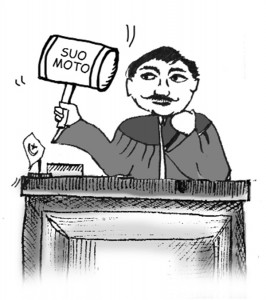
I hereby request the Chief Justice of Pakistan to take suo moto notice of this grave violation of rules and regulations and Mr Nasir’s unconstitutional appointment as DO Colleges, Sahiwal.
Muhammad Arif Iqbal,
Sahiwal.
Yet another scam I

Sir,
This is with reference to the New York Times report carried by your newspaper about Axact, the serious allegations leveled against it by Mr Declan Walsh, and its negative impact on Pakistan, educated professionals, and all skilled technicians employed abroad. While the authenticity of these allegations are still being investigated, it is an unfortunate reality that our investigation agencies, the Federal Bureau of Revenue (FBR), and various regulatory agencies funded by the taxpayer, were either complicit in this crime or were incompetently unaware of this serious violation of Pakistani law.
What purpose do these state-funded institutions serve, other than being a burden on taxpayers or serving only to regularize such blatant indiscretions? Why should this unfortunate country’s fate hinge on state agencies that always fail to implement laws and rules designed to check such irregularities? Why should Pakistan have to face international rebuke and disgrace? How is it possible that the Securities and Exchange Commission of Pakistan, Federal Investigation Agency, Intelligence Bureau and FBR were all unaware of the alleged crimes being committed by this organization, whose CEO allegedly paid less than Rs 100 in taxes in 2014?
Is it not a conspiracy against the state if fake degrees were being issued by Axact, and if some of these recipients were employed in state and private corporations, depriving thousands of qualified citizens of their constitutional rights? What greater damage can be inflicted upon Pakistan than destroying its human resource base and bringing Pakistani expatriates into disrepute? Such blatant criminal activity could not possibly have been accomplished without support from powerful elements within the ruling elite, establishment and law enforcement. No wonder retired additional directors of the FIA are billionaires who own business ventures both within Pakistan and abroad. What else can we expect when a former law minister and a controversial television anchor hold fake PhDs and continue to host primetime talk shows on private channels?
Ali Malik Tariq,
Malaysia.
Yet another scam II

Sir,
This is apropos reports about the Axact controversy and its impact on the already tarnished image of Pakistan. It is the nature of criminals and organized crime to do business in countries where corruption exists among senior law enforcement officers and where the billions reaped can be transferred easily to foreign safe havens with the help of pliant financial regulatory authorities and an internal revenue system willing to turn a blind eye. Criminals are not bound by emotions or loyalty as their sole objective is to make money, irrespective of the havoc their crimes may inflict upon the country where their operations are based.
Who could have imagined that a country founded by men of integrity and character, who refrained even from burdening the state for a cup of tea, would have at its helm men involved in the planned plunder of state assets? Men who have no hesitation in partnering with land mafia dons, who would openly defraud citizens of their lifelong savings in schemes such as the DHA Valley, Islamabad and similar projects in Karachi and Lahore. Jinnah and Iqbal did not create Pakistan so that criminals could brutally murder thousands in planned target killings, indulge in extortion, kidnappings and sectarian cleansing, pollute the nation’s human resources, and get away for the sake of political exigencies. Nor was it created so that its rulers could move their families abroad while this country and its constitution are raped.
G. Zaman,
Lahore.