

Policy rethink
Sir,
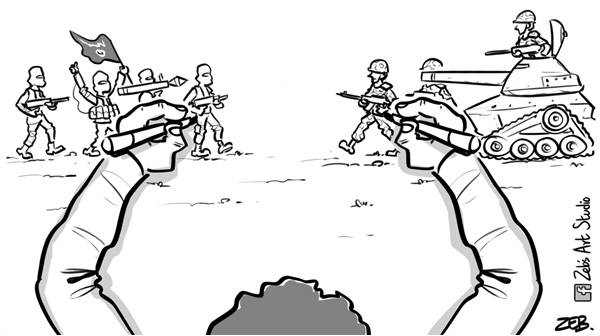
Paris, popularly known the world over as the city of sweet fragrance, was turned into a city shrouded with the repulsive smell of gunpowder on November 13. It was reported that a total of six locations were attacked in and just outside the capital. The deadliest attack was at the Bataclan theatre, where attackers took hostages and engaged in a standoff with police. The terrorists went berserk and brutally killed 129 innocent people, 89 of them at the theatre. In addition to the victims, seven attackers died. It is said the attacks were the deadliest in France since the Second World War, and the deadliest in the European Union since the Madrid train bombings in 2004.
The attacks were undoubtedly unpredicted, and it sent a wave of shock and awe among not only the residents of Paris but the whole of France and the rest of the world. Reportedly, ISIS claimed responsibility for the Paris attacks.
How very true it was when US President Barrack Obama, immediately after the news of the Paris massacre spread like wildfire across the world, said, “This is an attack not just on Paris, not just on the people of France, but an attack on all humanity and the universal values we share.” He called the attacks an “outrageous attempt to terrorise innocent civilians”. Eventually, it appears that the Paris massacre has made the US in particularly and the world at large realise that terrorism is not country-specific; it knows no bounds, and has become a threat for all of humanity.
Time has come for the US and its European allies to revisit its policies vis-à-vis global hegemony. History stands testimony to the fact that the US in particular has been responsible for dragging its allies into wars waged against nations on totally unconvincing grounds. The hegemonistic designs of the west are one of the several reasons that have given birth to the menace of terrorism across the world. One glaring example is Iraq. The basis on which the war was waged against Iraq was not strong enough to justify military action of inestimable magnitude.
In an interview with CNN on October 25, talking about the Iraq invasion, former British PM Tony Blair said, “I apologise for the fact that the intelligence we received was wrong.” He further said, “I also apologise for some of the mistakes in planning and, certainly, our mistake in our understanding of what would happen once you removed the regime.” He also admitted other ‘mistakes’ and the conflict’s role in the rise of ISIS. The former British PM’s qualified apology for the Iraq war is sufficient enough to indicate that the invasion of Iraq was not fully justified. In view of the foregoing fact should one expect that good sense would eventually dawn upon the mighty nations of the world, they would make genuine endeavours to end their hegemonistic designs. Terrorism in all forms must be condemned in the strongest terms by the civilised world. The causes of terrorism must also be found and sincerely addressed.
The massacre that took place in Paris is condemnable in the strongest terms. Pakistan has been and continues to be a sad victim of the worst form of terrorism for almost the past two decades. Its armed forces continue to fight the war on terror unilaterally, without much moral or tangible world support. Pakistan has already lost thousands of innocent men, women, children and soldiers to the ruthless menace of terrorism. Pakistan joins ranks with the civilised world in condemning, in the strongest terms, the brutalities committed by the perpetrators of the Paris terror attack. While doing so, it urges the world community to come forward and strengthen its hands in its long war against terror.
M Fazal Elahi,
Islamabad.
Speculation galore
Sir,
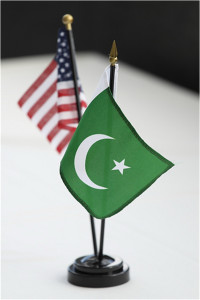
The COAS must have on his person a list of arms to buy from both America and Brazil. In the case of Brazil, the possibility of defense cooperation is significant. Brazil suits Pakistan in various ways, not to mention the country has expressed its desire to open a new chapter in its relationship with Islamabad. The Pentagon may insist upon the army chief an increased role in the fight against ISIS, perhaps in a bid to keep Pakistan away from Russia. It can ask Islamabad for an enhanced role in Afghanistan as well if the complaints of growing Indian influence in the country are addressed.
Domestically, speculations are flying all over the place that Gen Raheel’s next moves may be similar to those of Gen Zia. However, those who know the army chief do not think such a move likely. The general has already proved, they say, that he only wants the system to continue to work, and work well. Instead of dwelling on how to rid itself of the army chief, the government should hopefully wise enough to mend its ways, act fast on its part with regards to NAP, improve governance and shun corruption.
Alya Alvi,
Rawalpindi.

Crime, terrorism and corruption
Sir,
With reference to reports about the alleged links of Dr Asim with Al-Qaeda and him facilitating criminals by providing them medical assistance, when wanted target killers involved in the murder of thousands of people, including 350 police officers, can receive treatment in Karachi’s private clinics, would it be as a surprise if terrorists availed the same facilities? Unless the writ of the state and supremacy of the constitution is not enforced, and compromises for political or commercial gains do not stop, the curse of terrorism will continue to haunt Pakistan and ultimately lead to sanctions.
The nexus between crime, corruption and terrorism does indeed exist, and each aids the other. When instruments of state such as Customs, FBR, FIA, Border and Coast Guards, law enforcement, and intelligence agencies created to prevent entry or exit from Pakistan of containers full of smuggled goods, facilitate such illegal trade, then terrorist organisations will easily use the same channels to smuggle prohibited weapons, explosives, rocket launchers hidden in containers. If wanted criminals can flee Pakistan to evade punishment using political clout or bribes, then terrorists can do the same. The channels used to fund terrorism are the same used by corrupt bureaucrats, politicians, traders and land or drug mafias, for the transfer of funds to and from this country. As long as important public offices can be held by individuals with split loyalties, those who hold foreign passports and have relocated their families abroad, national security will suffer, along with the continuation of flight of capital. Crime must be punished, irrespective of who commits it, otherwise Pakistan will suffer, as it has for over two decades. The rights of criminals should not override collective national security interests.
Malik Tariq,
Lahore.
Going all out
Sir,
This is the season of local bodies elections in different areas, including Islamabad. With it, several political parties have taken their campaigns to heights where they seem to have crossed several limits. There is a saying that the “excess of anything is bad”. This rings true during the said election campaigns. Excessive use of money, thousands of posters, crowded rallies and excessive use of loudspeakers, this excess causes many serious problems. Political parties spend a lot of money on these campaigns, which just so happen to be a complete waste of time for citizens. Roads remain blocked for many hours because of crowded rallies, not too mention the amount of noise pollution created by the excessive use of loudspeakers.
Authorities must take notice of this and make such campaigns limited and purposeful. In this regard, there must be proper legislation to control these campaigns, which are turning into an increasing burden on society.
Tayyab Abbasi,
Islamabad.
Shaheen Air accident
Sir,
Public interest and safety of air travelers would be well served if the CAA were to investigate and reveal all the facts that led to the recent emergency landing by a Shaheen aircraft, resulting in damage to the left column of the main landing gear of B737. Luckily, there was no fire and no fatalities as a result of the landing. Commercial aviation is a specialised field and is as different from military aviation, as Oncology is from Dentistry.
Aviation is an unforgiving business, where there are no second chances, nor any room for relaxation in requirements. Pilots are paid better salaries and often get tax relief benefits, which others in this industry are not entitled to, because their earning tenure is not considered to be assured till the age of retirement, limited by stringent medical, physical and mental fitness requirements. Nowhere in the developed world where aviation safety is a priority are pilots allowed to fly beyond the national age of retirement, which is directly linked to that nation’s average age of mortality, quality of medical facilities availability, law and order and provision of unadulterated food etc. If commercial airline pilots in the US are allowed to fly till 62, it is because their national age of retirement is 67.
When the CAA does not revoke a commercial pilot’s license for having a criminal record, including those who have submitted fake degrees, or were involved in cases of sexual harassment, or had been found guilty of alcohol or drug consumption, then how can it expect to assure flight safety of the general public. If in the CAA’s opinion, pilots can be utilised beyond the national age of superannuation/retirement, although physical, medical and reflex action requirements for commercial airline pilots are higher than for those involved in doing regular jobs, then the problem lies with the regulator, not licensee. Was it not criminal of PIA, CAA and GoP to allow Capt Aijaz, an O’ level pass found guilty of gross irregularities in pilot recruitment, to be appointed as MD in 2008?
Aneela Chandio,
Sukkur.
Failure of governance
Sir,
Power acquired through ballot or bullet, when misused to thwart the rule of law, leads to institutional and economic collapses, rise in crime, lawlessness and even terrorism or anarchy, all of which have taken root in Pakistan. The only doctrine that can save Pakistan is one enunciated by Jinnah, which is a democratic welfare state, where every institution is accountable and is there to serve and protect the rights of citizens. The solution is submission by all citizens, irrespective of their official status, to the writ of the law, with none being immune from prosecution. The problem is not with any one system, whether its presidential or parliamentary, but with the mind set of those at the helm who believe that the state, its resources and its people are there to serve them, not the other way around. Without a credible system of accountability, prosecution and punishment, a state cannot function.
What to say of the repetitive military interventions, starting from 1956 onwards, where men belonging to disciplined uniformed services get involved in civil matters, while many amongst them succumb to temptations and greed. Such endeavours have adversely impacted these vital sensitive institutions, and severely retarded the development of civil institutions. The billions invested on national security infrastructure cannot justify permitting private militias, which history ordains as always turning on their masters. Moral bankruptcy plagues our paid civil cum uniformed bureaucracy, judiciary, law enforcement and elected executive, which can be gauged from the paucity of funds for the upkeep of the Flag Staff House, personal residence of Jinnah, but no dearth of funds for numerous private houses declared official residences of the PM or President, or the ever-expanding residential housing societies under the garb of the welfare of paid servants of state. We forget that Pakistan was created for the economic welfare of its people and improvement in human resource development, not for the welfare of an elite cadre or group. Any government that abuses its power to patronise and protect tax evasion is guilty of financial crimes against the state, a crime that constitutionally even majority electoral seats in parliament cannot waive.
Ali Malik,
Lahore.
No end in sight
Sir,
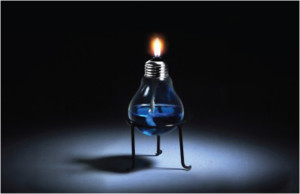
Two-and-a-half years have passed since the PML-N government took over the reins of the country after winning the 2013 elections, mainly on the basis of a promise made to the people of Pakistan that if elected, the government would solve the problem of energy shortage and end load shedding from the county. That has not happened yet, and is not likely to happen until and unless the issue of circular debt is resolved permanently. I believe circular debt is a serious bottleneck in the operation cycle of energy production and distribution. The government has not shared with the public, information regarding the latest stock and status of circular debt. Electricity producers cannot produce electricity regularly and efficiently unless their debts are cleared by purchasers, who happen to be the country’s power distribution companies. Power distribution companies can’t pay electricity producers because the former’s customers don’t pay on time or regularly for the electricity consumed. Thus, it has become a vicious circle. It is the responsibility of the government to fix the problem by removing the bottleneck, wherever it exists in this business operation cycle. In any business operation, generally speaking, the terms of trade debts range from 30 days to a maximum 120 days. It is extremely surprising that two-and-a-half years have passed (about 900 days) since the present government, soon after coming into power in June 2013, paid off circular debt amounting to Rs 482 billions, and to this date the people of Pakistan do not know what happened to the recovery of that circular debt. I have high respect and regards for the country’s finance minister, Ishaq Dar, for his positive contribution so far to the country’s economy, but as the custodian of the country’s finances, it is his duty to inform the public on the recovery status of that circular debt, which was paid from the national wealth about 900 days ago. If no recovery has been made so far from that circular debt amounting to Rs 482 billion, despite the passage of over 900 days, then it should not be called circular debt. It is actually a bad debt.
Ejaz Ahmad Magoon,
Lahore.
Uniform education system
Sir,
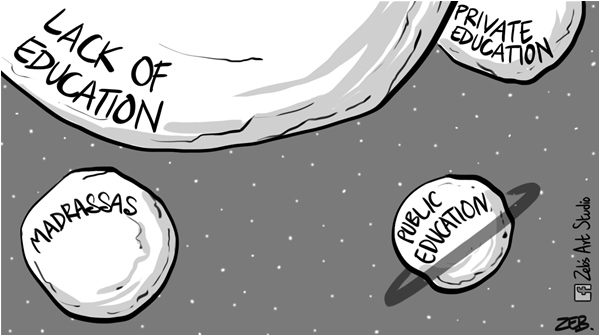
There is no uniformity in Pakistan’s education system. The medium of education is different in private and public sectors, as well as in madrassahs. The difference in the education system creates a lot of disparity among students. They think on different lines and have strikingly different approaches toward how to live their lives. The basis of an education system on unequal lines is causing a rift among the youth. It is promoting sectarianism rather than minimising it. This is a basic cause of the high illiteracy rate in Pakistan.
Politicians do see it as a problem, and I like to think that they recognise that it our education system is heading nowhere. The government cannot say for sure if educational funds are being equally distributed among all educational institutes, or if the educational system is uniform. And still, no practical measures are being taken to redress the situation.
Our problems like sectarianism, political and social clashes, social inequality and lack of unity on national issues will only destruct and demolish our society. If politicians seriously want to put the pedal to the metal and solve all these issues, their first step should be to establish a uniform education system.
A uniform education system will help develop a nation that will be self-reliant. It is high time now that ruling authorities take this fact in account and build new schools – or even reform existing ones – that give equal opportunities to both the rich and the poor. The minister for education has this responsibility and I request him to take notice of this situation and devise a uniform curricular for all educational institutions of Pakistan.
Ayesha Nawaz,.
Islamabad.