


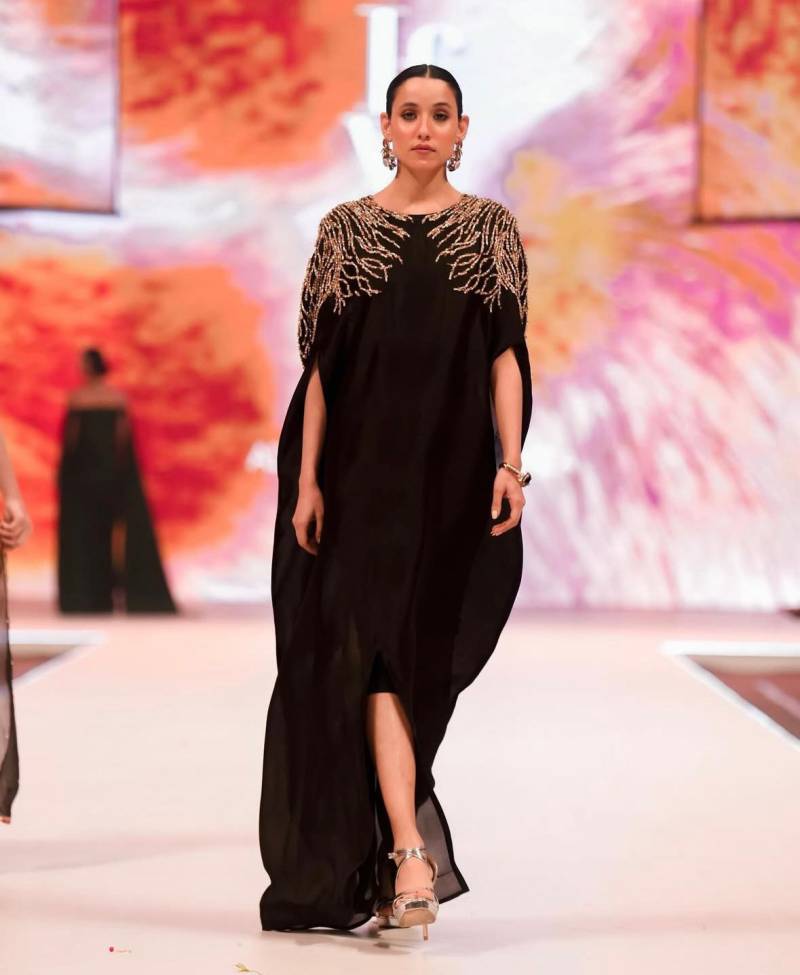
LAAM Fashion Week (LFW), Pakistan’s first runway-to-e-tail fashion platform, presented Day 2 of its inaugural showcase on Sunday, offering a sweeping view of the country’s diverse and evolving fashion ecosystem. Held on February 1, 2026, the day unfolded as a carefully curated journey from accessible high-street fashion to bold couture statements, reflecting the breadth, ambition and creative confidence of Pakistani design today.
Day 2 opened with Act 1, an afternoon high-street edit featuring Agha Noor, Panache Apparel and Urge Pret. Agha Noor set the tone with its Basant collection, celebrating renewal and the spirit of spring. Drawing inspiration from the cultural vibrancy of Basant, the collection featured sunlit yellows, fuchsia florals and fresh green accents. Airy organzas, fluid silks and softly textured chiffons were layered into elegant yet wearable silhouettes designed for festive moments.
Panache Apparel followed with Mistfall, a collection inspired by nature and the calm of outdoor living. Softly printed fabrics, muted hues and lightweight textures defined relaxed silhouettes created for comfort and ease during warmer months. Urge Pret concluded the act with Gulrang, presenting composed, versatile wearables inspired by the quiet strength of flowers. With fluid cuts and understated detailing, the collection reflected timeless beauty and grounded confidence.
Act 2 shifted focus to retail runway brands, featuring Allure by Izna Hamza, Bin Tayyab and Pehnawa by Bin Akram. Allure by Izna Hamza’s Sun at Noon explored a cross-cultural dialogue between African heritage and Pakistani craftsmanship. Tribal geometry, ceremonial forms and earth-rich palettes were translated through refined tailoring, silk, organza and velvet, enhanced by intricate hand embroidery that spoke to identity and lineage.
Bin Tayyab showcased Dastoor-e-Shahi, a collection rooted in classical architecture and regal heritage. Muted jewel tones, layered textures and graceful silhouettes conveyed sophistication while celebrating traditional artistry. Pehnawa by Bin Akram presented Amarbail, inspired by Mughal art and vintage Pakistani silhouettes. Rich fabrics such as tissue, raw silk and zari organza were adorned with tilla, goti, sitara and hand-finished details, reimagining classic forms like shararas and angrakhas alongside contemporary cuts.
Act 3 featured designer showcases by Karma, Deepak & Fahad, Sadaf Fawad Khan and Fahad Hussayn. Karma’s Dilruba marked Maheen Kardar’s return to the runway after a decade, embracing desi maximalism with bold colours, expressive embellishments and dramatic silhouettes. Designed for Eid, festive gatherings and monsoon weddings, the collection blended saris, flares, gowns and trousers with contemporary movement.
Deepak & Fahad presented Meraki, inspired by traditional Ikkat weaving and the abstract colour language of Mark Rothko. Handwoven cotton yarns and linen pieces revived a fading craft while offering a modern East-meets-West aesthetic. Sadaf Fawad Khan unveiled Suroor, a dual narrative that moved from refined, traditional silhouettes to contemporary couture defined by bold structures and theatrical scale.
The day concluded with Fahad Hussayn’s The Conclave of Anti-Fashion, a rebellious finale that treated clothing as ideology rather than a seasonal trend. Conceived as ritual objects of identity and permanence, the collection featured sculptural silhouettes, symbolic detailing and carefully composed colour stories. Developed under the Fahad Hussayn Academy’s Art Collective, the presentation was accompanied by live music performances by Sheryar Rehman, Natasha Baig and Nehal Nasim.
Streaming live across more than 120 countries and 7,800 cities, LFW Day 2 underscored the platform’s vision of uniting craft, creativity and commerce, while positioning Pakistani fashion firmly on the global stage.