


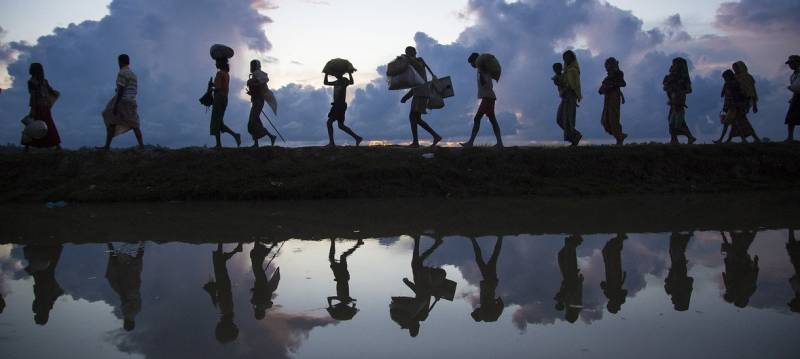
Over five million Rohingya Muslims and other minorities in Myanmar continue to face severe persecution, displacement, and human rights violations, according to remarks made at the United Nations General Assembly high-level conference on Monday. The conference focused on sustaining international attention, mobilising political support, and exploring sustainable resolutions to the humanitarian, political, and human rights challenges confronting Myanmar’s minorities.
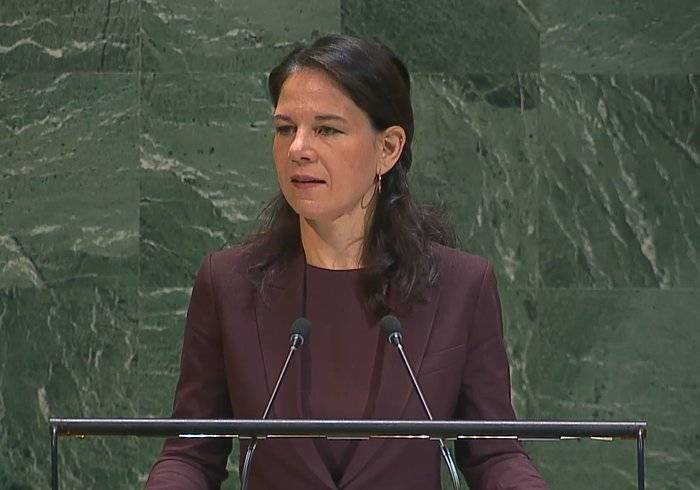
President of the UN General Assembly Annalena Baerbock described the scale of the crisis, highlighting communities whose homes have been burned, neighbours killed, and families uprooted for years. Millions of Rohingya have been forcibly displaced from their homes, with many spending entire childhoods in refugee camps or as internally displaced persons within Myanmar. “Five million men, women, and children share some version of this story,” Baerbock said, emphasising the deep and ongoing suffering across the region.
Rohingya remain largely segregated and discriminated against, with limited access to education, healthcare, and basic services. Restrictions on movement, denial of citizenship, and systemic discrimination have left over 3.5 million Rohingya within Myanmar in urgent need of assistance. More than 1.1 million have sought refuge in Bangladesh, where Cox’s Bazar, the world’s largest refugee camp, struggles to meet the needs of its inhabitants. Aid remains insufficient, with refugees often receiving only one meal per day, severely reduced healthcare, and limited access to safe water.
The conference emphasised the need for a comprehensive plan to address the crisis, including conditions for the voluntary, safe, sustainable, and dignified return of Rohingya Muslims and other minorities. International support, accountability for human rights violations, and a political solution addressing the root causes of conflict, discrimination, and exclusion in Myanmar were key points highlighted by participants.
Delivering a message on behalf of the UN Secretary-General, Chef de Cabinet Courtenay Rattray noted that the crisis had intensified since the 2021 military takeover. The takeover trampled on the rights and safety of millions and threatened regional stability. Rattray recalled a visit to Cox’s Bazar earlier this year, where he met Rohingya refugees who, despite trauma and displacement, expressed their determination to return home when conditions allow. Civilians in Myanmar are caught between warring parties, facing forced recruitment, airstrikes, and human rights violations. Over the past 18 months, at least 150,000 Rohingya have fled to Bangladesh, while others risk dangerous journeys by sea.
Daily life in refugee camps has grown increasingly difficult. Cuts to aid funding have reduced access to health care, education, and livelihood opportunities. Food assistance is projected to run out by the end of November, raising fears of malnutrition and unrest. Women and girls face heightened risks of trafficking, gender-based violence, and child marriage. Rattray called for immediate action, including respect for humanitarian law, unhindered access to aid, and increased investment to support basic needs and promote self-reliance among refugees and host communities. He noted that Bangladesh has shared land, water, and scarce resources with the displaced and stressed the need for international solidarity.
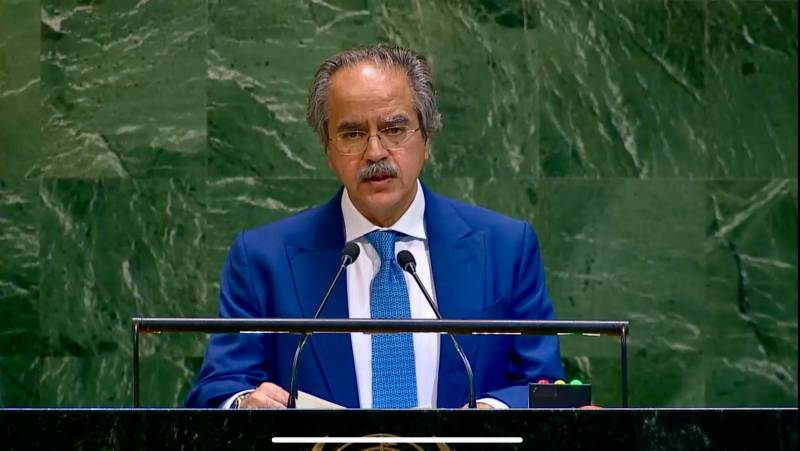
Pakistani Ambassador to the UN, Asim Iftikhar Ahmad, speaking in alignment with the OIC statement delivered by Turkey, said the conference comes at a critical moment. The plight of Rohingya Muslims and other minorities in Myanmar remains one of the most urgent humanitarian and human rights challenges. He commended Bangladesh and other host countries for sheltering displaced Rohingya, noting Pakistan’s own decades-long experience in hosting refugees.

Asim Iftikhar stressed that a lasting solution requires addressing root causes, including full implementation of the Advisory Commission’s recommendations on pathways to citizenship. A realistic and inclusive approach, owned by Myanmar and supported by the OIC, is vital for durable peace and reconciliation. Pakistan stands ready to work with all partners, including the UN, ASEAN, and the OIC, to meet humanitarian needs and promote lasting peace and stability.
During the conference, the Chinese representative emphasised that dialogue and arrangements between Myanmar and Bangladesh remain the only actionable and sustainable solutions. Continued communication and mutual understanding are essential to build trust and create conditions for repatriation. China highlighted its active diplomatic engagement, including high-level meetings and support for cooperation, while stressing that actions must respect Myanmar’s sovereignty, avoid intervention, and focus on development, reconstruction, and political and social unity.
UN High Commissioner for Human Rights Volker Türk described conditions in Myanmar, particularly Rakhine State, as potentially the worst ever for Rohingya and other minorities. He recalled that deprivation and hopelessness have worsened over time. Fighting has surged in Rakhine, with the military expanding the use of aerial bombardments against civilians. Reports indicated killings, torture, destruction of property, and forced conscription. Other minority communities, including ethnic Rakhine and groups such as Mro, Maramagyi, Hindu, and Kaman, have also been affected by artillery and airstrikes, leading to widespread displacement. Rohingya communities report severe restrictions on movement, confiscation of phones, and internet blackouts.
Türk noted that the Arakan Army has committed serious violations, including killings, forced recruitment, abductions, and arbitrary detentions. Homes and places of worship have been destroyed. Some Rohingya have been punished for alleged support of military or armed groups, for travel without authorization, or for resisting recruitment. Arrested individuals, including children, have gone missing. Civilians returning from Bangladesh have faced extortion and indefinite detention. Humanitarian access is dangerously restricted, with an estimated 15.2 million people facing acute food insecurity. Over 3.5 million people are internally displaced, and 150,000 Rohingya have crossed into Bangladesh since January 2024 alone.
Türk stressed five urgent areas for action. Violence must end, and UN Security Council resolutions, including resolution 2669, must be implemented. All parties should allow unimpeded humanitarian access. Sustained funding for communities inside Myanmar and refugees in Bangladesh is essential. Protection of those fleeing conflict, including at sea and borders, must be guaranteed. Compliance with International Court of Justice measures is critical, and the Security Council should consider referring the situation to the International Criminal Court. Listening to Rohingya voices and ensuring freedom, security, citizenship, and participation in peace processes are necessary for a sustainable solution.
Julie Bishop, the UN Secretary-General’s Special Envoy on Myanmar, emphasised that a sustainable solution for the Rohingya is tied to resolving Myanmar’s broader political crisis triggered by the 2021 military takeover. The internal conflict has affected the broader population, causing casualties, displacement, and humanitarian needs, with women and children disproportionately impacted. Bishop highlighted the ongoing violence between the military, ethnic armed organisations, and people’s defence forces. Elections planned under current conditions risk increasing resistance, protests, and violence, potentially undermining stability.
Bishop highlighted the aspirations of Rohingya refugees for education, skills development, and livelihoods during a February visit to Cox’s Bazar. Funding shortfalls have reduced access to food, education, and protection, and the 2025 Joint Response Plan for Rohingya humanitarian needs is only 37 percent funded. She called for stronger international solidarity, humanitarian access, and a political solution that addresses root causes, improves well-being across communities, and promotes inclusive governance.