

Pakistan-US strategic dialogue
Sir,
The resumption of strategic dialogue comes after a three-year hiatus, where Pakistan-US relations remained perched at a critical yet precarious impasse. Despite discussing all the details, there’s a shell game going on, in which Pakistan has been beset by the twin menace of radicalization and terrorism since 9/11.
Thus far, the government has stood its ground in all cases of terrorism since the fall of the twin towers.
The complete elimination of terrorism may not be possible, but adequate containment is the path being followed. The shrewd and incomprehensive propaganda against Pakistan about its usage of jets against terrorist has limited value. One massive challenge for counterterrorism in future will be coordination, which will help Pakistan improve its efforts further for cutting out this menace.
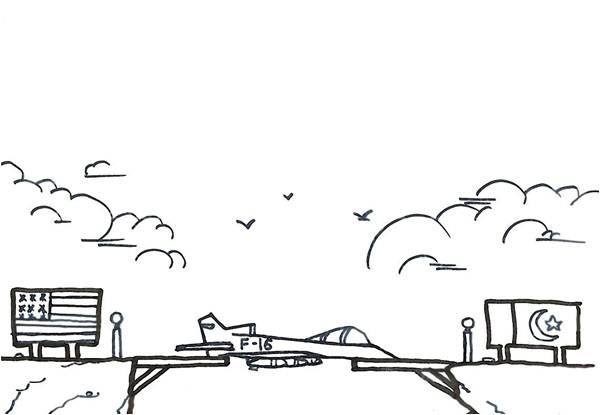
Helping Pakistan improve its internal security, given its role as a strategic partner, will secure the United States’ foreign policy objectives and national security. The US has approved selling eight Lockheed Martin F-16 fighter jets to Pakistan, along with training, radar and other equipment, worth a total of $699m. This decision of selling F-16s will help fulfill both partners’ efforts to meet future security threats.
With the inclusion of this new squadron of F-16’s, the success of counterterrorist operations in future will not be a distant dream. It will serve not only the national interests of Pakistan, but those of the United States, NATO, and the Asian region as a whole.
Subsequently, it’s high time to start rewarding and providing help to Pakistan who is holding its feet to the fire.
Usman Ali Khan,
Islamabad.
No water
Sir,
It is said that Balochistan is the biggest province of Pakistan, but still there are no dams or means of storing water in the entire province. It is clear that we all are facing lots of difficulties. It does not rain the region for months on end, resulting in the death of both animals and humans alike. If dams were being built perhaps we could avoid such a death toll. I request the Balochistan government and the federal government to please take notice of this issue and invest more into dams and barrages in Balochistan.
Momen Raheem,
Turbat.
Unacceptable numbers
Sir,
The deaths in Thar have reached 200 during three months. According to the various data collected, it has been proved that due to lack of good medical care, shortage of food, and the government’s apathy are the dominant causes of deaths of innocent children in Thar. 756 people have died in 10 months. In Thar, everyday, more than five children die, which is unacceptable.
The media is performing its full role to highlight the worst condition in Thar, but our leaders have ignored everything. They can only do their best to provide good healthcare, treatment, food, security and education to their own children. As per a report, 30 posts for doctors are vacant in Thar, but the government doesn’t even care enough to appoint doctors in Thar. They only visit, promise to help the people, and leave only to never return.
Mahnoor Baloch,
Turbat.

Ray Tomlinson is no more
Sir,
Raymond Tomlinson, the American programmer, a graduate of the distinguished Massachusetts Institute of Technology (MIT), widely recognised as the inventor of modern email and a technological leader, departed from this mortal world on March 5, 2016 at the age of 74. Email existed in a limited capacity before Tomlinson in that electronic messages could be shared amid multiple people within a limited framework. But until his invention in 1971 of the first network person-to-person email, there was no way to send something to a specific person at a specific address. It is said Tomlinson wrote and sent the first email on the ARPANET system, a computer network that was created for the US government that is considered a precursor to the Internet. Tomlinson also contributed to the network’s development, among numerous other pioneering technologies in the programming world.
Tomlinson’s employer, Raytheon Company, a major American defense contractor and industrial corporation, said in a statement, “A true technology pioneer, Ray was the man who brought us email in the early days of networked computers.” “His work changed the way the world communicates and yet, for all his accomplishments, he remained humble, kind and generous with his time and talents.”
M Fazal Elahi,
Islamabad.
For shame
Sir,
The Punjab government needs a pat on the back to have passed the women protection law. It is a pity that religious parties have given an ultimatum to the government to take back this law by March 27 or face dire consequences. It seems religious parties only want a law where they can have control over their women and also minorities.
Let me tell all the readers that women and minorities of the country have rendered more services for the good of the country than any others, while political parties who misused the name of religion in previous years have done a lot of damage to the country. It is high time that they realise their mistakes and try to undo all the mistakes they made in the name of religion.
Abid Habib,
Mirpurkhas.
Cyberstalking
Sir,
The World Wide Web and Internet are great places to study, work, or even play, but there is an ugly side of cyberspace.
Cyberspace reflects the real world and some people tend to forget that. Cyberstalking and harassment are problems that a large number of people (especially women) are realizing. Just because an individual owns a computer and has an Internet account does not mean that person is considerate or respectful.
There are just as many stalkers in cyberspace as anywhere else. It’s just that their methods have changed. Some stalkers might harass you by following you through live channels not being able to take no for an answer and bothering you with email messages. In some cases this harassment may become a systematic campaign against you; where your harasser bombards you with threatening messages of hate and obscenities. The stalker may even trace your home address and telephone number, causing not only emotional distress but possibly physical danger. It should come as no surprise to you that the stalkers are making use of this technology to harass people and prey on the innocent.
There have been many examples of cyberstalking crossing over into real-life stalking. And the internet users who have been victims of cyberstalking always report that no one took the harassment seriously until it became real life stalking. People say things like “well just turn off your computer” and “you can’t be hurt on the Internet, it’s just words”. They don’t realize cyberstalking can be a devastating experience for a person online – just as frightening and distressing as off-line stalking, and just as illegal.
Anyone can be stalked online, but statistics show that the majority of victims are women. Women are the minority of the internet population, which means their attention is generally fierce competition between male users. Cyberstalking and online harassment are easy to practice than real life stalking. In cyberspace, a stalker can harass their victim without ever having to leave the comfort of their own home, or have any witnesses to the crime.
Online users are vulnerable to stalking in three areas. Live chat rooms are the most common place for cyberstaking. Message boards and newsgroups, and email are also used. A user has the ability to write anything and even attach files to the email. Another common area is at “.edu” sites, which are educational institutes, such as colleges and universities. One user might know another user personally and interacts on the internet anonymously starting the cybertalk. One student can enter the internet as easily as another student, therefore not letting his or her true identity be known.
If you are being harassed online by a cyberstalker, the chances are you are not the first person they have stalked. Cyberstakers, like other predators, are opportunists. They know what they are looking for and know how to get it. Stalking is a power crime, the stalker has the power to make you suffer and enjoys that power. A stalker’s self-esteem rises when they attack your self-esteem. The more pain and suffering they can cause, the better they feel about themselves. The best protection against becoming a target of stalking is not to reveal anything personal that you might have in common. A major clue to cyberstalking is when the stalker pushes for information regarding your personal life, private life, or life away from the net. A simple rule is to never give any personal information over the Internet.
Wareesha Khan,
Islamabad.
Polluted Turbat
Sir,
Being a citizen of Turbat, I am facing several problems in the form of air pollution while traveling to college. Many vehicles that have not been maintained over the years are discharging too much smoke, which is affecting the environment. I am also suffering physically, and was unconscious and sick for nearly a month. Diseases such as cough, sore throat, headache and many other dangerous diseases have affected me already. For one whole week, I was unable to attend my classes, leading to my education suffering. I request Balochistan CM Sanaullah Zahri to ban or charge such vehicles, which are responsible for so much air pollution in the region.
Sana Samad,
Turbat.

Dark ages
Sir,
Everyone admits the fact that Gen Ziaul Haq’s regime was the darkest period of our history.
He tried to make it look like he was a champion of Islam, but he was hypocritical. It was during his regime that drug problems and the Kalashnikov culture spread. Various Islamic groups were armed without regard to consequences. The same groups are now fighting against each other.
Today, people admit that he was neither true to Islam nor to Pakistan. He only introduced so-called Islamic laws and made amendments in the constitution to remain in power and to control the women and minorities of the country.
Some of these laws are abused not only against women and minorities, but also against twice as many Muslim men.
If Zia was so insincere, how can anyone support anything this man began? His time should be declared the darkest period of our history and all the laws and amendments he made in the constitution should be scrapped.
It is high time that the government of Pakistan officially disclaims Ziaul Haq and abolishes his so-called Islamic laws, amendments to the constitution, and ordinances, with immediate effect.
Abid Habib,
Mirpurkhas.
Beggars, choosers
Sir,
I want to draw the attention of the authorities and the general public towards the evils of street begging, which is assuming alarming proportions in our country.
Begging in the streets is such a long-established custom in our country, and the giving of alms has so many religious sanctions, that it is not easy to make people realize the social evils inherent in the institution. The man who dares point out its real character is in danger of being accused of unsocial habits. People may even go to the extent of calling him ‘mean’ and ‘uncharitable’. But it is worthwhile to decry this manifest evil even at the cost of public disapproval. Causal almsgiving helps no one. It only encourages idleness and mendicancy.
The most important question is, are all the beggars in the streets really poor and deserve help? The answer is obviously no. A large number of these beggars are able-bodied and can turn to some useful work if they like. But they find it easy to live on the charity of those who deem it highly religious to indulge in indiscriminate acts of charity. The misplaced generosity has gone a long way to create an army of parasites who live upon the wealth produced by others.
Even religion condemns indiscriminate charity which only encourages idleness and a life of dependence. If we are really interested in the welfare of the poor and the needy, we should organize a charitable relief fund for the poor, or set up poor-houses where the able-bodied beggars – men and women both – can be taught some useful means from which they can earn. To give even a penny to a poor beggar may help the giver feel relieved of his social duty, but it does not solve the problem of poverty. Rather, it intensifies it.
Aroosa Naeem,
Lahore.

Juvenile justice
Sir,
A great example of judicial activism was set in Pakistan when a nine month old was presented in court and that too in the most efficiently governed heartland of the largest province of Pakistan. An unprecedented precedence has been set by the police and the court, and the entire world including the Guinness Book staff is watching the display of the unparalleled commitment of the Pakistani ruling classes towards justice.
It is certainly a great effort to bring rule of law in Pakistan. People always complain that the law does not treat everyone equally in Pakistan. This landmark incident of dispensation of justice would certainly silence all critics of the Pakistani justice system. Every one witnessed how the law treated a grandfather, a father and a nine month old grandson alike.
The incident will go down in the history of the country as one of the greatest of its kind and will help to curb crimes in all times to come. Such dire and critical moments come in the history of all great nations and change the entire course of dispensation of justice in anarchic societies. Bravo to the police and the judiciary.
It would be extremely unfair if the Punjab government is not praised for their extraordinary display of efficient Guinness-Book recognized world class governance.
Atif Mahmood Majoka,
Melbourne.
Gender gap
Sir,
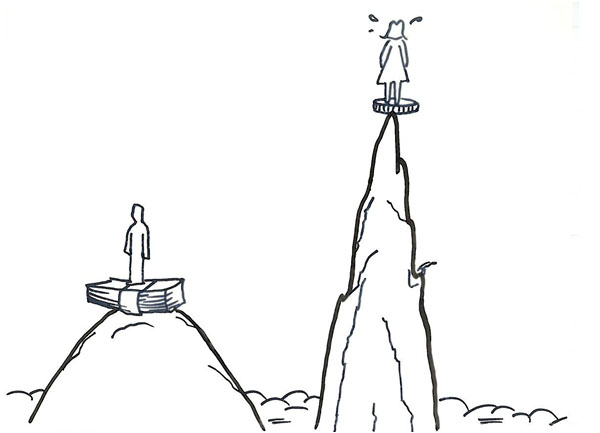
The Global Gender Gap Report 2013 ranked Pakistan as the world’s second-worst country in terms of gender equality and equitable division of resources and opportunities among men and women. In 2014-2015, Pakistan slightly improved its position. Pakistan’s male chauvinist society has a grip on almost all fields. Resources are not well divided between the male and female segments of society.
Areas including economic participation and opportunity (salaries, participation and highly skilled employment), educational attainment (access to basic and higher levels of education), political empowerment (representation in decision-making structures), health and survival (life expectancy and sex ratio) are declining. Pakistan ranks the second-worst in economic participation and opportunity, eighth-worst in terms of equal access to education, 13th from the bottom in terms of health and survival. Female education ratio is lowest amongst the world nations. Only 5-7% female reach higher education and the female school dropout ratio is the highest. Only 14% representation has been given to females in Parliament. A direct election to seats of Parliament has declined and remains the lowest among the other world nations. Political parties, in the 2013 general elections, awarded only 5%-7% tickets to female candidates. Pakistan’s civil society has only 2% female representation on boards and 5% of women have jobs in different donor-related initiatives.
Despite all these issues, hope remains. A Pakistani girl won the Nobel Peace Prize at the age of 14 years, while another won the Oscar for the second time. Malala Yousafzai and Sharmeen Obaid. Malala won the Nobel Peace Prize, while Sharmeen won her second Oscar. The Pakistani government must realise the power/innovations of women. The government must increase the representation of females in all tiers of Pakistani Parliament and give a role to women in all decision-making bodies.
Aijaz Ali Khuwaja,
Karachi.