

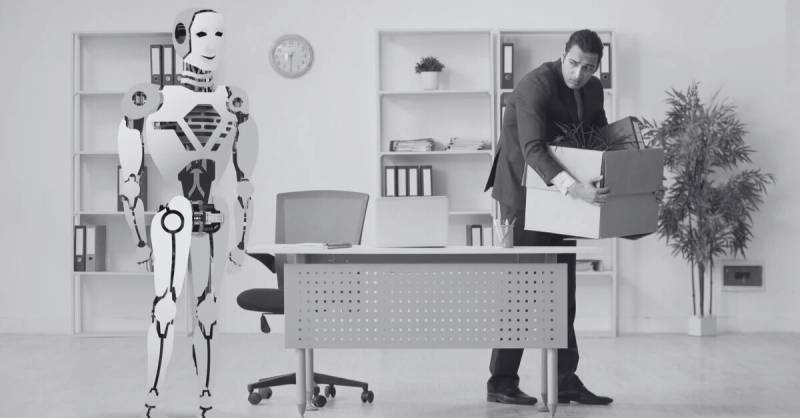
"The development of full artificial intelligence could spell the end of the human race." — Stephen Hawking, BBC Interview, December 2014
In a rapidly evolving world where the human brain is functioning more actively than ever, we have created a scientific yet robotic tool called AI, which has affected practically every field of the human race that is expanding relentlessly. Although this tool provides a reliable source of information, it also contains errors. This generative tool is nothing more than an apparatus for reaching conclusions. In fact, in 2025, people are relying more on this generative tool than on their intuition. This is particularly concerning, because the tool has been shaped and developed in such a manner that most industries are now adopting it for their primary tasks.
It would not be wrong to believe, as many platforms and forums suggest, that soon “AI will replace humans.” But is it truly possible that a tool, which has been developed by mimicking the functions of the human brain, can take the place of the very mind that created it? Despite this paradox, humans have grown so reliant on this tool that independent thought has become almost obsolete. Why? Is it the lack of time, or the relentless pace of modern life? It is becoming a new-age pandemic—one spreading faster than its usage. People today appear less concerned about the immense potential of their brains and place more emphasis on learning and using these tools rather than engaging their cognitive abilities.
Humans are gradually becoming couch-bound sculptures with dormant brains is more disturbing than many of the world’s most pressing issues
It is disheartening that the human being—once considered the finest creation in the universe—is devaluing and depreciating themselves in favour of something that exists solely due to their ingenuity. Using AI in major sectors is indeed useful and resourceful; it delivers instant solutions to problems in the blink of an eye. Not only is it utilised in industries, but it is also widely used in households and schools. Humans have always been slothful creatures and derive satisfaction when others carry out tasks. Ready-made results, findings, and solutions are eagerly welcomed by human beings. Why? Because it allows them to put in less effort, scroll their smartphones, and spend more time with “themselves”. Yes—this unfortunate reality is not only sweeping away the concept of thought itself, but it is also distancing people from their loved ones. When everything is pre-made and neatly organised, nobody bothers to exert extra effort—because “extra” holds little value in the 21st century.
Meanwhile, the reality that humans are gradually becoming couch-bound sculptures with dormant brains is more disturbing than many of the world’s most pressing issues. The time to worry has already begun, yet no one seems to recognise it. Human survival began in ancient times, but mankind has never fully embraced the roles assigned by their creator. The human has always been a lost entity—one that has profoundly accepted failures and mistakes since the beginning of existence. Man stands as the epitome of error, for nothing in this world can compare to the perfection of our creator. The troubling question is: why are we so readily declaring and nominating AI to be the perfect “being” or a self-sufficient “tool” when even humans could not attain perfection over thousands of years?
We, as humans, are pathetic yet magnificent creatures, for at least we have created something that is on the verge of becoming us.