

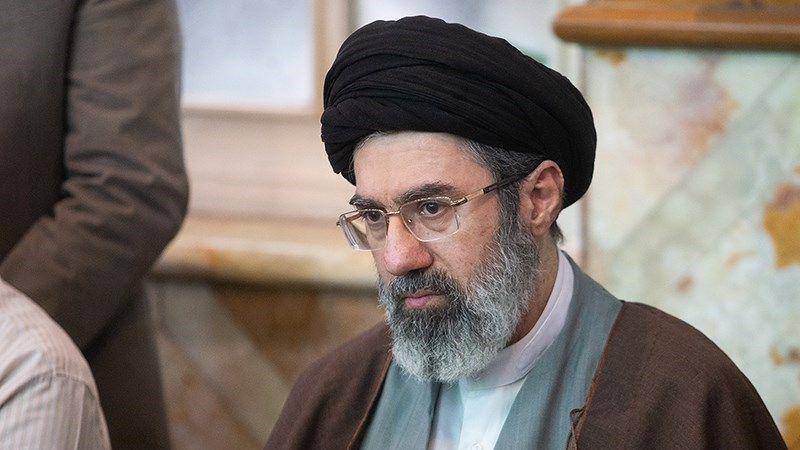
Mojtaba Khamenei, the second son of the late Ayatollah Ali Khamenei, has been appointed Iran’s new supreme leader, state media reported on Sunday. The appointment comes after the death of his father in the US–Israeli airstrikes on his Tehran compound on 28 February, which also killed several members of his family.
The Assembly of Experts, the 88‑member clerical body responsible for selecting the supreme leader, said Mr Khamenei was chosen by a “decisive vote” and urged Iranians to support the new leader. The statement called on religious and academic elites to pledge allegiance and maintain national unity.
Who is Mojtaba Khamenei?
Mojtaba Khamenei, 56, has largely stayed out of the public eye. Unlike his father, he has never held government office, given public speeches, or appeared regularly in the media. However, he has been active within the inner circles of the Iranian regime for decades, cultivating close ties with the Islamic Revolutionary Guard Corps (IRGC).
Born on 8 September 1969 in Mashhad, he is the second of six children of Ali Khamenei. He completed his secondary education at the Alavi School in Tehran. At 17, he briefly served in the military during the Iran‑Iraq War in the 1980s. In 1999, he entered the religious seminary in Qom, where he began formal clerical studies. He is a mid‑ranking cleric with the title of hojatoleslam, though some media and officials have referred to him as an ayatollah in recent years.
Mojtaba has been linked to Iran’s security and intelligence apparatus through his work with the IRGC and Basij forces. Reformist politicians have accused him of interfering in the 2005 and 2009 presidential elections to support hardline candidates and suppress opposition. He reportedly met with protest leaders in 2012 to urge them to end demonstrations following the 2009 Green Movement.
He is also believed to have significant economic interests through networks connected to the Iranian establishment, although he is not publicly linked to any specific transactions. His father’s precedent allows him to assume leadership despite his mid-level clerical rank.
Analysts say his appointment signals continuity of hardline policies in Iran. It may complicate prospects for negotiations with Western powers and increase tensions with Israel and the United States.